Posts weergeven met het label Typography. Alle posts weergeven

donderdag 20 maart 2014

An innovator in graphic design, typography, photography and furniture design Nederland Bouwt Betonwegen Paul Schuitema Company Photography


Nederland Bouwt Betonwegen.

Schuitema, Paul -

Published by Amsterdam, ENCY-CEMY N.V. (1938), Photo-illustrated stiff wrappers designed in photomontage by Schuitema (softcover) in plastic ringbinder , 29,7 x 21 cms., 80 pp. throughout photo-illustrated, folded map, text in Dutch. 
An innovator in graphic design, typography, photography and furniture design, Paul Schuitema was a member of Kurt Schwitters’ Ring neue Werbegestalter (Circle of New Designers), whose associates included László Moholy-NagyHerbert Bayerand Jan Tschichold. Yet despite Schuitema’s significant role in the development of typography for mass communication and advertising, he remains less recognised than his contemporaries. A new monograph by Dick Maan sets to redress this balance, and to offer the first concise overview of Schuitema’s work including his graphic design and typography, as well as his photography, furniture and film work.
schuitema-spread-1.jpg
While he began his artistic career as a painter, studying at the Academie voor Beeldende Kunsten in Rotterdam, Schuitema turned away from what he saw as a bourgeois activity after the First World War, and instead, in line with the Russian Constructivists and German Bauhaus activists, embraced modern technology and mass production. "The war of 1914-1918 had demonstrated that fine words and slogans were nonsense, romanticism had ended in bloodshed, heroism and patriotism were only for profit," he wrote in the exhibition catalogue for a retrospective of his work at the Kunstgewerbe Museum of Zurich in 1967. "Everything had turned out to be dirty, mendacious and full of false pathos. The function of art was to reassume the lost position. Graphic art had to be extremely functional; printwork had selling as its goal, it had to be clear and purposeful. In fact, it meant a marriage between typography and photography."
schuitema-spread-2.jpg
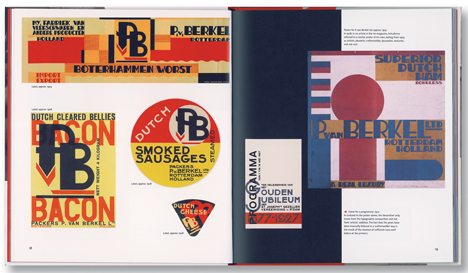
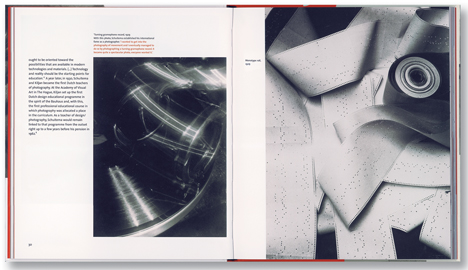
Schuitema strove to remove all decorative flourishes from his work, concentrating on sans-serif lettering as a means to communicate more directly and practically with the reader. He was similarly experimental with his photography and, alongside his colleagues Piet Zwart and Gerard Kiljan, contributed significantly to the development of New Photography in the Netherlands, becoming one of the first Dutch teachers of photography at the Academy of Visual Art in The Hague. He remained linked to the university until his retirement in 1962, and his integration of photography and typography also resulted in a number of striking adverts, most particularly for the Van Berkel companies.
Schuitema spread
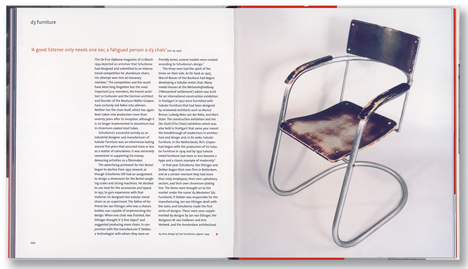
Maan’s book contains excellent visuals of all this work, as well as images from Schuitema’s experimental film work and his mass-production furniture design, some of which is still being manufactured today, more than 70 years after its inception. Tracing and accurately dating the images was no easy task, in part due to Schuitema’s belief that his early designs were simply "old paper" and was therefore a somewhat erratic archivist of his own work. Inevitably however, with his work continuing to appear in retrospective exhibitions, these pieces have in fact become collector’s items, a trend that is set to continue with the publication of this book, which offers an excellent introduction to over 50 years of his work.


Paul Schuitema & Berkel's Patent grafisch ontwerp & fotografie ...

Paul Schuitema De Vries Robbe & Co Gorinchem Gorinchem Graphic Design Company Photography


zaterdag 17 maart 2007

Lettering in Havana by Luc Devroye Typography Graphic Design


Lettering in Havana by Luc Devroye Typography Graphic Design


Tha Art of the Revolution Cuba Posters Sontag Stermer

http://www.youtube.com/watch?v=_gt7axc3aHY

The roots of the Cuban poster traditionCuba is a literate nation of 11 million people. It is a small enough that posters are an eminently viable medium for reaching wide audiences. Havana is a cosmopolitan capital of 1 million, which has been a cultural nexus between the old world and the new ever since the "discovery" of the Americas in 1492. As in Europe and the United States, lithographs appeared in Cuba in the mid 1800's. The emergence of a booming film industry in the 1940s - and posters publicizing those films - led to the first distinctly domestic style. In 1943 the U.S. exhibit "Originals of Tamigraph: Silk Screen Originals," which included 55 works by 27 artists was a significant impetus for the emergence of fine-art screenprinting in Cuba. This also spawned work of a distinctly political nature, the birth of Cuban political poster art. During the 50s some artists applied their talents to printmaking, but it continued to remain no more a significant cultural form than painting or sculpture. However, it was the overthrow of Fulgencio Batista and the immense national transformation that followed that led to the "golden age" of Cuban posters. The non-commercial mass poster was the direct fruit of the revolution, a conscious application of art in the service of social improvement. State resources were allocated for a broad range of cultural and artistic projects, and posters were the right medium at the right time.Poster production since the revolutionThe vast majority of posters produced in Cuba have been under the auspices of three agencies: Editora Politica, OSPAAAL (the Organization in Solidarity with the People of Africa, Asia and Latin America), and ICAIC (the Cuban Film Institute). Editora Politica (EP) is the official publishing department of the Cuban Communist Party, and is responsible for a wide range of (mostly) domestic public information propaganda in the form of books, brochures, billboards, and posters. In addition, many other agencies utilized the resources and distribution powers of EP for their own work, including FMC (the Federation of Cuban Women), the CNT (the National Confederation of Workers), and OCLAE (the Latin American Students Association). EP started out as the Commission of Revolutionary Orientation (COR, 1962-1974), then became the Department of Revolutionary Orientation (DOR, 1974-1984), and finally settled on Editora Politica in 1985.OSPAAAL is officially a Non-Governmental Organization (NGO) recognized by the United Nations, based in Havana, Cuba and with a board of representatives from all over the world. It is the primary producer of international solidarity posters in Cuba. Among its many activities has been the publication of Tricontinental magazine since 1967. At its peak its circulation was 30,000 copies, produced in 4 different languages and mailed to 87 countries. Included in most issues were folded-up solidarity posters, thus establishing the most effective international poster distribution system in the world. ICAIC produces posters for all films made in Cuba, and for many years also created publicity posters for foreign films shown in Cuba as well. These posters were all of identical size to fit in special kiosks throughout Havana. There are, of course, other venues for poster production. The Taller Artistico Experimental de Serigrafía Rene Portocarrero, founded in 1983, is a fine-art studio in Havana, always abuzz with students and teachers. Other agencies also have small shops, such as ICAP (Instituto Cubana de Amistad entre los Pueblos, or the Cuban Institute for Friendship between the People). And finally, there are small job shops that will produce work for any commercial client.Range of artistic content and styleOne of the characteristics that separates Cuban poster art from that of its historical antecedents - the Taller de Grafica Popular in Mexico in the 1930's, Polish film and political posters, and the state-sponsored posters of the Soviet Union and China - is the wide range of content and style. This is the result of several factors, including a long tradition of international influence in domestic artwork and a revolutionary government that was relatively open to experimentation and innovation. Although the "fine art" and "commercial art" worlds continue to exist in Cuba, a significant amount of resources and talent were funneled into challenging this capitalist dichotomy. Instead of selling products, artists could actually make a living using their skills to promote services and building community. Posters publicized motorcycle-based health brigades, joining the sugar harvest, working in the sugar mills efficiently, or planting healthy fruits and vegetables on available land. Some crops, such as tobacco, posed challenges; one poster pleads for "Your youthful hand" in helping the harvest , but another warns that "Tobacco burns health." Sports, education, and culture play a significant role; one poster for an armed forces chess tournament displays a commitment to play for keeps, another proudly proclaims "I am studying to be a teacher,"and a third uses a decidedly take-no-prisoners approach in promoting a conference on writers and artists.International solidarity is an important part of the Cuban culture, especially because the struggle against U.S. imperialism was being fought on Cuban shores. This deep connection to other underdeveloped countries struggling for self-determination resulted in many works succinctly and elegantly showing resistance against colonialism and U.S. imperialism. The persistent theme of "As in Viet Nam" underscores a deep national determination to be as self-reliant, brave, and resourceful as the people of Viet Nam, equating domestic food and industrial production with the urgency of armed struggle.Although most of the posters are produced in offset format, many of them (and all the older ICAIC posters) were done in silkscreen, in limited numbers. Many of the more popular ICAIC posters have been reissued, sometimes multiple times, to meet the demand for sales. Almost all of the stencils for the screenprinted posters were cut by hand, even many of the ones that "look" like large-dot photostencils.The current situationEver since the collapse of the Soviet Union and the Eastern Bloc in the mid-1990's, Cuba has been laboring under what has been officially described as the "special period". Economically, the country went into a tailspin, losing favorable trade agreements, oil and sugar subsidies, and technical assistance almost overnight. Ever since then, Cuba has followed a path of rebuilding its economy through international tourism. Massive joint-venture projects with Spain, Canada, Brazil, Mexico, and other nations have focused almost entirely on the hotel and ancillary service industries. This process, though justifiable given Cuba's limited options, has resulted in considerable distortion of the cultural fabric. All the poster-producing agencies have had to transform themselves from State subsidy to having to rely on fee-for-service to become self-supporting. Although an organization such as ICAIC may have a chance at pulling this off, agencies with an explicit political message such as EP or OSPAAAL are withering on the vine. This belt-tightening has affected art production in every way. Even billboard design favors use of white space because ink is in short supply. This difficult situation is compounded by a general disregard for intellectual property rights by foreigners, especially the United States. Because the U.S. government maintains such a hostile relationship with Cuba, many people assume that even if copyright is maintained it is unenforceable. All Cuban artists are acutely aware that although their work, mostly done for little pay, is a desirable commodity and can command high prices in the art market. Many Cuban artists were able to produce clippings from Christie's and others indicating sales of work in the over-$1000 range. This exploitation is not just limited to the high-end market. The web-based sales catalog of Barnes and Noble (a major U.S. bookseller) displays over 30 digitally-reproduced "Cuban posters," many originally created by OSPAAAL and ICAIC. With the exception of the Cuba Poster Project and the Center for Cuban Studies, I have never heard of a situation where sales of originals or reproductions were done with the authorization of the producing artist or agency, not to mention arrangements for compensation.
The task aheadPosters are a vital, expressive visual art which have historically been a medium of choice for presenting oppositional voices. Unfortunately, the timeless issues they raise are usually eclipsed by their short lifespan in the public record. A variety of factors conspire to dramatically limit the number of poster images which not only survive, but are available to researchers, organizers, and the viewing public. These include physical deterioration (bad ink/paper stability, staining and tearing due to poor display techniques, fading from exposure to sunlight, infestation by bugs and rot, damage from improper storage, etc.), irreversible damage and loss (insecure storage resulting in fire and water damage, posters being thrown out as trash), and privatization (posters being bought up by collectors/dealers). Cuba is no exception. As in the rest of the world, the very agencies which produced the works had devoted little energy to preserving them. An example of this a request by OSPAAAL in 1998 for display copies for an exhibit on Che Guevara; the agency did not have eight of the 18 different posters they had produced, and I was able to send down giant digital prints from archives created by the Cuba Poster Project.Because of the irreplaceable political and cultural heritage represented by this ephemeral art, I have been working with other independent poster curators (primarily Michael Rossman, an independent archivist, and Carol Wells, of the Center for the Study of Political Graphics in Los Angeles) to develop an approach for documenting and cataloguing the images and information in such a way that these works will forever remain potent voices of change. We seek to empower poster-producing organizations to preserve their own visual history and allow them to breathe new life into images that were created many years ago. Because we are also concerned with preserving oppositional poster art in general, we see the documentation of "small" collections to be key pieces in the construction of a major archive of domestic and international posters. Much of this is based on recent developments in the digitization of images and databases that have only recently become affordable to smaller collections. One of the wonderful features of a digital catalog is that it is possible to build a complete "collection" without possession of the actual artifact, thus freeing producing agencies from the whole separate difficult task of poster collection and conservation. An image-rich database means that poster images can be quickly located and compared without reliance on curatorial memory or access to the actual poster. Lincoln Cushing, Docs Populi - Documents for the Public lcushing@igc.org

Tha Art of the Revolution Cuba Posters Sontag Stermer

http://www.youtube.com/watch?v=_gt7axc3aHY

The roots of the Cuban poster traditionCuba is a literate nation of 11 million people. It is a small enough that posters are an eminently viable medium for reaching wide audiences. Havana is a cosmopolitan capital of 1 million, which has been a cultural nexus between the old world and the new ever since the "discovery" of the Americas in 1492. As in Europe and the United States, lithographs appeared in Cuba in the mid 1800's. The emergence of a booming film industry in the 1940s - and posters publicizing those films - led to the first distinctly domestic style. In 1943 the U.S. exhibit "Originals of Tamigraph: Silk Screen Originals," which included 55 works by 27 artists was a significant impetus for the emergence of fine-art screenprinting in Cuba. This also spawned work of a distinctly political nature, the birth of Cuban political poster art. During the 50s some artists applied their talents to printmaking, but it continued to remain no more a significant cultural form than painting or sculpture. However, it was the overthrow of Fulgencio Batista and the immense national transformation that followed that led to the "golden age" of Cuban posters. The non-commercial mass poster was the direct fruit of the revolution, a conscious application of art in the service of social improvement. State resources were allocated for a broad range of cultural and artistic projects, and posters were the right medium at the right time.Poster production since the revolutionThe vast majority of posters produced in Cuba have been under the auspices of three agencies: Editora Politica, OSPAAAL (the Organization in Solidarity with the People of Africa, Asia and Latin America), and ICAIC (the Cuban Film Institute). Editora Politica (EP) is the official publishing department of the Cuban Communist Party, and is responsible for a wide range of (mostly) domestic public information propaganda in the form of books, brochures, billboards, and posters. In addition, many other agencies utilized the resources and distribution powers of EP for their own work, including FMC (the Federation of Cuban Women), the CNT (the National Confederation of Workers), and OCLAE (the Latin American Students Association). EP started out as the Commission of Revolutionary Orientation (COR, 1962-1974), then became the Department of Revolutionary Orientation (DOR, 1974-1984), and finally settled on Editora Politica in 1985.OSPAAAL is officially a Non-Governmental Organization (NGO) recognized by the United Nations, based in Havana, Cuba and with a board of representatives from all over the world. It is the primary producer of international solidarity posters in Cuba. Among its many activities has been the publication of Tricontinental magazine since 1967. At its peak its circulation was 30,000 copies, produced in 4 different languages and mailed to 87 countries. Included in most issues were folded-up solidarity posters, thus establishing the most effective international poster distribution system in the world. ICAIC produces posters for all films made in Cuba, and for many years also created publicity posters for foreign films shown in Cuba as well. These posters were all of identical size to fit in special kiosks throughout Havana. There are, of course, other venues for poster production. The Taller Artistico Experimental de Serigrafía Rene Portocarrero, founded in 1983, is a fine-art studio in Havana, always abuzz with students and teachers. Other agencies also have small shops, such as ICAP (Instituto Cubana de Amistad entre los Pueblos, or the Cuban Institute for Friendship between the People). And finally, there are small job shops that will produce work for any commercial client.Range of artistic content and styleOne of the characteristics that separates Cuban poster art from that of its historical antecedents - the Taller de Grafica Popular in Mexico in the 1930's, Polish film and political posters, and the state-sponsored posters of the Soviet Union and China - is the wide range of content and style. This is the result of several factors, including a long tradition of international influence in domestic artwork and a revolutionary government that was relatively open to experimentation and innovation. Although the "fine art" and "commercial art" worlds continue to exist in Cuba, a significant amount of resources and talent were funneled into challenging this capitalist dichotomy. Instead of selling products, artists could actually make a living using their skills to promote services and building community. Posters publicized motorcycle-based health brigades, joining the sugar harvest, working in the sugar mills efficiently, or planting healthy fruits and vegetables on available land. Some crops, such as tobacco, posed challenges; one poster pleads for "Your youthful hand" in helping the harvest , but another warns that "Tobacco burns health." Sports, education, and culture play a significant role; one poster for an armed forces chess tournament displays a commitment to play for keeps, another proudly proclaims "I am studying to be a teacher,"and a third uses a decidedly take-no-prisoners approach in promoting a conference on writers and artists.International solidarity is an important part of the Cuban culture, especially because the struggle against U.S. imperialism was being fought on Cuban shores. This deep connection to other underdeveloped countries struggling for self-determination resulted in many works succinctly and elegantly showing resistance against colonialism and U.S. imperialism. The persistent theme of "As in Viet Nam" underscores a deep national determination to be as self-reliant, brave, and resourceful as the people of Viet Nam, equating domestic food and industrial production with the urgency of armed struggle.Although most of the posters are produced in offset format, many of them (and all the older ICAIC posters) were done in silkscreen, in limited numbers. Many of the more popular ICAIC posters have been reissued, sometimes multiple times, to meet the demand for sales. Almost all of the stencils for the screenprinted posters were cut by hand, even many of the ones that "look" like large-dot photostencils.The current situationEver since the collapse of the Soviet Union and the Eastern Bloc in the mid-1990's, Cuba has been laboring under what has been officially described as the "special period". Economically, the country went into a tailspin, losing favorable trade agreements, oil and sugar subsidies, and technical assistance almost overnight. Ever since then, Cuba has followed a path of rebuilding its economy through international tourism. Massive joint-venture projects with Spain, Canada, Brazil, Mexico, and other nations have focused almost entirely on the hotel and ancillary service industries. This process, though justifiable given Cuba's limited options, has resulted in considerable distortion of the cultural fabric. All the poster-producing agencies have had to transform themselves from State subsidy to having to rely on fee-for-service to become self-supporting. Although an organization such as ICAIC may have a chance at pulling this off, agencies with an explicit political message such as EP or OSPAAAL are withering on the vine. This belt-tightening has affected art production in every way. Even billboard design favors use of white space because ink is in short supply. This difficult situation is compounded by a general disregard for intellectual property rights by foreigners, especially the United States. Because the U.S. government maintains such a hostile relationship with Cuba, many people assume that even if copyright is maintained it is unenforceable. All Cuban artists are acutely aware that although their work, mostly done for little pay, is a desirable commodity and can command high prices in the art market. Many Cuban artists were able to produce clippings from Christie's and others indicating sales of work in the over-$1000 range. This exploitation is not just limited to the high-end market. The web-based sales catalog of Barnes and Noble (a major U.S. bookseller) displays over 30 digitally-reproduced "Cuban posters," many originally created by OSPAAAL and ICAIC. With the exception of the Cuba Poster Project and the Center for Cuban Studies, I have never heard of a situation where sales of originals or reproductions were done with the authorization of the producing artist or agency, not to mention arrangements for compensation.
The task aheadPosters are a vital, expressive visual art which have historically been a medium of choice for presenting oppositional voices. Unfortunately, the timeless issues they raise are usually eclipsed by their short lifespan in the public record. A variety of factors conspire to dramatically limit the number of poster images which not only survive, but are available to researchers, organizers, and the viewing public. These include physical deterioration (bad ink/paper stability, staining and tearing due to poor display techniques, fading from exposure to sunlight, infestation by bugs and rot, damage from improper storage, etc.), irreversible damage and loss (insecure storage resulting in fire and water damage, posters being thrown out as trash), and privatization (posters being bought up by collectors/dealers). Cuba is no exception. As in the rest of the world, the very agencies which produced the works had devoted little energy to preserving them. An example of this a request by OSPAAAL in 1998 for display copies for an exhibit on Che Guevara; the agency did not have eight of the 18 different posters they had produced, and I was able to send down giant digital prints from archives created by the Cuba Poster Project.Because of the irreplaceable political and cultural heritage represented by this ephemeral art, I have been working with other independent poster curators (primarily Michael Rossman, an independent archivist, and Carol Wells, of the Center for the Study of Political Graphics in Los Angeles) to develop an approach for documenting and cataloguing the images and information in such a way that these works will forever remain potent voices of change. We seek to empower poster-producing organizations to preserve their own visual history and allow them to breathe new life into images that were created many years ago. Because we are also concerned with preserving oppositional poster art in general, we see the documentation of "small" collections to be key pieces in the construction of a major archive of domestic and international posters. Much of this is based on recent developments in the digitization of images and databases that have only recently become affordable to smaller collections. One of the wonderful features of a digital catalog is that it is possible to build a complete "collection" without possession of the actual artifact, thus freeing producing agencies from the whole separate difficult task of poster collection and conservation. An image-rich database means that poster images can be quickly located and compared without reliance on curatorial memory or access to the actual poster. Lincoln Cushing, Docs Populi - Documents for the Public lcushing@igc.org

vrijdag 2 maart 2007

Cas Oorthuys & Dick Elffers Rotterdam Dynamic city a symphony of Photography & Typography

Rotterdam dynamische stad : http://www.youtube.com/watch?v=B7bA2CG4I4g

Oorthuys, Cas (1908 - 1975)

Working period 1938-1975

Description Cas Oorthuys captured the growing self-awareness of the Dutch in the period of postwar reconstruction in a unique fashion. His photographs show industrial recovery, a hard-working nation on the way towards a booming economy and a thriving tourist trade. Like many photographers in those postwar years, Oorthuys focused on people. His work is however characterised by the endeavour to generate interaction between the people in his photographs and the environment in which they live and work. Another remarkable aspect is his strong sense of composition: the photographs are conceived precisely within the matt glass square of his Rolleicord.Cas Oorthuys' life and work were shaped by World War Two and the events leading up to it. The economic crisis of the early 1930s lost him his Amsterdam municipal council post as an architect. He embarked on his photographic career with pictures of communist workers, and from 1936 was a photo-reporter for the social-democratic weekly Wij. When war broke out he tried to make a living with portrait photography. He also forged identity cards and in the Hunger Winter was a member of the group later known as The Camera in Hiding (De Ondergedoken Camera). This group had formed in order to record the liberation, which was expected imminently. When it failed to take place they illegally documented the last year of German occupation with photographic material which has retrospectively shaped our image of the Hunger Winter.After the liberation, social engagement remained a vital issue for Oorthuys. It is particularly evident in Een staat in wording (1947, a state in the making), a photo-book advocating a peaceful solution to the Indonesian struggle for independence. It was a vain hope, and changed Oorthuys' views about the function of photography. After this, he rarely used the medium as a political weapon. Henceforth, his photographs of people were prompted mainly by human interest.Although ideology receded into the background, people continued to feature prominently in Oorthuys' photos. This is demonstrated not only by his numerous industrial publications, annual reports and commemorative books dating from 1945 to 1975, but also by some forty travel paperbacks commissioned between 1951 and 1965 by Contact and the book Rotterdam dynamische stad (Rotterdam, dynamic city), published by the same firm in 1959. In 1969 the Stedelijk Museum in Amsterdam invited Oorthuys to stage a one-man show appropriately called Mensen/People. A book with the same title appeared that year. Oorthuys divided it into fifteen thematic groups, beginning with death and ending with laughter.Cas Oorthuys' prolific postwar production required an efficient administration. All his films were numbered, contact-printed and arranged according to subject in looseleaf books. With some 500,000 negatives and 444 books of contact prints, Cas Oorthuys' archive is one of the largest and most accessible of Dutch photo archives.

Biography
1908 Casparus Bernadus (Cas) Oorthuys is born on November 1 in Leiden.1926-1930 Studies architecture in Haarlem and develops an interest in photography.1930-1932 Employed by the Amsterdam municipal council as an architect, but loses his job in 1932 as a result of the economic crisis.1932 Joins the Vereeniging van Arbeiders-Fotografen (association of workers-photographers), founds the OV 20 combination for graphic design with painter Jo Voskuil and moves into a studio at 20 Prinseneiland. He and Voskuil provide photographs and photo-montages for brochures, magazines, book-jackets and posters.1936 Co-founder of the photo and film section of the Artists' Union in Defence of Cultural Rights (BKVK), and is involved in the organisation of the international exhibition The Olympiad under Dictatorship. A job as photographer for the weekly Wij and the daily Het Volk marks his decision to make photography his profession.1937 Participates in the organisation of the exhibition 'Foto '37' at the Stedelijk Museum, Amsterdam.1944 Liberation seems imminent, and a group of photographers - including Oorthuys - decide to photograph the event. It took another six months for the Netherlands to be liberated, however, and the group later known as The Camera in Hiding (De Ondergedoken Camera) photographed the ensuing Hunger Winter instead. In 1947 these photographs were collected in the book Amsterdam tijdens de hongerwinter (Amsterdam during the Hunger Winter.1945 Co-founder of the photographers' branch of the union of contracted artists (GKf).1946 Assigned by ABC Press to photograph the Nuremberg trials.1947 Spends two months travelling through Indonesia for the Contact publishing company, taking photographs for Een staat in wording (a state in the making), published that July.1951 Publishes Bonjour Paris, the first in a series of travel paperbacks for which Oorthuys visits numerous European countries until 1965.1955 Oorthuys and six other Dutch photographers participate in the exhibition The Family of Man at the Museum of Modern Art in New York.1956 Travels to New Guinea for Bredero's construction company.1959 Photographs in the Congo for the Belgian information service, and then for Billiton in the Tanganyikan and Rhodesian ore mines. The photo book Rotterdam dynamische stad is published.1969 One-man show at the Stedelijk Museum in Amsterdam to mark Oorthuys' sixtieth birthday. The exhibition is accompanied by the book Mensen/People.1975 Cas Oorthuys dies on July 22 in Amsterdam.
.
Bibliography PRIMARY
D.J. Maltha, Landbouw, Amsterdam 1946
Alb. de la Court, Een staat in wording. Foto-reportage over het Indonesië van heden, Amsterdam/Antwerpen 1947
C.H.J. Maliepaard (red.), Rundvee, Amsterdam 1948
Evert Zandstra en Cas Oorthuys, Zwervend door Nederland, Amsterdam/Antwerpen 1950
C.H.J. Maliepaard (red.), Trekpaarden, Amsterdam 1950
J.W. de Boer, Rotterdam dynamische stad, Amsterdam 1959 [also english edition]
Bert Schierbeek, De draad van het verhaal, Wormerveer 1960
Gerrit Kouwenaar en Jan Mastenbroek, Amsterdam onze hoofdstad, Amsterdam 1963
Mensen/People, Amsterdam 19691944-45 het laatste jaar. Een verslag in foto's over onderdrukking en bevrijding, Amsterdam 1970
Guaranteed Real Dutch Congo, Rotterdam 1992Mensen aan de stroom. Reisimpressies van Cas Oorthuys in Belgisch Congo 1959, Tervuren 1992
.
Contact-photo-pockets:
Jan Brusse, Bonjour Paris. Bonsoir Paris. Au revoir Paris. Parijse begroetingen, Amsterdam/Antwerpen 1951 [also german and french edition]C.J. Kelk, Dit is ons land Nederland, Amsterdam/Antwerpen 1952 [also german, english, french and spanish edition]Han G. Hoekstra, Dit is onze hoofdstad Amsterdam, Amsterdam/Antwerpen 1952 [also german, english and french edition]Ch.A. Cocheret, Dit is onze havenstad Rotterdam, Amsterdam/Antwerpen 1952 [also german, english and french edition]Neville Braybrooke, Dit is Londen, Amsterdam/Antwerpen 1953 [also german and english edition]Jan Brusse, De Franse Rivièra. Van Marseille tot Menton, Amsterdam/Antwerpen 1954 [also english edition]Benno Premsela, Dit is Florence, Amsterdam/Antwerpen 1954K. Jonckheere, Dit is België, Amsterdam/Antwerpen 1955 [also american, english and french edition]Evert Zandstra, Dit is Oostenrijk, Amsterdam/Antwerpen 1956René Patris, Dit is Rome, Amsterdam/Antwerpen 1956Bert Schierbeek, Hart van Spanje, Amsterdam/Antwerpen 1956 [also german edition]H. Molendijk, Dit is Amersfoort, Amsterdam/Antwerpen 1957 [also german and english edition]A. den Doolaard, Dit is Joegoslavië, Amsterdam/Antwerpen 1957A. den Doolaard, Dit is Venetië, Amsterdam/Antwerpen 1958B. Delépinne, Dit is Brussel, Amsterdam/Antwerpen 1958 [also german and french edition]Marise Ferro, Dit is de Italiaanse Rivièra, Amsterdam/Antwerpen 1958A. den Doolaard, Dit is Griekenland. Het vasteland, Amsterdam/Antwerpen 1958A. den Doolaard, Dit is Griekenland. De eilanden, Amsterdam/Antwerpen 1959A.B. Wigman en A.M. Hammacher, Dit is het nationale park De Hoge Veluwe, Amsterdam/Antwerpen 1960 [also german and english edition]H.J.A. Schintz, Dit is Zwitserland, Amsterdam/Antwerpen 1960P. Cressard, Dit is Bretagne, Amsterdam/Antwerpen 1961 [also french edition]Paul Ahnne, Dit is de Elzas, Amsterdam/Antwerpen 1961 [also french edition]M. Pezet, Dit is de Provence, Amsterdam/Antwerpen 1962Bert Schierbeek, Dit is Enschede, Amsterdam/Antwerpen 1962 [also german and english edition]R. Penrose, Oxford & Cambridge, Amsterdam 1962 [also english edition]Jean A. Schalekamp, De Balearen, Amsterdam/Antwerpen 1964W. Alings Jr., Napels en omgeving, Amsterdam 1964 [also english edition]Garmt Stuiveling, Dit is Hilversum, Amsterdam/Antwerpen 1964 [also german and english edition]Wim Alings Jr., De Italiaanse meren, Amsterdam/Antwerpen 1965

Contact-travel-pockets:
Evert Zandstra, Overijssel, Amsterdam/Antwerpen z.j.Auteur onbekend, De Vogezen. Lotharingen en de Elzas, Amsterdam/Antwerpen z.j.Evert Zandstra, Gelderland, Amsterdam/Antwerpen 1953Evert Zandstra, De Ardennen, Amsterdam/Antwerpen 1953Evert Zandstra, Luxemburg, Amsterdam/Antwerpen 1953Evert Zandstra, De Waddeneilanden, Amsterdam/Antwerpen 1954Evert Zandstra, Tirol & Vorarlberg, Amsterdam/Antwerpen 1954A. den Doolaard, Joegoslavië, Amsterdam/Antwerpen 1956Evert Zandstra, Limburg, Amsterdam/Antwerpen 1957Evert Zandstra, Tessin, Amsterdam/Antwerpen 1959 [idem: Vakantie in Tessin, 1959]

stamp design:
'Kinderzegels' [stamps], 1951'Spoorweg-jubileumzegels' [2 stamps], 1964'Bevrijdingszegel', 1975
.
SECONDARY
Sybrand Hekking, Cas Oorthuys fotograaf 1908-1975, Amsterdam 1982
Flip Bool, 'Cas Oorthuys', in: Geschiedenis van de Nederlandse fotografie in monografieën en thema-artikelen, Alphen aan den Rijn/ Amsterdam 1984-, aflevering 22
Willem Diepraam, Een beeld van Cas Oorthuys, Amsterdam 1991

http://www.auctiva.com/stores/viewstore.aspx?id=17894

dinsdag 16 januari 2007

Piet Zwart & De Stijl & de Nieuwe Zakelijkheid & Photography & Typography & Design

Free Image Hosting at www.auctiva.com

Piet Zwart

From Wikipedia, the free encyclopedia

He started his career as an architect and worked for Jan Wils and Berlage.

As a designer, Zwart was well known because of his work for both the Nederlandse Kabelfabriek Delft (the Dutch Cable Factory in Delft) and the Dutch Postal Telegraph and Telephone, and as a pioneer of modern typography. He did not adhere to traditional typography rules, but used the basic principles of constructivism and "De Stijl" in his commercial work. His work can be recognized by its primary colors, geometrical shapes, repeated word patterns and an early use of photomontage.

He created a total of 275 designs in 10 years for the NKF Company, almost all typographical works. He resigned in 1933 to become an interior, industrial and furniture designer.

Piet Zwart died at the age of 92 in 1977.

Nederlandse typograaf, fotograaf en industrieel ontwerper

De Nederlandse typograaf, fotograaf en industrieel ontwerper Piet Zwart werd in 1885 geboren te Zaandijk.
Zwart studeerde aan de Rijksschool voor Kunstnijverheid in Amsterdam van 1902 tot 1907. Hij volgde les in architectuur en tekenen. Na zijn studie verhuisde hij naar Leeuwarden, waar hij tekenles gaf. In de twee jaar voor de Eerste Wereldoorlog studeerde hij aan de Technische Hogeschool in Delft tot hij werd opgeroepen om zijn dienstplicht te vervullen.

Assistent van architect H.P. Berlage

Regelmatig ontmoete hij Jan Wils en Huszár, die hem zeer beïnvloedden, maar toch zou Piet Zwart nooit deel uit gaan maken van De Stijl.
In 1919 werkte hij bij de firma De Stijl van Jan Wils. Twee jaar later werd hij assistent van de architect H.P. Berlage. Later schreef Zwart hierover: "In die tijd was de relatie van de architect met de werknemer compleet anders dan tegenwoordig. Assistenten worden tegenwoordig genoemd als zij van belang zijn geweest. Dat was in die tijd niet het geval; je was een nederige werknemer, de architect was je baas en deze relatie was heel duidelijk."

Nederlandsche Kabelfabriek (NKF)

Op zesendertig-jarige leeftijd ontwierp Zwart voor het eerst voor de vertegenwoordiger van Vickers. In 1923 introduceerde Berlage hem bij de Nederlandsche Kabelfabriek (NKF). Piet Zwart verwees de traditionele typografische principes naar de prullenmand en koos de formele constructieve De Stijl aanpak voor zijn Nederlandse ontwerpen. De relatie met de NKF bleef tot 1933 in stand. Gedurende deze tien jaar produceerde hij 275 advertenties en de veel geprezen publicatie "Sterkstroom". Later verklaarde Piet Zwart wat hij had geleerd van deze opdrachten: "Eigenlijk heb ik op deze manier geleerd wat typografie inhield. Ik kende de termen niet, ik kende de methoden niet, ik wist niet eens het verschil tussen boven- en onderkast."
Om zoveel mogelijk aandacht te krijgen van de klant experimenteerde Zwart hevig met grote schreefloze letters, herhalingen van woordenpatronen en sterke diagonalen. Bovendien was hij één van de eerste, die de fotomontagetechniek toepaste.

Belangrijke opdrachtgevers

Dankzij de typografische opdrachten kon hij het zich veroorloven om zijn baan bij Berlage op te geven toen hij ongeveer veertig was. Naast de NKF werkte Piet Zwart voor vele andere klanten, waarvan de belangrijkste de PTT was. Hij ontwierp vijf postzegels en ook enig reclamedrukwerk voor het staatsbedrijf.

Bruijnzeel

Zijn intuïtieve aanpak en vooral ook zijn ingenieuze manipulatie van grafische elementen, gecombineerd met de typische De Stijl kleurencombinaties, vormden een contrast met de meer formele benadering door andere exponenten van de "nieuwe" typografie.
Aan het einde van 1933 maakte Piet Zwart een grote ommezwaai. Voor de Nederlandse firma Bruijnzeel ging hij keukeninterieurs ontwerpen.
Piet Zwart overleed te Wassenaar in 1977.

ADVERTISING LEAFLET FOR PTT, 1932

The name De Stijl, title of a magazine founded in the Netherlands in 1917, is now used to identify the abstract art and functional architecture of its major contributors: Mondrian, Van Doesburg, Van der Leck, Oud, Wils and Rietveld. De Stijl achieved international acclaim by the end of the 1920s and its paintings, buildings and furniture made fundamental contributions to the modern movement.

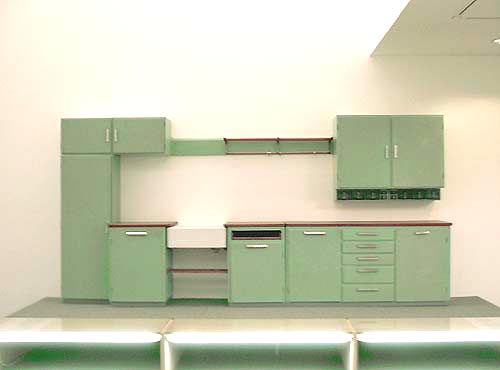
Piet Zwart in het Centraal Museum : 'standaardkeuken' (1935)Op weg naar het museum liet ik mijn camera op het trottoir vallen, verloor tweehonderd meter verder een stuk van mijn hak, kreeg in het museum een berisping omdat ik een foto maakte van de keuken en besmeurde de museumvloer met modder uit de museumtuin. Kortom, afgelopen dinsdag was ik in het Centraal Museum in Utrecht en zag de tentoonstelling ideaal ! wonen. Ik maakte er in het diepste geheim mijn foto's, de Volkskrant schreef erover in haar kunstbijlage:

"(...) moesten meubels degelijk, hygi?nisch, goedkoop te produceren en vooral effici?nt zijn. Als voorbeeld van die visie is in Utrecht de standaardkeuken te zien die Piet Zwart in 1935 ontwierp nadat hij nauwkeurig had opgemeten welke ruimte een huisvrouw nodig had."

In het Centraal Museum #1: de standaardkeuken van Piet Zwart - onlangs uitgeroepen tot "meest gezichtsbepalende ontwerper van de 20e eeuw" - anno 1938 en anno 2002.