Posts weergeven met het label De Stijl. Alle posts weergeven

dinsdag 16 januari 2007

Piet Zwart & De Stijl & de Nieuwe Zakelijkheid & Photography & Typography & Design

Free Image Hosting at www.auctiva.com

Piet Zwart

From Wikipedia, the free encyclopedia

He started his career as an architect and worked for Jan Wils and Berlage.

As a designer, Zwart was well known because of his work for both the Nederlandse Kabelfabriek Delft (the Dutch Cable Factory in Delft) and the Dutch Postal Telegraph and Telephone, and as a pioneer of modern typography. He did not adhere to traditional typography rules, but used the basic principles of constructivism and "De Stijl" in his commercial work. His work can be recognized by its primary colors, geometrical shapes, repeated word patterns and an early use of photomontage.

He created a total of 275 designs in 10 years for the NKF Company, almost all typographical works. He resigned in 1933 to become an interior, industrial and furniture designer.

Piet Zwart died at the age of 92 in 1977.

Nederlandse typograaf, fotograaf en industrieel ontwerper

De Nederlandse typograaf, fotograaf en industrieel ontwerper Piet Zwart werd in 1885 geboren te Zaandijk.
Zwart studeerde aan de Rijksschool voor Kunstnijverheid in Amsterdam van 1902 tot 1907. Hij volgde les in architectuur en tekenen. Na zijn studie verhuisde hij naar Leeuwarden, waar hij tekenles gaf. In de twee jaar voor de Eerste Wereldoorlog studeerde hij aan de Technische Hogeschool in Delft tot hij werd opgeroepen om zijn dienstplicht te vervullen.

Assistent van architect H.P. Berlage

Regelmatig ontmoete hij Jan Wils en Huszár, die hem zeer beïnvloedden, maar toch zou Piet Zwart nooit deel uit gaan maken van De Stijl.
In 1919 werkte hij bij de firma De Stijl van Jan Wils. Twee jaar later werd hij assistent van de architect H.P. Berlage. Later schreef Zwart hierover: "In die tijd was de relatie van de architect met de werknemer compleet anders dan tegenwoordig. Assistenten worden tegenwoordig genoemd als zij van belang zijn geweest. Dat was in die tijd niet het geval; je was een nederige werknemer, de architect was je baas en deze relatie was heel duidelijk."

Nederlandsche Kabelfabriek (NKF)

Op zesendertig-jarige leeftijd ontwierp Zwart voor het eerst voor de vertegenwoordiger van Vickers. In 1923 introduceerde Berlage hem bij de Nederlandsche Kabelfabriek (NKF). Piet Zwart verwees de traditionele typografische principes naar de prullenmand en koos de formele constructieve De Stijl aanpak voor zijn Nederlandse ontwerpen. De relatie met de NKF bleef tot 1933 in stand. Gedurende deze tien jaar produceerde hij 275 advertenties en de veel geprezen publicatie "Sterkstroom". Later verklaarde Piet Zwart wat hij had geleerd van deze opdrachten: "Eigenlijk heb ik op deze manier geleerd wat typografie inhield. Ik kende de termen niet, ik kende de methoden niet, ik wist niet eens het verschil tussen boven- en onderkast."
Om zoveel mogelijk aandacht te krijgen van de klant experimenteerde Zwart hevig met grote schreefloze letters, herhalingen van woordenpatronen en sterke diagonalen. Bovendien was hij één van de eerste, die de fotomontagetechniek toepaste.

Belangrijke opdrachtgevers

Dankzij de typografische opdrachten kon hij het zich veroorloven om zijn baan bij Berlage op te geven toen hij ongeveer veertig was. Naast de NKF werkte Piet Zwart voor vele andere klanten, waarvan de belangrijkste de PTT was. Hij ontwierp vijf postzegels en ook enig reclamedrukwerk voor het staatsbedrijf.

Bruijnzeel

Zijn intuïtieve aanpak en vooral ook zijn ingenieuze manipulatie van grafische elementen, gecombineerd met de typische De Stijl kleurencombinaties, vormden een contrast met de meer formele benadering door andere exponenten van de "nieuwe" typografie.
Aan het einde van 1933 maakte Piet Zwart een grote ommezwaai. Voor de Nederlandse firma Bruijnzeel ging hij keukeninterieurs ontwerpen.
Piet Zwart overleed te Wassenaar in 1977.

ADVERTISING LEAFLET FOR PTT, 1932

The name De Stijl, title of a magazine founded in the Netherlands in 1917, is now used to identify the abstract art and functional architecture of its major contributors: Mondrian, Van Doesburg, Van der Leck, Oud, Wils and Rietveld. De Stijl achieved international acclaim by the end of the 1920s and its paintings, buildings and furniture made fundamental contributions to the modern movement.

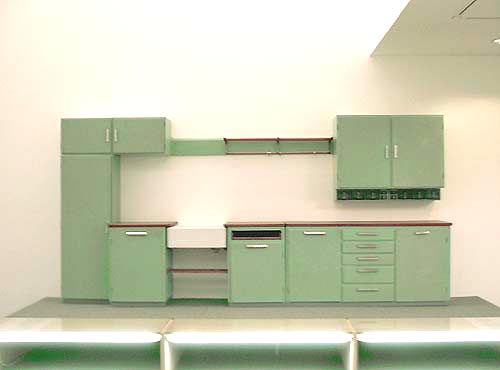
Piet Zwart in het Centraal Museum : 'standaardkeuken' (1935)Op weg naar het museum liet ik mijn camera op het trottoir vallen, verloor tweehonderd meter verder een stuk van mijn hak, kreeg in het museum een berisping omdat ik een foto maakte van de keuken en besmeurde de museumvloer met modder uit de museumtuin. Kortom, afgelopen dinsdag was ik in het Centraal Museum in Utrecht en zag de tentoonstelling ideaal ! wonen. Ik maakte er in het diepste geheim mijn foto's, de Volkskrant schreef erover in haar kunstbijlage:

"(...) moesten meubels degelijk, hygi?nisch, goedkoop te produceren en vooral effici?nt zijn. Als voorbeeld van die visie is in Utrecht de standaardkeuken te zien die Piet Zwart in 1935 ontwierp nadat hij nauwkeurig had opgemeten welke ruimte een huisvrouw nodig had."

In het Centraal Museum #1: de standaardkeuken van Piet Zwart - onlangs uitgeroepen tot "meest gezichtsbepalende ontwerper van de 20e eeuw" - anno 1938 en anno 2002.

zondag 7 januari 2007

Plem 1909-1959 Company Photography De Stijl Elffers Oorthuys Thijsen Parr


1909 PLEM 1959.
[Text L. Harpman, P.A. Becx (redactie); Bertus Aafjes, R. Franquinet (essay); E. L. Kramer (foreword); F. Houben (introduction); H. Gelissen (firm's history). Photography Cas Oorthuys Illustrations: P.A. Becx Layout Dick Elffers en Ben Dui
Maastricht / 1959 / 154 p. / cb. / 26x24cm / with dustjacket / 136 b&w photographs, 7 color, in opdracht, uit bedrijfsarchief en uit niet-particuliere archieven / documentaire foto's / directeursportretten, huishoudelijke apparatuur, landschap en stedenschoon en schakelinstallaties). - Ill 11 b&w photographs, 35 colo / NN / Firmenschrift, Festschrift / Photographie - Anthologie - Auftragsphotographie, commissioned photography - Nederland, Niederlande - 20. Jahrh. / Printed by Firma Boosten & Stols, Maastricht (boekdruk). - Opdrachtgever: NV Provinciale Limburgsche Electriciteits-Maatschappij PLEM (50-jarig bestaan). - Foto-typo-taal. De elektriciteitscentrale wordt metaforisch voorgesteld als een sprookjespaleis uit duizend-en-een-nacht. De foto is onderdeel van een grafisch totaalontwerp. Grafieken zijn in aparte katernen op andersoortig papier afgedrukt. De tekst is gezet uit de Grotesk, Gill en Goudy catalogue. Lit.: M. Bruinsma, L. Ros en R. Schröder, Een leest heeft drie voeten. Dick Elffers en de kunsten, Amsterdam 1989, p. 42-43.

Plem 1909-1959 by : Martin Parr & Gerry Badger in The Photobook : A History volume II
It is a characteristic of the Dutch photobook, as it is of the Japanese photobook, that design is an important element of the total package. One of the best designed examples of the period was produced for the utility company PLEM ( Provinciale Limburgsche Electriciteitsmaatschappij), the electricity-generating company in the south of Holland, and it is the book's lead designer Dick Elffers, who is the driving force behind the look of the volume, even tough the photographic roster includes such distinguished names in Dutch photography as Cas Oorthuys (Oorthuys) and Koen Lenarts.
With its plethora of design 'references', the book might even be considered a prototype of the postmodern photobook, although graphic design, like fashion, was always a matter of visual appropriation. The borrowing begins with the cover, where the letters 'PLEM' are arranged in exactly the same way as the letters 'CPDE' on the cover of Man Ray's Électricite' (1931; see pages 182-83).
Another important design feature is a grid pattern that relates to the De Stijl movement of the 1930's, which numbered amongst its exponents Piet Mondriaan and Gerrit Rietveld. De Stijl was noted for its rigorous geometry and use of primary colours, and this is echoed throughout PLEM. Most notably, its piece de resistance is a two-page panorama of a power station at night, in which the space is fractured and expanded by means of red and yellow overlaid shapes.

Cas Oorthuys (1908-1975)
As no other photographer, Cas Oorthuys has expressed the growing self-confidence of the Dutch in the period of post-war reconstruction. His photographs show the restoration of the industry, hard-working Holland on the road to a society with a booming economy, and the growth of tourism.
Just like many other photographers in the post-war years, he chose people as his major subject. Characteristic for Oorthuys, though, is that he has always tried to let the environment in which they live and work play a role in his photographs. Another striking feature is his strong sense for composition: his photographs are composed carefully within the square of frosted glass of his Rolleicord.
At the beginning of the thirties he was personally affected by the consequences of the economic depression when he was fired as architectural assistant by the municipality of Amsterdam. He started his career in photography as a communist labour photographer, working since 1936 as photo reporter for the social-democrat weekly Wij.
After the outbreak of the Second World War, Oorthuys tried to survive as a portrait photographer. He also forged identity cards and in the 'Winter of Starvation' of 1944/1945, he was a member of the group that later would become known as 'De Ondergedoken Camera' ('The Hidden Camera'). This group had come into being around Dolle Dinsdag ('Crazy Tuesday', 5 September 1944) intending to capture the Liberation. When this unexpectedly failed to occur, the group documented illegally the last year of the German occupation. In retrospect this photo material has come to define our view of the 'Winter of Starvation'.
After the Liberation, social commitment continued initially to be the focus point for Oorthuys. This is evident especially in his photo book Een staat in wording (A Nascent state, 1947), a plea for a peaceful solution for the Indonesian struggle for independence.
When his hopes turned out to be vain, his view on the role of photography changed. He was to use the medium of photography no longer as a political weapon, and started to photograph people mainly motivated by the aspect of human interest. Ideology was pushed into the background, but people continued to play a prominent role in his photographs.

Dick Elffers (Rotterdam,1910 - Amsterdam,1990) occupies a crucial position in the development of graphic design in the Netherlands in the 20th century. He was a talented, diversified artist whose activities varied from painting to architectural & exhibition design, large scale sculpture, tapestries, ceramics, photography and an extensive body of graphic design. After studying at the Art Academy in Rotterdam (1929-1933) he worked with Piet Zwart and Paul Schuitema; interrupted by the 2nd World War he established his own studio in Amsterdam in 1945. He retreated from the austere modernism of the thirties and began to use a painters approach for his imagery creating his own expressionist style. His famous poster "Weerbare Democratie" has become an icon for the changing approach to poster design in the Netherlands after the war and his numerous music and film images designed for the Holland Festival in the fifties and sixties, with their bold colours and inventive typography, exude a vitality which has never been duplicated since.
In 1949 Elffers was the first recipiant of the H.N.Werkman Prize awarded by the city of Amsterdam; he taught at the Academy of Art in Eindhoven in the seventies; he designed the Dutch memorial exhibition in the Staatsmuseum Auschwitz-Birkenau in 1980 and in Westerbork in 1983.

Plem 1909-1959 Company Photography De Stijl Elffers Oorthuys Thijsen Parr


1909 PLEM 1959.
[Text L. Harpman, P.A. Becx (redactie); Bertus Aafjes, R. Franquinet (essay); E. L. Kramer (foreword); F. Houben (introduction); H. Gelissen (firm's history). Photography Cas Oorthuys Illustrations: P.A. Becx Layout Dick Elffers en Ben Dui
Maastricht / 1959 / 154 p. / cb. / 26x24cm / with dustjacket / 136 b&w photographs, 7 color, in opdracht, uit bedrijfsarchief en uit niet-particuliere archieven / documentaire foto's / directeursportretten, huishoudelijke apparatuur, landschap en stedenschoon en schakelinstallaties). - Ill 11 b&w photographs, 35 colo / NN / Firmenschrift, Festschrift / Photographie - Anthologie - Auftragsphotographie, commissioned photography - Nederland, Niederlande - 20. Jahrh. / Printed by Firma Boosten & Stols, Maastricht (boekdruk). - Opdrachtgever: NV Provinciale Limburgsche Electriciteits-Maatschappij PLEM (50-jarig bestaan). - Foto-typo-taal. De elektriciteitscentrale wordt metaforisch voorgesteld als een sprookjespaleis uit duizend-en-een-nacht. De foto is onderdeel van een grafisch totaalontwerp. Grafieken zijn in aparte katernen op andersoortig papier afgedrukt. De tekst is gezet uit de Grotesk, Gill en Goudy catalogue. Lit.: M. Bruinsma, L. Ros en R. Schröder, Een leest heeft drie voeten. Dick Elffers en de kunsten, Amsterdam 1989, p. 42-43.

Plem 1909-1959 by : Martin Parr & Gerry Badger in The Photobook : A History volume II
It is a characteristic of the Dutch photobook, as it is of the Japanese photobook, that design is an important element of the total package. One of the best designed examples of the period was produced for the utility company PLEM ( Provinciale Limburgsche Electriciteitsmaatschappij), the electricity-generating company in the south of Holland, and it is the book's lead designer Dick Elffers, who is the driving force behind the look of the volume, even tough the photographic roster includes such distinguished names in Dutch photography as Cas Oorthuys (Oorthuys) and Koen Lenarts.
With its plethora of design 'references', the book might even be considered a prototype of the postmodern photobook, although graphic design, like fashion, was always a matter of visual appropriation. The borrowing begins with the cover, where the letters 'PLEM' are arranged in exactly the same way as the letters 'CPDE' on the cover of Man Ray's Électricite' (1931; see pages 182-83).
Another important design feature is a grid pattern that relates to the De Stijl movement of the 1930's, which numbered amongst its exponents Piet Mondriaan and Gerrit Rietveld. De Stijl was noted for its rigorous geometry and use of primary colours, and this is echoed throughout PLEM. Most notably, its piece de resistance is a two-page panorama of a power station at night, in which the space is fractured and expanded by means of red and yellow overlaid shapes.

Cas Oorthuys (1908-1975)
As no other photographer, Cas Oorthuys has expressed the growing self-confidence of the Dutch in the period of post-war reconstruction. His photographs show the restoration of the industry, hard-working Holland on the road to a society with a booming economy, and the growth of tourism.
Just like many other photographers in the post-war years, he chose people as his major subject. Characteristic for Oorthuys, though, is that he has always tried to let the environment in which they live and work play a role in his photographs. Another striking feature is his strong sense for composition: his photographs are composed carefully within the square of frosted glass of his Rolleicord.
At the beginning of the thirties he was personally affected by the consequences of the economic depression when he was fired as architectural assistant by the municipality of Amsterdam. He started his career in photography as a communist labour photographer, working since 1936 as photo reporter for the social-democrat weekly Wij.
After the outbreak of the Second World War, Oorthuys tried to survive as a portrait photographer. He also forged identity cards and in the 'Winter of Starvation' of 1944/1945, he was a member of the group that later would become known as 'De Ondergedoken Camera' ('The Hidden Camera'). This group had come into being around Dolle Dinsdag ('Crazy Tuesday', 5 September 1944) intending to capture the Liberation. When this unexpectedly failed to occur, the group documented illegally the last year of the German occupation. In retrospect this photo material has come to define our view of the 'Winter of Starvation'.
After the Liberation, social commitment continued initially to be the focus point for Oorthuys. This is evident especially in his photo book Een staat in wording (A Nascent state, 1947), a plea for a peaceful solution for the Indonesian struggle for independence.
When his hopes turned out to be vain, his view on the role of photography changed. He was to use the medium of photography no longer as a political weapon, and started to photograph people mainly motivated by the aspect of human interest. Ideology was pushed into the background, but people continued to play a prominent role in his photographs.

Dick Elffers (Rotterdam,1910 - Amsterdam,1990) occupies a crucial position in the development of graphic design in the Netherlands in the 20th century. He was a talented, diversified artist whose activities varied from painting to architectural & exhibition design, large scale sculpture, tapestries, ceramics, photography and an extensive body of graphic design. After studying at the Art Academy in Rotterdam (1929-1933) he worked with Piet Zwart and Paul Schuitema; interrupted by the 2nd World War he established his own studio in Amsterdam in 1945. He retreated from the austere modernism of the thirties and began to use a painters approach for his imagery creating his own expressionist style. His famous poster "Weerbare Democratie" has become an icon for the changing approach to poster design in the Netherlands after the war and his numerous music and film images designed for the Holland Festival in the fifties and sixties, with their bold colours and inventive typography, exude a vitality which has never been duplicated since.
In 1949 Elffers was the first recipiant of the H.N.Werkman Prize awarded by the city of Amsterdam; he taught at the Academy of Art in Eindhoven in the seventies; he designed the Dutch memorial exhibition in the Staatsmuseum Auschwitz-Birkenau in 1980 and in Westerbork in 1983.