Tuesday, January 30, 2007

The photobooks of Contact Uitgeverij Amsterdam


Amsterdam tijdens de hongerwinter.

Amsterdam / De Bezoge Bij/ Uitgeverij Contact / 1947 / First edition / 72 p. / cb. in wrappers / b&w photographs / NN / Buch / Zeitgeschichte, Zweiter Weltkrieg - Photographie - Anthologie - Nederland, Niederlande, Amsterdam - 20. Jahrh. - Andriesse, Emmy - Blazer, Carel - Breyer, Charles - Oorthuys, Cas - Taconis, Kryn - Windig, Ad

Amsterdam tijdens de hongerwinter by Martin Parr and Gerry Badger in : The Photobook: A History volume I

The book was published two years after the liberation of Holland from the Nazis. It marks both an end and a beginning. When it was published, the leading members of the Underground Camera group, like the country, were about to move on. As members of a new group, GKf, most of them took part in the exhibition 'Foto'48'. Amsterdam tijdens de hongerwinter looked back, while 'Foto'48' looked forward, but both shared a manifesto that made a passionate plea for an anti-formalist documentary photography that would help forge a more just and free Holland, following the occupation.
Thus this not simply a book remembering and commemorating Amsterdam's dreadful winter of 1944-5, but also a political rallying cry for the future. As the journalist Max Nord wrote in the book's introduction: 'Was it not those times that we dreamed our most beautiful dreams?...While uniformed Germans marched along Amsterdam's canals, their clipped songs resounding past the overcrowed prisons, we had a clear vision of the most perfect freedom.'
Nevertheless, the publication's first task was to bear witness, as photographers like Cas Oorthuys and Emmy Andriesse knew when they made these pictures, often at some risk. The story told is of extreme hardship - hunger, poverty and cold. People stand in food queues of search desperately for firewood, while others lie dead or dying on the streets. But, it also showed resilience and resistance: the forging of identity cards, the printing of underground magazines. Much of the book is shot in a style that could be ragarded as the opposite of formalist - not exactly anti-formalist, but a mode where the primary considerartion was getting the picture, no matter how out-of-focus or blurred it might have been. This snatched, off-kilter approach generated an immediate, spontaneous aesthetic of its own, which fed directly into postwar Dutch photography in an extremely positive way. So this was an important book in that sense also. It was a landmark publication by a group of photographers with both an ethical and an aesthetic attitude, a group who would exert a great influence on Dutch photography and the Dutch photobook in the late 1940s and 50s.

Tuesday, January 23, 2007

Asia Maior & Photography of the Dutch East Indies


Nederlands-Indië in foto's, 1860-1940

Photography in the Dutch East Indies


The commercial photographers who started working in the Dutch East Indies from 1845 led a nomadic existence. They would set up a studio in a large town or hotel or at the home of an acquaintance, advertise in the local paper and take a photograph of anybody who had money to spare for that purpose. After a couple of weeks or months when the market had become saturated, they moved on to the next town. Among these pioneers were the two young Englishmen Walter Bentley Woodbury and James Page. From 1857 to 1908 Woodbury & Page was a leading firm in the photography sector in the Dutch East Indies.

Primarily, the commercial photographers took portraits of people, more particularly of prominent individuals. In addition, they sold topographic photos, i.e. pictures of important buildings, streets, volcanoes or agricultural enterprises. Pictures of the various population types in the colony also formed part of their repertoire. The topographic photos were chiefly sold as ‘souvenirs’.

During the last decades of the nineteenth century, the photographers’ wanderings came to an end. At that time, every large town had one or more permanently established photographers. The Surabayan photographers Onnes Kurkdjian and Herman Salzwedel and the Javan, Kassian Cephas (who worked in Yogyakarta) were famous names at the time.

The heyday of commercial photography was over by the beginning of the twentieth century and the role it played in forming an image of the Dutch East Indies diminished noticeably. There were two reasons for this. The introduction of the picture postcard brought an end to the market for topographic photos. And then, thanks to the many technical improvements, photography had essentially become the domain of amateurs: now everybody could make his or her own ‘souvenirs’.

Make a sentimental journey with the Willem Ruys of the Royal Rotterdam Lloyd to the Dutch East Indies : http://www.youtube.com/watch?v=iBqIEJlAecU

Walter B. Woodbury
From Wikipedia, the free encyclopedia

Walter Bentley Woodbury (26 June 1834 to 5 September 1885) was an inventor and pioneering British photographer. He was one of the earliest photographers in Australia and the Dutch East Indies (now part of Indonesia). He also patented numerous inventions relating to various aspects of photography, his best known innovation being the Woodburytype photomechanical process.

Early years
Walter B. Woodbury was born in Manchester, England on 26 June 1834.[1] As a student of a civil engineer in Manchester, he constructed his own camera obscuras from cigar boxes and eyeglass lenses.[2]
In 1851 Woodbury, who had already become a professional photographer, went to Australia and soon found work in the engineering department of the Melbourne waterworks. He photographed the construction of ducts and other waterworks as well as various buildings in Melbourne. He received a medal for is photography in 1854.[3]
At some point in the mid-1850s Woodbury met expatriate British photographer James Page. In 1857 the two left Melbourne and moved to Batavia (now Jakarta), Dutch East Indies, arriving 18 May 1857, and established the partnership of Woodbury & Page that same year.[4]

In Java

During most of 1858 Woodbury & Page photographed in Central and East Java, producing large views of the ruined temples near Surakarta, amongst other subjects, before 1 September of that year[5]. After their tour of Java, by 8 December 1858 Woodbury and Page had returned to Batavia[6].
In 1859 Woodbury returned to England to arrange a regular supplier of photographic materials for his photographic studio and he contracted the London firm Negretti and Zambra to market Woodbury & Page photographs in England[7].
Woodbury returned to Java in 1860 and during most of that year travelled with Page through Central and West Java along with Walter's brother, Henry James Woodbury (born 1836 – died 1873), who had arrived in Batavia in April 1859[8].
On 18 March 1861 Woodbury & Page moved to new premises, also in Batavia, and the studio was renamed Photographisch Atelier van Walter Woodbury, also known as Atelier Woodbury. The firm sold portraits, views of Java, stereographs, cameras, lenses, photographic chemicals and other photographic supplies. These premises continued to be used by the firm until 1908, when it was dissolved[9].

Return to England

In late January or early February 1863, Woodbury left Java to return to England, because of ill health.[10]
Having returned to England, Woodbury invented the Woodburytype photomechanical reproduction process, which he patented in 1864.[11] Between 1864 and 1885 Woodbury took out more than 30 patents in Britain and abroad for inventions relating to balloon photography, transparencies, sensitized films and improvements in optical lanterns and stereoscopy.[12] In addition to his inventions, Woodbury produced photographs documenting London's poor.[13]
In 1865 his Woodburytype process was bought by the Photo Relief Company, then bought by the Woodbury Permanent Photographic Printing Company and then bought by a succession of other companies in Britain and elsewhere.[14]
Walter B. Woodbury died on 5 September 1885.[15]
In his career Woodbury produced topographic, ethnographic and especially portrait photographs. He photographed in Australia, Java, Sumatra, Borneo and London.[16] Although individual photographers were rarely identified on Woodbury & Page photographs, between 1861 and 1862 Walter B. Woodbury occasionally stamped the mounts of his photographs: "Photographed by Walter Woodbury, Java".[17]

Notes
^ Anglo-American Name Authority File.
^ Auer and Auer.
^ Auer and Auer; Browne and Partnow, 676-677.
^ Merrillees, 256, 258. Bloom gives the date of their arrival in Batavia as the Fall of 1856 (Bloom, 29).
^ Merrillees, 256.
^ Merrillees, 256-257.
^ Bloom, 29.
^ Merrillees, 258,
^ Merrillees, 258-260.
^ Merrillees, 260; Ovenden, 35. Bloom gives the date of his return as 1862 (Bloom, 30), Auer and Auer give the date as 1864.
^ Ovenden, 216; Rosenblum, 198; Bloom, 30. Auer and Auer give the date 1866.
^ Auer and Auer; Browne and Partnow, 677.
^ Browne and Partnow, 677.
^ Auer and Auer.
^ Merrillees, 260.
^ Edwards, 581; Merrillees, 260; Browne and Partnow, 677.
^ Merrillees, 260

References
Anglo-American Name Authority File, s.v. "Woodbury, Walter B. (Walter Bentley), 1834-1885", LC Control Number no 2003087165. Accessed 20 May 2004.
Auer, Michèle, and Michel Auer. Encyclopédie internationale des photographes de 1839 à nos jours/Photographers Encyclopaedia International 1839 to the Present (Hermance: Editions Camera Obscura, 1985).
Bloom, John. "Woodbury and Page: Photographers of the Old Order". In Toward Independence: A Century of Indonesia Photographed (San Francisco: The Friends of Photography, 1991), 29-30.
Browne, Turner, and Elaine Partnow. Macmillan Biographical Encyclopedia of Photographic Artists & Innovators (New York: Macmillan, 1983), 676-677.
Canadian Centre for Architecture; Collections Online, s.v. "Woodbury, Walter B.". Accessed 28 September 2006.
Edwards, Gary. International Guide to Nineteenth-Century Photographers and Their Works (Boston: G.K. Hall, 1988), 581-582.
Gernsheim, Helmut. The Rise of Photography: 1850-1880: The Age of Collodion (London: Thames and Hudson Ltd., 1988), 263-264.
Leo Haks, Indonesian Art & Photography, s.v. "Woodbury & Page". Accessed 28 September 2006.
Merrillees, Scott. Batavia in Nineteenth Century Photographs (Richmond, England: Curzon Press, 2000), 256-260.
Ovenden, Richard. John Thomson (1837-1921): Photographer (Edinburgh: National Library of Scotland, The Stationary Office, 1997), 35-36, 216.
Rosenblum, Naomi. A World History of Photography (New York: Abbeville Press, 1984), 34, 197-198.
Union List of Artist Names, s.v. "Woodbury, Walter Bentley". Accessed 28 September 2006.
Retrieved from "http://en.wikipedia.org/wiki/Walter_B._Woodbury"

Thursday, January 18, 2007

Gerry Badger & Martin Parr Five Favorite Photobooks

Martin Parr's and Gerry Badger's Five Favorite Photobooks

October 31, 2006

By Edgar Allen Beem

With their second volume of The Photobook: A History (Phaidon 2006), Martin Parr and Gerry Badger (a critic, curator and photographer himself) have presented us with another fascinating, inquisitive, biased, and highly readable account of the published photography book. In the November issue of PDN, Parr and Badger discussed the new publication and the importance of the photobook - as opposed to the print – in the history of the medium.
"It’s a history of photography, yet it's a personal choice at the same time," says Badger, who wrote all of the text in the book except Parr’s preface. "It’s not definitive. No history is definitive.."
Volume II picks up roughly where Volume I left off, taking on American photobooks since the 1970s and European photobooks since the 1980s. It also adds chapters on photobooks from around the world, company books commissioned by corporations, artist’s photobooks, books assembled by picture editors, books by concerned photographers since World War II, the New Objective photobooks by Bernd and Hilla Becher and their Dusseldorf School followers, and a rather catch-all category Parr and Badger call "the photography of modern life."
Within the 336 pages are over 200 selections ranging from the obvious like Avedon's In The American West, to the completely obscure – such as two high school yearbooks from Texas and New Jersey.
"This is a revisionist history looking at the history of photography from the point of view of photographers," says Parr.
Presented here are ten selections, five each by Parr and Badger, highlighting some of their favorite moments from The Photobook: A History, Volume II.


Gerry Badger

Perhaps it’s not fair to ask Gerry Badger, who has written about more than 400 titles in the two volumes of The Photobook, to pick five personal favorites. But we did and Gerry Badger was happy to oblige.

American Photographs
(1938) by Walker Evans – "The book that defines not only a vision of America in the 1930s and the photobook but also a complex view of photographic modernism."

The Pond (1985) by John Gossage – "Adams, Shore, Baltz – all the New Topographic photographers made great books, but none are better than The Pond."

Alphabet of Spiritual Emptiness (1946) by Zdenek Tmej – "Extraordinarily rough, lyrical book made clandestinely during the war by a 'guest worker' of the Nazis."

For a Language to Come (1964-1973) by Takuma Nakahira – "A dark, troubling book presenting one man's view of Japan – a visionary dream or a nightmare."

La Fille du docteur (1991) by Sophie Calle – "One of the best 'conceptual' books by an artist using photography. Calle’s La Fille du docteur is both serious and funny and also a masterpiece of the bookmaking craft."


Martin Parr

Martin Parr selected five favorite photobooks, but counseled, "I write these today, but the list may be different next week."

Sashin Yo Sayonara (Bye Bye Photography, Dear)
(1972) by Daido Moriyama – "If a book can ever explode when it opens, this is it. The dynamics and boldness are unique."

Checked Baggage (2004) by Christien Meindertsma – "This book has almost more resonance now than when it was originally published. A brilliant and simple idea that hits you directly between the eyes."

Fait: Koweit 1991 (1992) by Sophie Ristelhueber – "The design and the narrative took the idea of photography books on war into unknown waters.
It was so radical when it was originally published, most people just did not get it."

Industriia sotsializma (1935) by El Lissitsky – "The design and imagery are so bold that opening and viewing this takes your breath away."

William Eggleston's Guide (1976) by William Eggleston – "This book changed the way we thought about color photography. His images get inside our heads and we struggle to understand why, but his influence is always there."

Tuesday, January 16, 2007

Piet Zwart & De Stijl & de Nieuwe Zakelijkheid & Photography & Typography & Design

Free Image Hosting at www.auctiva.com

Piet Zwart

From Wikipedia, the free encyclopedia

He started his career as an architect and worked for Jan Wils and Berlage.

As a designer, Zwart was well known because of his work for both the Nederlandse Kabelfabriek Delft (the Dutch Cable Factory in Delft) and the Dutch Postal Telegraph and Telephone, and as a pioneer of modern typography. He did not adhere to traditional typography rules, but used the basic principles of constructivism and "De Stijl" in his commercial work. His work can be recognized by its primary colors, geometrical shapes, repeated word patterns and an early use of photomontage.

He created a total of 275 designs in 10 years for the NKF Company, almost all typographical works. He resigned in 1933 to become an interior, industrial and furniture designer.

Piet Zwart died at the age of 92 in 1977.

Nederlandse typograaf, fotograaf en industrieel ontwerper

De Nederlandse typograaf, fotograaf en industrieel ontwerper Piet Zwart werd in 1885 geboren te Zaandijk.
Zwart studeerde aan de Rijksschool voor Kunstnijverheid in Amsterdam van 1902 tot 1907. Hij volgde les in architectuur en tekenen. Na zijn studie verhuisde hij naar Leeuwarden, waar hij tekenles gaf. In de twee jaar voor de Eerste Wereldoorlog studeerde hij aan de Technische Hogeschool in Delft tot hij werd opgeroepen om zijn dienstplicht te vervullen.

Assistent van architect H.P. Berlage

Regelmatig ontmoete hij Jan Wils en Huszár, die hem zeer beïnvloedden, maar toch zou Piet Zwart nooit deel uit gaan maken van De Stijl.
In 1919 werkte hij bij de firma De Stijl van Jan Wils. Twee jaar later werd hij assistent van de architect H.P. Berlage. Later schreef Zwart hierover: "In die tijd was de relatie van de architect met de werknemer compleet anders dan tegenwoordig. Assistenten worden tegenwoordig genoemd als zij van belang zijn geweest. Dat was in die tijd niet het geval; je was een nederige werknemer, de architect was je baas en deze relatie was heel duidelijk."

Nederlandsche Kabelfabriek (NKF)

Op zesendertig-jarige leeftijd ontwierp Zwart voor het eerst voor de vertegenwoordiger van Vickers. In 1923 introduceerde Berlage hem bij de Nederlandsche Kabelfabriek (NKF). Piet Zwart verwees de traditionele typografische principes naar de prullenmand en koos de formele constructieve De Stijl aanpak voor zijn Nederlandse ontwerpen. De relatie met de NKF bleef tot 1933 in stand. Gedurende deze tien jaar produceerde hij 275 advertenties en de veel geprezen publicatie "Sterkstroom". Later verklaarde Piet Zwart wat hij had geleerd van deze opdrachten: "Eigenlijk heb ik op deze manier geleerd wat typografie inhield. Ik kende de termen niet, ik kende de methoden niet, ik wist niet eens het verschil tussen boven- en onderkast."
Om zoveel mogelijk aandacht te krijgen van de klant experimenteerde Zwart hevig met grote schreefloze letters, herhalingen van woordenpatronen en sterke diagonalen. Bovendien was hij één van de eerste, die de fotomontagetechniek toepaste.

Belangrijke opdrachtgevers

Dankzij de typografische opdrachten kon hij het zich veroorloven om zijn baan bij Berlage op te geven toen hij ongeveer veertig was. Naast de NKF werkte Piet Zwart voor vele andere klanten, waarvan de belangrijkste de PTT was. Hij ontwierp vijf postzegels en ook enig reclamedrukwerk voor het staatsbedrijf.

Bruijnzeel

Zijn intuïtieve aanpak en vooral ook zijn ingenieuze manipulatie van grafische elementen, gecombineerd met de typische De Stijl kleurencombinaties, vormden een contrast met de meer formele benadering door andere exponenten van de "nieuwe" typografie.
Aan het einde van 1933 maakte Piet Zwart een grote ommezwaai. Voor de Nederlandse firma Bruijnzeel ging hij keukeninterieurs ontwerpen.
Piet Zwart overleed te Wassenaar in 1977.

ADVERTISING LEAFLET FOR PTT, 1932

The name De Stijl, title of a magazine founded in the Netherlands in 1917, is now used to identify the abstract art and functional architecture of its major contributors: Mondrian, Van Doesburg, Van der Leck, Oud, Wils and Rietveld. De Stijl achieved international acclaim by the end of the 1920s and its paintings, buildings and furniture made fundamental contributions to the modern movement.

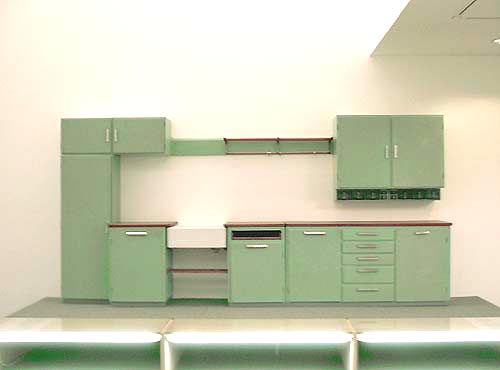
Piet Zwart in het Centraal Museum : 'standaardkeuken' (1935)Op weg naar het museum liet ik mijn camera op het trottoir vallen, verloor tweehonderd meter verder een stuk van mijn hak, kreeg in het museum een berisping omdat ik een foto maakte van de keuken en besmeurde de museumvloer met modder uit de museumtuin. Kortom, afgelopen dinsdag was ik in het Centraal Museum in Utrecht en zag de tentoonstelling ideaal ! wonen. Ik maakte er in het diepste geheim mijn foto's, de Volkskrant schreef erover in haar kunstbijlage:

"(...) moesten meubels degelijk, hygi?nisch, goedkoop te produceren en vooral effici?nt zijn. Als voorbeeld van die visie is in Utrecht de standaardkeuken te zien die Piet Zwart in 1935 ontwierp nadat hij nauwkeurig had opgemeten welke ruimte een huisvrouw nodig had."

In het Centraal Museum #1: de standaardkeuken van Piet Zwart - onlangs uitgeroepen tot "meest gezichtsbepalende ontwerper van de 20e eeuw" - anno 1938 en anno 2002.

Saturday, January 13, 2007

photoBooks on INTernet available now by Bint

Available now by Bint photoBooks on INternet : http://www.boekwinkeltjes.nl/bint


Schrijver Titel Uitgever Bijz. Prijs €
AARSMAN HANS Aarsman's Amsterdam first edition text in Dutch edition of 1000 copies Amsterdam, Boekhandel De Verbeelding 1993. orig cloth pictorial dustjacket 31 x 22 cm 132 pp 225.00
Aarsman Hans Rommert Boonstra Ton Broekhuis Inez van Lamsweeerde Hans van der Meer Harry Sengers VROEGE, BAS Groningen A - Z in fotos. Photos by Hans Aarsman, Rommert Boonstra, Ton Broekhuis, Inez van Lamsweeerde, Hans van der Meer, Harry Sengers and 27 other photographers first edition Edam, Paradox, 1997 orig photo-pictorial wrappers 29 x 29 cm 136 pp text in Dutch and English 30.00
AARSMAN, HANS Het engeltje dat op mijn tong pieste. Uitgegeven ter gelegenheid van het 125-jarig bestaan van Buteressence BV Zaandam 28 november 1995. Amsterdam, De Verbeelding, 1995 Paper covered boards, 19,5 x 14,5 cm., 61 pp. text in Dutch with illustrations in colour and b/w. Mi 5.00
Alphen Oscar van Morriën Adriaan Kinderen in de grote stad. Photographie Monographie Kinder 20. Jahrh. Den Haag / Internationale Uitgeverij Duphare 1958 / s. p. / OLw. / 26.5x20.4cm / b&w photographs 27.50
ANDRIESSE Emmy Dick Elffers CHARLES, J.B. Beeldroman. A novel in pictures with many mainly full page black and white photographs. Bert bakker / Daamen NV / Den Haag 1956 105 pp. No dust jacket 40.00
Andriesse Emmy C. Breijer Cas Oorthuys CPR Holtzapffel A. Hustinx J. Merkelbach E. Somers, R. Kok, H. Selier Fotografie in bezettingstijd Geschiedenis en beeldvorming met oa Emmy Andriesse C. Breijer Cas Oorthuys CPR Holtzapffel A. Hustinx J. Merkelbach etc. Waanders In samenwerking met: Nederlands Instituut voor Oorlogsdocumentatie, Amsterdam Paperback 96 paginas 18 kleurenfotos 100 zwart-witfotos 17.50
Andriesse, Emmy - Blazer, Carel - Oorthuys, Cas - Taconis, Krijn Tromp, Ir. Th. P. Verwoesting en wederopbouw. Revival of the Netherlands. Amsterdam / Contact 1946 / 104 p. / OHlwd. / met stofomslag / 28.5x23cm / with 171 photographs Zeitgeschichte - Nederlan 45.00
Ariëns, Catrien Curaçao : een eiland van zichzelf = un isla di su mes = an island of its own / fotos: Catrien Ariëns; tekst en voorwoord: Frank Martinus Arion; Engelse vert.: Sammy Herman; Papiamentu vert.: Stanley Braafheid Zutphen : Walburg Pers, 1999 136 p. : ill., 112 foto’s ; 24 x 28 cm. ISBN 90-5730-079-6 15.00
Austria Maria Ruth Liepman, Magda van Emde Boas, Ritsaert ten Cate Maria Austria. Samengesteld en vormgegeven door Kees Nieuwenhuijzen. Monographie - Theaterphotographie - Kinder - Portraitphotographie Amsterdam / uitgegeven door de bezige bij Amsterdam 1976 / s. p. / pb. / 28x23cm / 185 b&w photographs 20.00
Baart, Theo Hollandse interieurs/ Theo Baart [fotogr. en samenstelling/ fototeksten: Jan Willem Papo] Uitg. onder auspiciën van het maandblad Eigen Huis & Interieur [Haarlem] : De Spaarnestad 1995 [152] p 27×27 cm foto's 9070672065 30.00
BAART, THEO PORTNOY, ETHEL., RUTTEN, JAN. Wonen in Naoorlogse Wijken. Postwar housing in the Netherlands. In this unusual book, photographers [Theo Baart and Cary Markerink] offer their views on housing built after 1945 and the way people live there today. This theme produced two entirely di Amsterdam, Fragment, 1986 63 pages, numerous b&w illustrations, 8vo. text in English and Dutch. Cloth hardbound 15.00
Besnyo, Eva en Soest, Marjo van en Zande, Henny van der Meid, wat ben ik bewust geworden - Vijf jaar Dolle Mina Stichting Uitgeverij Dolle Mina Den Haag 1975 PB 166 paginas veel z/w fotos 20.00
BESNYÖ EVA Photography EVA BESNYÖ 'n halve eeuw werk Photography Grande Dame van de Nederlandse fotografie, In haar werk staan fotografische eigenschappen als scherpte, aandacht voor het detail en voor de afdruk centraal. Amsterdam, Sara, 1982 orig photo-pictorial wrappers 232 plates first edition 23 x 27 cm 45.00
BILDERS, GERARD - HOOGERVOORST, JOLANDA Gerard Bilders en het Geldersch Barbizon. Arnhem, Historisch Museum Het Burgerweeshuis, 1998. Illustrated boards, 19,8 x 22,6 cm., 56 pp. with 20 (colour.) plates. EDITION OF ONLY 400 COPIES. IS 20.00
Blazer Carel Zeeland Droog Middelburg, St. Kunst in Beweging Fanoy . 84 pp., gel. zachte band. 1e druk. 22 * 23 cm 15.00
Blazer Carel Max Dendermonde F.W. Michels Jurriaan Schrofer Willem Ruys. To see the world. Printed by Drukkerij Meijer NV, Wormerveer (offset). - Opdrachtgever: Koninklijke Rotterdamsche Lloyd NV (ingebruikneming). Rotterdam / [1961] / 59 p. / leporello / 19x15cm / 23 b&w photographs, 18 color 45.00
Blazer Carel Max Dendermonde Gerard Wernars The finishing touch: 100 jaar Twentsche Stoombleekerij NV Bedrijfsreportage en fotos van landschap en folklore. 7 b&w photographs / pentekeningen van tjaps). Printed by Drukkerij Meijer NV, Wormerveer (boekdruk). - Opdrachtgever: NV Twentsche Stoomblekerij (100-jarig bestaan). Goor / 1957 / 96 p. / hb. / 27x20cm / 94 b&w photographs, 2 color 25.00
Blazer Carel Max Dendermonde H.A.M.C. Dibbits Opland Mart Kempers Wegen naar morgen: Uitgave onder auspiciën van de Nederlandse Vereniging van Wegenbouwers Historische en eigentijdse documentaire fotos / vervoermiddelen, voertuigen in de moderne samenleving, autoraces, bermrecreatie, spoorwegaanleg, wegenbouw en st Printed by Drukkerij Meijer NV, Wormerveer (boekdruk, offset). - Opdrachtgever: Nederlandse Vereniging van Wegenbouwers (25-jarig bestaan). 1962 / 128 p. / hb. / 29x24cm / 114 b&w photographs 20.00
Blazer Carel Max Dendermonde Mart Kempers De zaak is rond: Een halve eeuw SKF in Nederland Bedrijfsreportage en documentaire fotos / toepassing van kogellagers binnen industrietakken, in communicatie en in het dagelijks verkeer 11 b&w photographs, 3 color / schematische tekeningen en encyclo Printed by Drukkerij Meijer NV, Wormerveer (boekdruk). - Opdrachtgever: NV Nederlandsche Maatschappij voor Kogellagers SKF (50-jarig bestaan) Delft / 1964 / 88 p. / hb., wrappers / 25x25cm / 43 b&w photographs, 20 color 25.00
Blazer Guermonprez Haas Kleijn van Moerkerken VIRULY,A.,JAN P.STRIJBOS EN D.L.DAALDER De Schoonheid van ons land.Deel I ,van Texel tot Walcheren. Photography of : Carel Blazer, Paul Guermonprez, Nico de Haas, Karel kleijn, E. van Moerkerken and others Amsterdam, Contacht, First Edition. Decorative Cloth, 4to - over 93/4" - 12" tall, Good/No Jacket, Ln.geb. XLVIII + 80 pag. afbeeldingen 15.00
BOCK MANFRED E.A. Berlage in Amsterdam. 54 Architectural Projects. Architectura & Natura. Arcam Pocket 4. 1992. 176 pp. Ills. Pocket 10.00
Boer Hans de Evert Zandstra M.A. Geuze Mart Kempers VCS: Gedenkboek bij het tienjarig bestaan van de Verenigde Coöperatieve Suikerfabrieken Dinteloord, Roosendaal, Zevenbergen Printed by NV Grafische Kunstinrichting J. van Poll Suykerbuyk, Roosendaal (boekdruk Dinteloord / 1957 / 122 p. / hb., 31x25cm / 166 b&w photographs met stofomslag 30.00
Boer Hans de Evert Zandstra Th. Boersma Mart Kempers Wiersum 50 jaar Wiersum. Bedrijfsreportage / rurale landschap, zaaien en dorsen, research en bestrijding in fruit- en bloemteelt, kantoren, staf en diensten). Printed by Drukkerij Have, Groningen (boekdruk). - Opdrachtgever: NV Landbouwbureau M. Wiersum (50-jarig bestaan). Groningen / 1959. / 108 p. / hb. / 29x25cm / 105 b&w photographs 25.00
Boom, Mattie Fotokunst 19de Eeuw 19th Century Photographic Art 116 masterpieces of photography from the 19th century. Taken from state collections and the print gallery of the Rijksmuseum in Amsterdam. William Henry Fox Talbot, Roger fenton, Giorgio Sommer, Wal SDU Uitgeverij 1989 Original Wraps 4to - over 9¾ - 12 tall. 198pp. Dutch/English over 100 bw duotone and 20 color 45.00
BOT, MARRIE - HEERMA VAN VOSS, A.J. Bezwaard Bestaan. Foto Rotterdam, Bot, 1989. Green cloth with pictorial dustjacket, 32,5 x 27,7 cm., 216 pp., introductory text with phot. 30.00
BROOS, KEES & FLIP BOOL Besnyö Kiljan Domela Schuitema Zwart Citroen Suschitzky Blazer Oorthuys Wolf Rose Salomon De Nieuwe Fotografie in Nederland Contributions on: Emmy Andriesse, Eva Besnyö, Carel Blazer, Erwin Blumenfeld, Paul Citroen, Theo van Doesburg, Wally Elenbaas, Dick Elffers, Emiel van Moerkerken, Cas Oorthuys, Erich Salomon, Paul Schuitema, Piet Zwa Amsterdam, Fragment Uitgeverij 1989. Cloth, illustrated dustwrappers, 26,7 x 24 cm., 143 pp. text in Dutch with illustrations and p 35.00
Brusse Molkenboer Poll Douw Speekhout, G. Fotokunst 1943/44. Fine. inter alia photos of Berssenbrugge, Moerkerk, van de Poll. Hengelo., Smit., 1944. 31 x 24 cms, ii p. text, lxiv p. with plates, where of viii in colour, 21 p.text. Hcloth. 15.00
Buitenweg Hein Kind in Tempo Doeloe. A photographic account of children's daily life in so-called Tempo Doeloe, old colonial Indonesia. Wassenaar, Servire, 1969 Square sm. 8°. Original cloth, dustjacket. 144pp. Many black/white ills., of which full-page, after 20.00
Clarijs Jojanneke Friso Kramer Kho Liang Visser Premsela Spectrum Moderne meubelvormgeving en naoorlogs idealisme Dutch/English summary 112 pp / 285 x 240 mm / hardcover 15.00
Claxton & Berendt, William & Joachim E Jazzlife. Auf Den Spuren Des Jazz. 1961. A very nice copy of this important collaboration of pictures and words of the world of jazz by two of the key jazz journalists of the 1950's, William Claxton and Joachim Berendt. Profusely illustrated and beau Offenburg (Baden), Germany: Burda Druck und Verlag. 1961. (First edition). Quarto. Gilt titled black cloth with "U.S. of Jazz" map front endpapers. No dustjacket. 90.00
COPPENS MARTIEN OTTO DONKERS H. PIRENNE Mensen en Dieren op de Bossche Veemarkt. Layout door Martien Coppens. Zuid-nederlandsche Drukkerij s-Hertogenbosch 1975 (ZB, geb., 72 pag., 2de druk) 15.00
Coppens Martien Ad Bevers Bouwondernemers bouwen. Bedrijfsreportage en documentaire fotos / beeld van werklieden op de bouwplaats en in de steigers, voorbeelden van naoorlogse woningbouw 14 b&w photographs / plattegronden en een register van aannemers. Printed by NV Drukkerij Levisson, Den Haag (boekdruk). - Opdrachtgever: Nederlandsche Bond van Bouwondernemers (25-jarig bestaan). - Voornamelijk een stalenboek van Nederlandse naoorlogse woningbouw. Den Haag / 1958 / 168 p. / hb. / 29x22cm / 176 b&w photographs 35.00
Coppens Martien Ad Bevers H.A.C.M. van Grunsven Wilma Weert 1939-1964. Documentaire fotos / leefgemeenschappen in nieuwbouw, industrieel bouwen, aanleg van tuinsteden. Printer unknown (boekdruk). - Opdrachtgever: Wilma (25-jarig bestaan). Weert / 1964 / 184 p. / hb., wrappers / 31x25cm / 129 b&w photographs Grensgeval tussen beeldverhaa 35.00
Coppens Martien Max Dendermonde J.A. de Roy van Zuydewijn C.J.M. Dams H.J. Manie Mart Kempers Land onder stroom: NV PNEM 1914-1964. Bedrijfsreportage en documentaire fotos / landschap, stedenschoon, hoogspanningsmasten, elektriciteitscentrales, stroomvoorziening in het openbare leven Printed by Drukkerij Meijer NV, Wormerveer (boekdruk, offset). - Opdrachtgever: Provinciale Noordbrabantsche Electriciteits-Maatschappij PNEM (50-jarig bestaan). 's-Hertogenbosch / 1964 / 192 p. / hb., wrappers / 28x25cm / 109 b&w photographs, 8 color 15.00
Coppens Zoetmulder Rotgans Helfferich, D. Nederlands jaarboek voor fotokunst 1947. Uitgave en druk Smit, Hengelo. Redactie G.J. Speekhout. Boards. Illustr. in col and b/w. With advertismensts.Text in Dutch. 15.00
COPPENS, MARTIEN Koorbanken in Nederland. Fotografisch gezien en ingeleid door Martien Coppens. Barok. Martien Coppens was responsible for a number of topographical photobooks during the 1930s and 1940s, documenting the architecture, landscape and art of his native B Amst./ Brussel, Elsevier 11 pp. text. 69 plts. Half cloth/ boards/ Dustjacket 30.00
Cornelius Violette, Cas Oorthuys Ed van Wijk, J. Algera, F. W. J. Crebas, M. Boetje. Ed. C. H. W. d Artillac Brill, W.F. Gouwe , Bob de Wit, W. J. van Borselen Otto Treumann PTT 1893-1953: PTT. Archiefmateriaal en actuele fotos gemaakt in opdracht wisselen elkaar af. Productfoto en bedrijfsreportage / apparatuur en PTT mensen in hun werksituaties) 56 b&w photographs, uit bedrijfsarchief / postzegels, prenten Printed by Staatsdrukkerij- en Uitgeverijbedrijf SDU, Den Haag (boekdruk). - Opdrachtgever: Staatsbedrijf der PTT (60-jarig bestaan). Den Haag / 1954 / 324 p. / hb. / 27x27cm / 345 b&w photographs 35.00
Dekkers Ger Harriët Freezer H.M. Stegeman Kees van Barneveld N.H. van Heek Van bombazijn tot fluweel: honderd jaar Schuttersveld. Not only commemmorating the centenary of Schuttersveld fabrics (Van Heek & Sons, Enschede, The Netherlands), but also reviewing the history and development of 17th century bombazine to velvet fab Printed by NV Drukkerij v/h FA. M. J. van der Loeff, Enschedé (boekdruk). - Opdrachtgever: Gebroeders van Heek op het Schuttersveld (100-jarig bestaan). Enschede / 1959 / 103 p. / hb. / 25x22cm / 58 b&w photographs, 22 color 30.00
dOliveira Jaap F.J. Philips J.J. Vriend Reynders Jan van Keulen Bouwen als sociale daad: 50 jaar woningbouw Philips Documentaire fotos / tuindorpen, rurale landschappen, woningen en winkels 15 b&w photographs, 16 color / pentekeningen, prent, wandschildering: J.M. van F. Leger, tekening van V. van Gogh, colorvlak Printed by Verweij, Mijdrecht (boekdruk). - Opdrachtgever: Philips Woningbouwbureau (50-jarig bestaan). Eindhoven / s. a. [1960] / 126 p. / cb. [what does this mean?] hb., wrappers / 29x23cm / 89 b&w phot 25.00
Eilers Bernard F. Maatschappij tot Exploitatie van Staats Spoorwegen 1863-1913. Reprint. Productfotografie en documentaire fotos / treinen, aanzichten en interieuropnamen van werkplaatsen en stations, landschappen en havengezichten. Printed by Uitgever Noorderboek Groningen - Opdrachtgever: Maatschappij tot exploitatie van Staatsspoorwegen (50-jarig bestaan). Utrecht / Heruitgave 1986 (1913) / 134 p. / hc. / 24x33cm / 124 b&w photographs in opdracht en uit b 35.00
Eilers Bernard F. Nederland: uitgegeven door de My tot Exploitatie van Staats Spoorwegen 1915. Documentaire fotos / landschap en stedenschoon en recreatie in de provincies, Nederland in mobilisatie. Landkaarten, logo\s / wapens van provincies, emblemen van Staatsspoo Printed by Nederlandsche Rotogravure Mij, Leiden (rotatiediepdruk). - Opdrachtgever: Staatsspoorwegen (public relations / information). Utrecht / 1915 / 66 p. / Sewn paperback / 21x30cm / 119 b&w photographs, 10 color 65.00
Elsken Ed Ata Kando Nico Jesse Dolf Toussaint Haveman Mariëtte Zwarte Rook Fotografie en steenkool in de twintigste eeuw Frits Gierstberg Paul van de Laar en Loek Kreukels NAi Uitgevers i.s.m. het Nederlands Foto Instituut Paperback, ing., geïllustreerd (kleur en zw/w), 168 pagina 15.00
Elsken Ed van der J. A. van Dongen Wereldreis in fotos 1, 2, 3 & 4 Filmisch scenario. De uitgave, in 4 delen, is op verschillende momenten verschenen. Deel 1 is in maart 1967 uitgebracht, deel 4 als nieuwjaarsgeschenk voor 1968. In de fotoboekjes wordt het bedrijf zelf niet belicht, m Coöperatieve Condensfabriek Friesland, 1967-1968 Leeuwarden / 1967-1968 / 52 p / pb. (sewn) / 25x25cm / 57 b&w photographs (deel 1), 45 b&w photograp 90.00
Elsken Ed van der Jelle van der Velde Hans Brink Natlab Bedrijfsboek voor het Natlab van Philips in Eindhoven. Ed van der Elsken had, niet alleen binnen zijn vakgebied, maar ook algemeen een grote interesse in techniek. Daarbij kwam zijn bewondering voor de volharding waarmee de mensen van het Natl Eindhoven, Philips Natuurkundig Laboratorium (1989) Formaat: 22,5 x 22,5cm 66 bladzijden 75.00
Elsken Ed van der Mattheus Engel Cor Jaring Philip Mechanicus Hans Pelgrom Koen Wessing Vrouwen van Amsterdam Amsterdam, Foton 1970 paperbound, soft cover, 4to 28 pp. text, ca. 100 photogr. plates (b/w and colour) 12.50
Elsken Ed van der Max Dendermonde Carel Blazer Cas Oorthuys Cor van Weele E. Dukkers Aad Feldhoen Mart Kempers Frits Müller B. Witteveen H. Bartels Peter van Straaten De wereld van vandaag: Na vijftig jaar Vredestein. Documentaire fotos / toepassing van rubber in industrie, wetenschappelijk onderzoek, woningbouw en het dagelijks leven. Printed by Drukkerij Meijer NV, Wormerveer (boekdruk, offset). -. Opdrachtgever: NV Rubberfabriek Vredestein (50-jarig bestaan). Loosduinen / 1959 / 64 p. / pb. (sewn) / 25x21cm / 21 b&w photographs, 2 color 30.00
Elsken Ed van der Paul Rodenko G.S.K. Blaauw J.F. ten Doesschate P.R. Bentz van den Berg P. van Delden Violette Cornelius Paul Huf Cas Oorthuys Ata Kando Jan H. V Vuur aan zee. Bedrijfsreportage, documentaire en suggestieve fotos / Hoogovens in bedrijf en werknemers). 5 b&w photographs / technische tekeningen en een komische filmstrip. Printed by Drukkerij Meijer NV, Wormerveer (offset). - Opdrachtgever: De Koninklijke Nederlandsche Hoogovens en Staalfabrieken NV (afscheid). IJmuiden / 1958 / 80 p. / white hardcovers, / 31x25cm / 46 b&w photographs, 8 color 70.00
Elsken Karsh Design and printing in the netherlands 1960 Design and printing in the netherlands 1960 Essentially a large sales brochure for the Dutch printing industry, with numerous specimens from various firms. Well illustrated in color. Binding is 4to., stiff paper wrappers. 27+(1) pages, followed by approx. 10.00
ELSKEN, ED VAN DER De ontdekking van Japan. Loosely INSERTED, as issued, a booklet, 28,5 x 24 cm., 36 pp. text in Dutch with numerous b/w illustrations. Amsterdam, Fragment, 1988. Cloth decorated with a red circular shape, illustrated dustjacket, 30,6 x 30,5 cm., 154 pp. with pho 325.00
ELSKEN, ED VAN DER Once upon a time. Bibliography by Joke Pronk and Evelyn de Regt. A retrospective of Van der Elsken Amsterdam, Fragment, 1991. Cloth, illustrated silver foiled dustjacket & endpapers, 30,9 x 30,4 cm., silver foil front endpaper 120.00
Goldberg Jim Parr II Photography Raised by wolves Kurzinfo: Goldbergs now phamous book about Runaways in the US. Portraits, bed stuff, objects, letters (all that in pictures) plus interviews and facsimile writing by youngsters who do not write much. It's not Weegee and not Larry Cla Verlag: Scalo Ort: Zuerich Sprache: Englisch ISBN: 1881616509 Format: 30,5 X 22,8 cm Seiten: 320 Gewicht: 1300 g Erschienen: 1995 Einband: Paperb 75.00
GRAAF, H.J. DE Ambon in oude ansichten. Ambon is een eiland in de Molukken, vlakbij Ceram. Het heeft een oppervlakte van 761 km² en het hoogste punt is 1038 meter. De belangrijkste stad op het eiland heet eveneens Ambon. 2th edition. Zaltbommel, 1972 sm. oblong 8°. orig. cloth, illustr. pasted on upper boards. [2]pp. of introd. text, 76 facsim. plat 20.00
Heymans Max Emmy Huf Andriesse Dukkers Huf Spoon Raviez FASHION Max Heymans. Emmy Andriesse, Kors van Bennekom, Fred Bromet, Barton van Flijmen, Hans Dukkers, Paul Huf, Sherry Kamp, Jan Keja, Sicco Kingma, Theo Noort, Ir. C. Spoon, Ed Suister en Steye Raviez Tiebosch Uitgevers Maatschappij NV Amsterdam 1983 45.00
Huf Paul R. Forbes S.L. Mansholt; D. Kamp Ton Raateland Een kwart eeuw TNO 1932-1957: Gedenkboek bij de voltooiing van de eerste 25 jaar werkzaamheid van de organisatie TNO. Portretten, bedrijfsreportage en geënsceneerde fotos / personeel, burelen, laboratoriumonderzoek, testsituaties Printed by Drukkerij Semper Avanti, Den Haag (boekdruk en koperdiepdruk). - Opdrachtgever: Nederlandse Organisatie voor Toegepast-Natuurwetenschappelijk Onderzoek TNO (25-jarig bestaan). Den Haag / 1957 / 184 p. / hb. / 29x22cm / 73 b&w photographs 15.00
Huf Paul Highlights Huf was een zeer succesvol mode- en reclamefotograaf. Hij was het creatieve brein achter een groot aantal succesvolle reclamecampagnes voor uiteenlopende producten; de platenhoezen voor Philips met fotos van het model Anne Pickford en de c Eindhoven: Kempen, 1995 30x24,5 p. Orig. photo dec. wrappers, illustr. b/w and color photographs, 127 p. 3.50
Huf Poll Rotgans Smit Brusse SPEEKHOUT, G. J. Nederlandsch Jaarboek Voor Fotokunst 1944/46 Photographic Annual, covering more than a single year, from wartime Netherlands. 32pp, 64 b&w and color photo plates, advertising. 15.00
HUISMAN, JAAP Gispen, Bruynzeel, Martin Visser, Rietveld, Piet Zwart /IERENE CIERAAD/KARIN GAILLARD/ROB VAN ENGLESDORP GASTELAARS Honderd jaar wonen in Nederland 1900-2000. is in de eerste plaats een fantastisch plaatjesboek van allerlei interieurs. De foto’s proberen een indruk te geven van de materiële leefwereld van de Nederlanders in de twintigste eeuw. Dit boek laat zien h Rotterdam, Uitgeverij 010, 2000 Illustrated boards (hardcover), 23,8 x 17,5 cms., 256 pp. with numerous illustrations, partly in col 20.00
JARING, COR De Amsterdamse Haven. The Port of Amsterdam. Amersfoort, Bekking. 2001. Hard Cover. Nieuwstaat 12.50
JASPER, J.E.; PIRNGADIE, MAS De Inlandsche Kunstnijverheid in Nederlandsch Indie. I.: Het Vlechtwerk Facsimile reprint of this famous standard work on Indonesian arts and crafts; volume 1: plaiting (rattan, bamboo, palmleave, grasses, etc.); richly illustrated; NL modern red cloth (gold lettering), 4to 240 pp text, 88 plates, XL pp. index, 369 ills. Monnikendam, 1998, (facsimile reprint of: Den Haag, Mouton, 1912) fullpage colour plates; good cond 45.00
Jonker Henk Herman Hofhuizen de Vet en Creton Shot 65. Opdrachtgever: De Katholieke Radio Omroep (40-jarig bestaan). - Beeldverhaal. De fotopocket brengt in beeld hoe mensen voor en achter de schermen samenwerken aan de productie van radio- en televisieprogrammas. Achterin de uitgave is een toel Printed by Joh. Enschedé en Zonen, Haarlem (diepdruk). bedrijfsreportage en theaterfotografie / productie van radio en televisieprogrammas Hilversum / 1965 / 96 p. / paperback / 18x12cm / 78 b&w photographs 15.00
Keuken Johan van der Emile van Moerkerken A. Verburg Victor Meeussen Leonard Freed en E. Munks Stoottroep van Christus. Jubileumuitgave van het Nationaal Hoofdkwartier bij het 75-jarig bestaan van het Leger des Heils in Nederland Kleine fotoseries zijn in de vorm van filmstroken gepresenteerd. Rode colorvlakken en kapitalen ondersteunen de bon Printed by (diepdruk). - Opdrachtgever: (75-jarig bestaan). Amsterdam / 1962 / 72 p. / hb. / 23x18cm / 132/ portretten en documentaire fotos 15.00
KEUKEN, JOAN VAN DER S. Carmiggelt Martin Parr Wij zijn 17. Text by S. Carmiggelt. First book by Joan van der Keuken. Pictures were made and published when he was 17 years old. Uitgave Paul Andriesse Amsterdam Edition 2005 16 x 24 cm 35.00
Kleijn RITTER JR. DR. P.H. VEEN, PROF.DR. H.N. TER De schoonheid van ons land, deel IV: Rondom de Zuiderzee Uitgeverij Contact, Amsterdam Gebonden, hardcover; 120pp 15.00
Klein Aart S.A. Leeflang W. Hijmans Hans Samsom Joop de Nijs Philips: Professioneel Profiel. Bedrijfsreportage / atoomfysica en ruimteonderzoek, verkeersleiding op Schiphol, controle- en weegsystemen, ziekenhuisapparatuur, administratieve automatisering, grootbeeldprojectie, sport en ontspanning. Printed by Meijer Wormerveer NV, Wormerveer (offset). Opdrachtgever: Philips Nederland NV (voorlichting). Philips Nederland NV, 1970. / Wormerveer / 1970 / 118 p / hb., wrappers / 27x27cm / 84 b&w photograp 15.00
Klein Aart A. Alberts Hans Barvelink Semper mare navigandum: De zee moet steeds bevaren worden. NV Stoomvaart Maatschappij Nederland. bedrijfsreportage / historische en eigentijdse fotos brengen in beeld hoe door de eeuwen heen de zeeën werden bevaren. Printed by Drukkerij en uitgeverij v/h C de Boer NV, Hilversum (offset) for the 100th anniversary of shipping line NV Stoomvaart Maatschappij Nederland. 1970. / Amsterdam / 1970 / 72 p. / pb. (sewn) / 30x21cm / 106 b&w photographs, 9 color 22.50
Klein Aart A. Alberts P. van Koppen Hans Barvelink Een eeuw in beweging. Documentaire fotos / industriële vooruitgang, dagelijks leven en recreatie). 27 b&w photographs, 12 color / reproducties Printed by Koninklijke Drukkerij G. J. Thieme NV, Nijmegen (boekdruk). - Opdrachtgever: Koninklijke Machinefabriek Stork NV (100-jarig bestaan). Hengelo / 1968 / 56 p. / pb. (sewn) / 23x19cm / 33 b&w photographs 25.00
KLEIN, AART Delta. Poort van Europa. Inleiding Sj. Groenman. The Dutch Delta area which developed as a gatekeeper for the European hinterland Amersfoort (NV Uitgeverij A. Roelofs van Goor) n.d. unpag.; 1st edition 1963 (geen omslag) 15.00
Klein, Aart & Graftdijk, Klaas Delta. Stromenland in beweging. Land im Fluß. Currents to future. Desafio al mar. Foto¹s, Bilder, photographs, fotografia Aart Klein. Tekst, texto Klaas Graftdijk. Inleiding, Einführung, introduction, introducción Prof. Dr. Sj. Groenman Amersfoort / Roelofs van Goor / s. a. / 184 p. / OLw. / 30.8x27cm / Tiefdruckabb 1970 15.00
Klein, Aart Hofland, H.J.A Aart Klein. Amsterdam gefotografeerd 1944-1996 De fotos van Aart Klein dragen onmiskenbaar zijn signatuur: formele maar poëtische wit-zwart fotografie. Klein benadrukt de volgorde wit-zwart, want voor hem is licht het beeldend middel en fotograferen Amsterdam, De Verbeelding, 1996 Stiff pictorial wrappers, 21,5 x 22,5 cm., unpag., numerous b/w phot. plates. As new. ISBN: 90741591 10.00
Knaap, Gerrit CEPHAS, YOGYAKARTA. PHOTOGRAPHY IN THE SERVICE OF THE SULTAN Presents over 100 b/w plates produced by the Javanese photographer Kassian Cephas (1845-1912) and drawn mainly from the collection of the KITLV in Leiden, The Netherlands, introducing the Leiden, 1999 136 pp.; Cloth. 30.00
Kruger Dolf Eens Zuiderzee Tekst in het Nederlands en Engels Uitg. ter gelegenheid van de uitreiking van de Zuiderzeeprijs van de Vereniging van Vrienden van het Zuiderzeemuseum aan de fotograaf Dolf Kruger in 1988 Amsterdam : Fragment 1988 96 p. : fotos. ; 22×22 cm 90-6579-025-X 20.00
KRUGER DOLF BOOL FLIP Dolf Kruger Fotografie 1948 - 1984. Amsterdam, Fragment 1987. Stiff wrappers, 28 x 28,1 cm., unpag. with 114 phot. b/w plates. 45.00
Kruger Dolf Jan Mastenbroek Ko Kwinkelenberg Op de toekomst gebouwd: 65 jaar n.v. Aannemersbedrijf v/h Tiemstra & Zn Nijmegen. Kenmerken van woord-beeld-equivalent en productcatalogus. Op de toekomst gebouwd is verwant aan promotionele uitgaven ter bevordering van industriële vestiging in gemee Opdrachtgever: NV Aannemersbedrijf v/h G.Tiemstra & zn; 65-jarig bestaan. Nijmegen / 1968 / 57 p. / hb. / 25x22cm / 64 b&w photographs / in opdracht en uit bedrijfsarchief / 20.00
LAUWERIKS, J.L. MATHIEU - TUMMERS, NIC. H.M J.L. Mathieu Lauweriks. Zijn werk en zijn invloed op architectuur en vormgeving rond 1910:"De Hagener Impuls". Hilversum, Nederlands Uitgeverscentrum 1968. Soft boards with decorated wrappers, 31,6 x 23,7 cm., 72 pp. text in Dutch with 140 illustrati 55.00
Leijerzapf, I.Th., E. Barents, F. Bool & K. Broos (ed.) Fotografie in Nederland 1839 1975 (3 vol) Photography vol. I: 1839-1920, 112 pp. t vol III: 133 pp. with over 200 ills. in colour and b/w. 's-Gravenhage, Staatsuitgeverij 1978-1979 encyclopaedic (complete) set on Dutch photographers. Dec. stiff wrappers, 27,4 x 20,7 cm., 75.00
List Herbert Photographs from the 1930s List is best known for his homoerotic images of young men, on the beaches of Germanys Baltic coast and later the Mediterranean. Ausstellungskatalog, Robert Miller Gallery, New York 25 S., 11 Abb., Softback, the book is in very good condition 5.00
Lixenberg Dana Offstage. Het Nationale Balet Gezien Door Dana Lixenberg Fotoboek over het leven achter de schermen van het Nationale Ballet bij het 40-jarig jubileum in 2001. Tekst in het Engels en Nederlands. - Uitg. ter gelegenheid van het 40-jarig jubileum van H Amsterdam:: Het Muziektheater 2001. 4to. (11.5 x 9.5 inches). Unpaginated. Colour photo illusts. Pictorial card wrappers, small bu 15.00
MANEN, BERTIEN VAN Vrouwen te gast A Hundred Summers Photography Amsterdam, Feministische Uitgeverij Sara 1979. Illustrated stiff boards, 20 x 22,5 cm., 178 pp. text in Dutch (by M. van Manen) with phot. pl 20.00
Manen, Bertien van East wind west wind. "...For a Dutch photographer to have found her way into the intimate corners of Chinese lives must have taken more than that Amsterdam, De Verbeelding, 2001 240 pagina's / garengenaaid gebrocheerd / 110 fotos in kleur / ISBN 90 74159 36 2 30.00
Meer Hans van der Amsterdams verkeer / Amsterdam Traffic In opdracht van de Gemeente Amsterdam fotografeerde Hans van der Meer de dagelijkse verkeerschaos in Amsterdam. Niet met veroordelende, maar met verbaasde blik: hoe chaotisch het ook lijkt, toch manoevreert alle Amsterdam de Verbeelding 80 pagina's / gebonden / 40 panorama-foto's / ISBN 90 74159 26 5 10.00
Mikhailov Boris Parr II Photography CASE HISTORY Landmark collection of photographs on post-Soviet Ukraine. One of the most important photography books of the last decade of the 20th century. The First Hardcover Edition. Precedes and should not be confused with all other subsequent edi Zurich, Switzerland: Scalo, 1999 Hardcover. First Edition. First Printing. 478 pages. New Dust Jacket. 45.00
Moerkerken, E. van S. Carmiggelt Reportages in licht en schaduw Amsterdam / G. A. van Oorschot 1947 / 4 p. text plus plates / OLw. / 106 ill met stofomslag 70.00
NIEUWENHUYS, R.(ps.: E. Breton de Nijs, Semarang 1908-Amsterdam 1999) Komen en Blijven. Tempo Doeloe-een verzonken wereld. Fotografische documenten uit het oude Indië 1870-1920. Amsterdam, 1998. 2nd revised edition, Small 4 , cloth, soft cover original pictorial glossy dj., 192pp. Many plates after old photos with text in Dutch, describing the so-called "Tempo Doeloe" period in t 15.00
OLAF ERWIN Mapplethorpe Avedon Witkin CHESSMEN Bizar, erotisch, symbolisch en fascinerend —zo heeft de internationaal erkende fotograaf Erwin Olaf de 32 schaakstukken in beeld gebracht. Chessmen, het eerste fotoboek van Erwin Olaf, bezorgde de fotograaf in 1989 de International Prize for Focus media 72 pagina’s, 30 x 30 cm, paperback, 32 plates in duotone 35.00
OLAF, ERWIN - LUIJTERS, GUUS. Stadsgezichten van Erwin Olaf en Fragmenten uit: Het Amsterdamse Dromenboek van Guus Luijters, met een inleiding van Hans van Manen. Erwin Olaf, een bekende Nederlandse fotograaf, werd 2 juni 1959 te Hilversum geboren als Erwin Olaf Springveld. Erwin Amsterdam, De Woelrat, 1985. Illustrated boards, 24,2 x 16,9 cm., unnumb. (34) pp. text in Dutch with b/w photographic illustrati 35.00
Oorthuys Cas Maltha, D.J. Landbouw. As no other photographer, Cas Oorthuys has expressed the growing self-confidence of the Dutch in the period of post-war reconstruction. His photographs show the restoration of the industry, hard-working Holland on the road to a society with Amsterdam, Contact, 1946 pp. 144, fine full-page photo-illustrations in text, 4to, cloth-backed boards. Agrarisch fonds 20.00
OORTHUYS CAS 1944-45 het laatste jaar. Een verslag in foto's over onderdrukking en bevrijding. Amsterdam. Uitgeverij Contact 1970. Paperback met omslag 30.00
Oorthuys Cas A.F. Kamp P.H. Goede Charlotte van Regteren Altena Mia Pot-van Regteren Altena s Konings Oudste Dogter. Kleine geschiedenis nopens wedervaren en onderkomen van De Nederlandsche Bank. Documentaire fotos / bouw, gevelaanzichten, interieuropnamen, luchtfotos) 11 color / schematische tekeningen en potloodtekeningen / bankhuizen, st Opdrachtgever: (ingebruikneming). Amsterdam, / 1968 / 142 p. / hb. / 27x20cm / 51 b&w photographs 20.00
Oorthuys Cas Bert Schierbeek C. Blok e.a. Mart Kempers. Taal & teken. De tekst is gezet uit de Baskerville. B. Schierbeek beschrijft de tekens van macht en onmacht op aarde. In woord en beeld wordt gewezen op de verworvenheden van de jaren vijftig en zestig: wereldreizen, industrialisatie, automatisering, Printed by Drukkerij Confiance, Amsterdam; Nederlandse Rotogravure Maatschappij NV, Leiden (boekdruk, koperdiepdruk). - Opdrachtgever: Vereniging ter bevordering van de belangen des Boekhandels (150-j Amsterdam / 1965 / 80 p. / pb. (sewn) / 28x20cm / 45 b&w photographs, 7 color, uit archief van fotog 15.00
Oorthuys Cas Bert Schierbeek Melle Jurriaan Schrofer De draad van het verhaal. Bedrijfsreportage en documentaire fotos / productieproces en alledaagse leven 2 b&w photographs, 3 color, in opdracht en uit niet-particulier archief / prent / stadsgezicht. Printed by Drukkerij Meijer NV, Wormerveer (boekdruk en offset). - Opdrachtgever: Koninklijke Textielfabrieken Nijverdal-Ten Cate NV (200-jarig bestaan). Almelo / 1960 / 76 p. / hb., celluloid cover / 31x25cm / 92 b&w photographs, 2 color 22.50
Oorthuys Cas Gerrit Kouwenaar Jan Mastenbroek Amsterdam onze hoofdstad. Een fotoboek van Cas Oorthuys. Amsterdam Contact uitgeverij 31x28 cm. b/w and color photographs, 34 p., 307 photogr. 15.00
Oorthuys Cas Hans Andreus Ko Kwinkelenberg 125 jaar ter Horst 1855-1960: 125 jaar. De uitgave opent als een fotoboek over landschap en stedenschoon, dan volgt een direct en toegankelijk beeldverhaal over de jute-verwerking van-grondstof-tot-eindproduct, waarin de relatie mens-machine centraal Printed by Drukkerij Meijer NV, Wormerveer (boekdruk). - Opdrachtgever: Koninklijke Jutespinnerij en -Weverij ter Horst & Co NV (125-jarig bestaan). Rijssen / 1960 / 68 p. / hb. / 27x23cm / 65 b&w and 4 color photographs 20.00
Oorthuys Cas M. A. Asselberghs Gerard Douwe H. Schaafsma Jaap Romijn Piet Kemp Conrad Busken Huet, Frans Coenen Simon Carmiggelt De trein hoort erbij: Ter gelegenheid van het 125-jarig bestaan van de Spoorwegen in Nederland. Fotopocket. De onderschriften bij de foto's lopen door over de pagina's en versterken de verhaallijn. Dynamische foto's van Cas Oorthuys zijn tot stand ge Printed by A.W. Bruna & Zoon, Utrecht (boekdruk, diepdruk). - Opdrachtgever: NV Nederlandse Spoorwegen NS (125-jarig bestaan). Utrecht / 1964 / 160 p. / paperback / 18x12cm / 53 b&w photographs, 6 color 10.00
Oorthuys Cas Max Dendermonde C. Vosmaer Ko Kwinkelenberg Samen leven met het leven: gezondheidsorganisatie tno Bedrijfsreportage / wetenschappelijk onderzoek en onderzoekssituaties in tno instituten) 3 b&w photographs / pentekeningen / wezel, hamster en konijn, industrieel landschap en medicijnen) Drukkerij Meijer NV, Wormerveer (boekdruk). - Opdrachtgever: Gezondheidsorganisatie TNO (ingebruikneming). Den Haag / 1966 / 125 p. / hb., wrappers / 26x23cm / 79 b&w photographs 20.00
Oorthuys Windig Huf Blazer Helfferich, D. Nederlands jaarboek voor fotokunst 1948 - 49. Redactie D. Helfferich. Amsterdam/ Hengelo / Stedelijk Museum/ Smit / 1948 hb. / b&w and color ill. / NN / Jahrbuch / Photographie - Monographie - 20. Jahrh. / With advertisem 20.00
OORTHUYS, CAS - HEKKING, S.. Cas Oorthuys. fotograaf 1908-1975. De Geschiedenis van de Nederlandse Fotografie 2. Amsterdam, Fragment Uitgeverij 1982. Illustrated boards, 30,4 x 21,6 cm., 167 pp., of which 35 photographic plates in b/w and other 35.00
Oorthuys, Cas J.W. de Boer Rotterdam, dynamische stad. As no other photographer, Cas Oorthuys has expressed the growing self-confidence of the Dutch in the period of post-war reconstruction. His photographs show the restoration of the industry, hard-working Holland on the road Amsterdam, Contact, (1959). 35 pp. introduction and index and 236 gravure reproductions of Oorthuys' captivating photographs of 30.00
OORTHUYS,CAS. KELK,C.J. Nederland in foto's / the Netherlands in photographs / les Pays-Bas en photos / die Niederlände in Fotos. As no other photographer, Cas Oorthuys has expressed the growing self-confidence of the Dutch in the period of post-war reconstruction. His pho Amst. & Antwerpen, 1955 116 pp. With photographs by Cas Oorthuys. Boards with dustjacket. 15.00
OVINK, G.W. Het aanzien van de eeuw, de periode 1856-1956 weerspiegeld in 950 illustraties uit de voornaamste Nederlandse familiebladen [Haarlem Drukkerij De Spaarnestad 1956] Haarlem 1956. 325pp. Illus. in b/w 60.00
PERESS, GILLES Farewell to Bosnia : Mit e. Nachw. v. Giles Peress... b/w photographic swan song to Bosnia. Black and white photo- essay - sustained poignant, harrowing, insightful, unflinching, emotional elegy to Bosnia. Zürich, Germany:, Scalo Verlag AG,, 1994.. First edition. Hard Cover. Large heavy hardback volume; as new. 25.00


Schrijver Titel Uitgever Bijz. Prijs € Bestellen
PERESS, GILLES Telex Iran. Photographs by Gilles Peress. Twelve years after Gilles Peress Munich, 1996 102pp., 100 duotone illustrations, 10½x15". In English. As New. HB Hardbound. 25.00 Bint
Poll Willem van de J. Luger H. Halbertsma J.F. Doeve De Kof gaet voor de baet uit: Een verhaal over hout. Het boek bevat aflopende foto's en fotomontages en slaat een brug tussen de stijlprincipes van de Nieuwe Fotografie en de eerste golf naoorlogse bedrijfsfotoboeken. Printed by Ervaco, Den Haag (boekdruk). - Opdrachtgever: NV Halbertsma fabrieken (50-jarig bestaan). Grouw / 1941 / 59 p. / hb. / 33x24cm / 40 b&w photographs 50.00 Bint
Posthuma de Boer, Eddy & Blokker, Jan Klein gedenkboek van liefde en haat. Confronting photographs of public expressions of pro's and con's the Dutch monarchy. Pb. Good. 4to, oblong. Orig. wrappers, illustr. b/w, c. 105 p. 10.00 Bint
RIJK TIMO DE Artifort Bruynzeel Pastoe Gispen LOV Metz Tomado DESIGNERS IN NEDERLAND Een eeuw productvormgeving. Samengesteld met medewerking van Wim Pijbes. ADO, Ahrend, Karel de Bazel, H.P. Berlage, Jan des Bouvrie, Brabantia, Bruynzeel, Theo Colenbrander, Andries Copier, Wim Crouwel, Curver, Gebr. Das, Droog Ludion, 2003. 1e druk 432 pp. Origineel Gebonden flexibele band. 24,5 x 17,5 cm. ISBN: 9076588481. Omslagfoto: Ell 20.00 Bint
RIJK, TIMO DE Design Inventum Erres Philips Daalderop HET ELEKTRISCHE HUIS Vormgeving en acceptatie van elektrische huishoudelijke apparaten in Nederland. Koninklijke Inventum. Koninklijke Metaalwarenfabriek Daalderop. Erres, Van der Heem en Stokvis. Thabur, Rubli en Ruton. Philips Rotterdam, Uitgeverij 010 Publishers, 1998. 1e druk. Paperback/ingenaaid/flappen, 24cmx17cm 20.00 Bint
Roodenburg Linda Demmeni Kurkdjian Photography Dutch East West Indies Anceaux's Glasses Anthropological photography since 1860 Waanders Paperback 192 pagina's 150 zwart-witfoto's Nederlands / Engels 20.00 Bint
Rotterdamsche Lloyd Willem Ruys Passengerrooms Design Eschauzier, F.A. - Werf, Jouke van der F.A. Eschauzier 1889-1957. Een orde voor zintuigen. pagina 157 t/m 163 : Cloth, illustrated d/w, 30,4 x 21,5 cm., 208 pp. text in Dutch with very numerous plates in colour a 20.00 Bint
ROULET JEAN-MICHEL LES DINKY TOYS ET DINKY SUPERTOYS FRANCAIS 1933 MECCANO 1981 FORMAAT 21,5x25,5 CM - 408 PAGINA'S 75.00 Bint
Schrofer Jurriaan Joop Hardy B.A.H. Deiters Lotte Rüting 75 Jaar: Uitgave ter herinnering aan het jubileum van H. Berghaus NV. Beeldrijm. Associatieve mengeling van tekst, foto's en illustraties. Historische gebeurtenissen en komische feiten uit de 75 jaar dat het bedrijf bestaat worden in beeld gebracht. Printed by Drukkerij Meijer NV, Wormerveer (boekdruk en offset). - Opdrachtgever: Eerste Nederlandse Dames- en Kindermantelfabriek H. Berghaus NV (75-jarig bestaan). Amsterdam / 1957 / 68 p. / hb. / 24x21cm / Photography (32 b&w photographs, uit niet-particuliere ar 25.00 Bint
Serrano, Andres America and Other Work A monumental series of over a hundred color-photographic portraits of Americans. Shot against luminous painted backdrops devoid of any other imagery, each figure is presented alone and calmly posed (except for the corpses). Eac Publisher: TASCHEN, BENEDIKTPublication Date: 2004 Binding: Oversize Hardcover 368p.Photography. 35.00 Bint
Versnel Jan Maarten Kloos Reynoud Homan Wim Crouwel Alexander Bodon, architect Bodon Versnel Nieuwe Bouwen Architecture Photography Dutch/English 144 pp / 265 x 250 mm / hardcover 12.00 Bint
VRIES,D.DE KPM RL Gordel van smaragd.180 foto's over land en volk van Indonesië. Contact, Amsterdam, 1946. 1 ed. 184 p. illustr. Oblong. Dutch. photobook of Indonesia.180 Plates. Ornam. half-cloth with cover 20.00 Bint
Wattjes,J.G Nieuw - Nederlandsche Bouwkunst Book on interesting Dutch architecture,mostly belonging to the 'Amsterdamse school'(expressionist architecture) by architects such as Kramer,de Klerk etc.. Amsterdam : Uitgevers-Maatschappij Kosmos Bookdesign by Rooseburg. 1924 24 x 31 cm,introduction + 110 b/w. pl. and plans 45.00 Bint
WESSEL, GERARD - ZWAGERMAN, JOOST (INTROD.) Werk van Wessel. Fotografie: Gerard Wessel. Geboren in Zwolle in 1960. Studeerde aan de Haagse School voor Fotografie en Fotonica. Begon in 1985 als staffotograaf bij Nieuwe Revu waar hij zich ontwikkelde tot chroniqueur van de Nederlandse jeugdcultu Amsterdam, De Verbeelding, 2003. Pictorial paper-covered boards (hardcover), 32,7 x 24,4 cms., 112 pp. with numerous photographic (co 20.00 Bint
WESSING, KOEN & JAN DEN DER PUTTEN. Nicaragua ’78. The photographs of Koen Wessing (b.1942) conjure up stories. His images tell tales about Ireland, Chile, Guinea-Bissau, Nicaragua, El Salvador, China, Berlin, & Amsterdam. Wessing is always moving on, ever seeking places of conflict wh Amsterdam, Van Gennep 1978. 50p. Ills. Note: this item is a fine copy, but the back is taped 45.00 Bint
Wildenburg A. van den Rien Kok Martelhoffs Circuline C. Koeman C. Rupert N.V. Wollenstoffenfabriek Gebroeders Diepen Bedrijfsreportage / productieproces, laboratoriumonderzoek, vormstudies klossen garen en textiel, portretten van laboranten, directie en personeel Printed by N.V. Kunstdrukkerij Mercurius, Wormerveer (boekdruk). - Opdrachtgever: (150-jarig bestaan). Tilburg / 1958 / 64 p., / hb., / 28x22cm / 20 color 20.00 Bint
Windig Ad Bert Schierbeek Alexander Verberne Drie vel in het wapen: 250 jaar NV Berghuizer Papierfabriek v/h B. Cramer. Bedrijfsreportage / productieproces van-grondstof-tot-eindproduct 6 b&w photographs / watermerk in handgeschept papier, visitekaartjes van oprichters en documenten. Printed by Drukkerij Meijer NV, Wormerveer (boekdruk en offset). - Opdrachtgever: NV Berghuizer Papierfabriek v/h B. Cramer (250-jarig bestaan). Wormerveer, Meijers Industriële Uitgeverij / 1961 / 64 p. / hb. / 28x21cm / 53 b&w photographs, 4 co 15.00 Bint
Windig Ad Wim Alings jr Harry N. Sierman Bloemlezing bij vijftig jaar Meneba: Kleingoed & kruimels opgedist bij het vijftigjarig jubileum van de NV Meelfabrieken der Nederlandsche Bakkerij te Rotterdam. Bedrijfsreportage van-grondstof-tot-eindproduct 9 b&w photographs, 79 color / kleine vr Printed by Meijer Offset NV; Drukkerij Meijer NV, Wormerveer (boekdruk, offset). - Opdrachtgever: NV Meelfabrieken der Nederlandsche Bakkerij (50-jarig bestaan). Rotterdam / 1965 / 84 p. / hb. / 23x18cm / 20 b&w photographs 15.00 Bint
Windig Ad , Maria Austria, Cock de Graaff, Eva Besnyö, Aart Klein, Lood van Bennekom P. D. van der Poel lay out by Alexander Verberne Alkmaar. Dit boek werd 20 juli 1954 tergelegenheid van het 700-jarig bestaan van de stad Alkmaar in opdracht van het gemeentebestuur uitgegeven. De tekst werd geschreven door Eric van der Steen. Amsterdam, De Bezige Bij 1954 orig pictorial stiff wrappers 80 pp plates printed in gravure 21 x 27 cm first edition 35.00 Bint
Windig Ad F.H.A. Kothe H. van Namen J.H. Groenewegen en K.H. Dekker Het Academisch Ziekenhuis van de Vrije Universiteit te Amsterdam 1966: introductieboek, uitgegeven ter gelegenheid van de officiële ingebruikneming van het ziekenhuis. De bouw, de inrichting en het ziekenhuis-in-bedrijf zijn in beeld gebracht in deze Opdrachtgever: Het Aacademisch Ziekenhuis van de Vrije Universiteit van Amsterdam AZU (ingebruikneming). Amsterdam / 1966 / 176 p. / hb. / 23x23cm / 116 b&w photographs 25.00 Bint
Windig Ad Klaas Graftdijk Ko Kwinkelenberg Ik drink de aarde. Koninklijke Maatschappij tot het uitvoeren van openbare werken Adriaan Volker nv Rotterdam, [ca. 1970]. Bedrijfsreportage / griendwerken, baggerwerktuigen, pijpleidingen en landwinning 19, color / landkaarten, schematische tekening Printed by Koninklijke Drukkerij G.J. Thieme NV, Nijmegen (boekdruk en offset). - Opdrachtgever: Koninklijke Maatschappij tot het uitvoeren van openbare werken Adriaan Volker nv Rotterdam. Rotterdam / s. a. [1970] / 78 p. / hb. in celluloid wrappers / 28x26cm / 84 b&w photographs 35.00 Bint
Zwart Elsken Keuken Wessing Klein Foto in vorm DRUKKERS WEEKBLAD/AUTOLIJN/GRAFISCH NEDERLAND Bijdragen van Kees Broos, Harold Evans, Gerard Hadders, Gert Dumbar e.a. Piet Zwart, Paul Schuitema, Eva Besnyö, Cas Oorthuys and others. Amsterdam, 1984 Stiff fold. wrappers, 31,5 x 24,2 cm., 104 pp. with (colour.) illustrations 15.00 Bint
ZWEERS, L. Kaulfuss, Lambert, Krüger, Kleingrothe, Nieuwenhuis, Woodbury & Page, Stafhell, Dittmann Sumatra. Kolonialen, Koelies en Krijgers. A photo-accont of Sumatra in the last and first decades of 19th/20th century. Houten 1988. sm. 4°. cloth, pict. col. dj. 160pp. of text and ills. after orig. photos, notes to chapters, 15.00 Bint

Tuesday, January 9, 2007

Hans Aarsman Nederlands Fotomuseum Aarsman's Amsterdam Hollandse taferelen

Aarsman's Amsterdam : http://www.nederlandsfotomuseum.nl/nl/index.php?option=com_nfm_album&Itemid=183&task=viewer&album_id=11

Hollandse Taferelen : http://www.nederlandsfotomuseum.nl/nl/index.php?option=com_nfm_album&Itemid=183&task=viewer&album_id=10


Sunday, January 7, 2007

Plem 1909-1959 Company Photography De Stijl Elffers Oorthuys Thijsen Parr

Free Image Hosting at www.auctiva.com

1909 PLEM 1959.

[Text L. Harpman, P.A. Becx (redactie); Bertus Aafjes, R. Franquinet (essay); E. L. Kramer (foreword); F. Houben (introduction); H. Gelissen (firm's history). Photography Cas Oorthuys Illustrations: P.A. Becx Layout Dick Elffers en Ben Dui

Maastricht / 1959 / 154 p. / cb. / 26x24cm / with dustjacket / 136 b&w photographs, 7 color, in opdracht, uit bedrijfsarchief en uit niet-particuliere archieven / documentaire foto's / directeursportretten, huishoudelijke apparatuur, landschap en stedenschoon en schakelinstallaties). - Ill 11 b&w photographs, 35 colo / NN / Firmenschrift, Festschrift / Photographie - Anthologie - Auftragsphotographie, commissioned photography - Nederland, Niederlande - 20. Jahrh. / Printed by Firma Boosten & Stols, Maastricht (boekdruk). - Opdrachtgever: NV Provinciale Limburgsche Electriciteits-Maatschappij PLEM (50-jarig bestaan). - Foto-typo-taal. De elektriciteitscentrale wordt metaforisch voorgesteld als een sprookjespaleis uit duizend-en-een-nacht. De foto is onderdeel van een grafisch totaalontwerp. Grafieken zijn in aparte katernen op andersoortig papier afgedrukt. De tekst is gezet uit de Grotesk, Gill en Goudy catalogue. Lit.: M. Bruinsma, L. Ros en R. Schröder, Een leest heeft drie voeten. Dick Elffers en de kunsten, Amsterdam 1989, p. 42-43.


Plem 1909-1959 by : Martin Parr & Gerry Badger in The Photobook : A History volume II

It is a characteristic of the Dutch photobook, as it is of the Japanese photobook, that design is an important element of the total package. One of the best designed examples of the period was produced for the utility company PLEM ( Provinciale Limburgsche Electriciteitsmaatschappij), the electricity-generating company in the south of Holland, and it is the book's lead designer Dick Elffers, who is the driving force behind the look of the volume, even tough the photographic roster includes such distinguished names in Dutch photography as Cas Oorthuys (Oorthuys) and Koen Lenarts.
With its plethora of design 'references', the book might even be considered a prototype of the postmodern photobook, although graphic design, like fashion, was always a matter of visual appropriation. The borrowing begins with the cover, where the letters 'PLEM' are arranged in exactly the same way as the letters 'CPDE' on the cover of Man Ray's Électricite' (1931; see pages 182-83).
Another important design feature is a grid pattern that relates to the De Stijl movement of the 1930's, which numbered amongst its exponents Piet Mondriaan and Gerrit Rietveld. De Stijl was noted for its rigorous geometry and use of primary colours, and this is echoed throughout PLEM. Most notably, its piece de resistance is a two-page panorama of a power station at night, in which the space is fractured and expanded by means of red and yellow overlaid shapes.

Cas Oorthuys (1908-1975)

As no other photographer, Cas Oorthuys has expressed the growing self-confidence of the Dutch in the period of post-war reconstruction. His photographs show the restoration of the industry, hard-working Holland on the road to a society with a booming economy, and the growth of tourism.

Just like many other photographers in the post-war years, he chose people as his major subject. Characteristic for Oorthuys, though, is that he has always tried to let the environment in which they live and work play a role in his photographs. Another striking feature is his strong sense for composition: his photographs are composed carefully within the square of frosted glass of his Rolleicord.

At the beginning of the thirties he was personally affected by the consequences of the economic depression when he was fired as architectural assistant by the municipality of Amsterdam. He started his career in photography as a communist labour photographer, working since 1936 as photo reporter for the social-democrat weekly Wij.

After the outbreak of the Second World War, Oorthuys tried to survive as a portrait photographer. He also forged identity cards and in the 'Winter of Starvation' of 1944/1945, he was a member of the group that later would become known as 'De Ondergedoken Camera' ('The Hidden Camera'). This group had come into being around Dolle Dinsdag ('Crazy Tuesday', 5 September 1944) intending to capture the Liberation. When this unexpectedly failed to occur, the group documented illegally the last year of the German occupation. In retrospect this photo material has come to define our view of the 'Winter of Starvation'.

After the Liberation, social commitment continued initially to be the focus point for Oorthuys. This is evident especially in his photo book Een staat in wording (A Nascent state, 1947), a plea for a peaceful solution for the Indonesian struggle for independence.

When his hopes turned out to be vain, his view on the role of photography changed. He was to use the medium of photography no longer as a political weapon, and started to photograph people mainly motivated by the aspect of human interest. Ideology was pushed into the background, but people continued to play a prominent role in his photographs.

Dick Elffers (Rotterdam,1910 - Amsterdam,1990) occupies a crucial position in the development of graphic design in the Netherlands in the 20th century. He was a talented, diversified artist whose activities varied from painting to architectural & exhibition design, large scale sculpture, tapestries, ceramics, photography and an extensive body of graphic design. After studying at the Art Academy in Rotterdam (1929-1933) he worked with Piet Zwart and Paul Schuitema; interrupted by the 2nd World War he established his own studio in Amsterdam in 1945. He retreated from the austere modernism of the thirties and began to use a painters approach for his imagery creating his own expressionist style. His famous poster "Weerbare Democratie" has become an icon for the changing approach to poster design in the Netherlands after the war and his numerous music and film images designed for the Holland Festival in the fifties and sixties, with their bold colours and inventive typography, exude a vitality which has never been duplicated since.
In 1949 Elffers was the first recipiant of the H.N.Werkman Prize awarded by the city of Amsterdam; he taught at the Academy of Art in Eindhoven in the seventies; he designed the Dutch memorial exhibition in the Staatsmuseum Auschwitz-Birkenau in 1980 and in Westerbork in 1983.

Friday, January 5, 2007

Jazz & photography...Claxton, Elsken, Klein

Free Image Hosting at www.auctiva.com

William Claxton: Photographic Memory

by Garrett White

Photography is a form of memory. A century ago, the French novelist Emile Zola wrote, "You cannot claim to have really seen anything until you have photographed it." He might have said, you can't claim to have really remembered anything until you've seen a photograph. A photographic image, a work of art as a record of a moment in time, is the way we remember our world. Memory, of course, is itself a work of art. And what we see in a photograph is always a mix of what we bring to it - how we feel about the subject, how we respond to what we see - and what the photographer has created out of light and movement and place.

Free Image Hosting at www.auctiva.comThe pattern of a life can be captured in a photograph. Not the whole ineffable life, to be sure, but something we recognize as essential. We know this instinctively, even in the memory of an image, especially of someone we love: a familiar gesture, a certain glance, a well-wrought pose, a moment, gone forever, of expressive will and human emotion. The life expressed in Photographic Memory is William Claxton's. In the early 1950s, while still in school at UCLA, Claxton began photographing musicians on the flourishing Los Angeles jazz scene. His subsequent history in jazz is well known. While still a student, he founded the record company Pacific Jazz with producer Richard Bock and went on to photograph (and often design) hundreds of album covers. His quintessential images of jazz musicians appeared in scores of magazines and have been shown in galleries and museums around the world. The body of work he created chronicles a whole trajectory of postwar American jazz, from its early years to bebop, West Coast Cool, and the flowering of free-form improvisation. When shooting in Los Angeles and San Francisco, he often photographed his subjects outside, bringing an intimacy to his images that said as much about his friendships with these artists as it did about the California light. He brought this same fresh approach to his photographs of musicians in New York, Chicago, New Orleans, and other cities around the country.

Less well known is the fact that throughout his career Claxton has just as assiduously photographed people from all walks of life, both the famous - writers, actors, directors, composers, artists, and fashion designers - and the family and friends to whom he has been closest. Often there has been little distinction between the two. In a sense, he has always been a kind of neighborhood photographer, though later his neighborhood became the world. Many of the photographs shown in the gathering of pictures featured here - whether shot in a recording studio, on a Hollywood sound stage, or in the living rooms of his subjects - were taken within a few miles of Claxton's home at the top of Benedict Canyon above Beverly Hills.

Free Image Hosting at www.auctiva.comA Pasadena kid who went to high school in Glendale, Claxton has been an insider in the world of L.A. art and entertainment for most of his adult life. He has always moved easily between jazz clubs, recording studios, the art scene, film sets, and the homes of the artists who became his friends. Above all, this work is about friendship. As a young man Claxton gravitated toward jazz musicians because of his precocious love of their music. That love was true enough to earn him lifelong friendships with many of those he photographed. (After a gig on Central Avenue, while still living with his parents, he brought Charlie Parker home for an early-morning dinner, as good an example as there is about how to reconcile life and art.) Later, he continued to be drawn to jazz musicians, I believe, because as a rule they don't care about pretense. For one thing, fakery interferes with the music. For another, they've most often been on the outside of polite society. As a result, they are who they are, take it or leave it. Style? It's all they've got. And if this book is first and foremost about friendship, it is next about style. Although genuinely too modest to admit it, Claxton is universally considered as gracious, funny, elegant, and stylish a man as you are likely to meet, and with enough charm and wit to have been at home in any Noel Coward play. He has always admired these qualities in others, especially in those who seem to have them effortlessly and in abundance, and it shows in the photographs - in the beauty of Gloria Swanson shopping with Claxton in an antique store, on the set with the eternally hip Steve McQueen, or in the image of a dapper Vincent Price at home with his renowned collection of art.

Although best known for his jazz photographs, Photographic Memory - a book-in-progress planned for publication in fall 2001 - reveals Claxton as a versatile artist whose subject is the human face and the human form. "The international languages of jazz and photography need no special education or sophistication to be enjoyed," he has said. "All I ask you to do is listen with your eyes." It's a request that can be applied to all of his work. And if we listen with our eyes - aware of the parallel between a photographer with his camera and a musician with his "ax" - what we see in Photographic Memory is the pattern of a life expressed, like that of any great musician, in pursuit of the truest notes.

Free Image Hosting at www.auctiva.comKey to that life is the Peggy of these pages. Peggy Moffitt, Claxton's wife of more than forty years, has been a pivotal influence in his life and art. Their work together began with shooting album covers and continued with the fashion designer Rudi Gernreich, Claxton as photographer, Moffitt as model and muse to them both. Her reputation as a groundbreaking model who contributed to the crafting of the images in which she appeared does only partial justice to the depth of the lifelong collaboration between the two. The love they have brought to their art is evident here, and the memories offered in these photographs are shared between them. More often than not, as you will see, they are our memories too.

Garrett White is a writer and producer in a variety of media, from commercial and academic publications to documentary film. Since January 1999 he has served as Director of Publications for the Los Angeles County Museum of Art.

Free Image Hosting at www.auctiva.com

For your interest, see Michiel de Ruyter's collection of Jazz LP covers : http://mdr.jazzarchief.nl/platen/scans/

Bint photoBooks on INTernet Joan van der Keuken Achter Glas

Free Image Hosting at www.auctiva.com

Johan van der Keuken (1938-2001)

Johan van der Keuken started experimenting with photography at the age of twelve. Five years later, in 1955, he published his first book of photographs Wij zijn 17 (We are 17). After studying at the Institute of Cinematography in Paris (IDHEC) Van der Keuken started making films. Around the same time his first writings about photos and films began to appear in Dutch magazines. From 1977 onwards he wrote a column in the Dutch film magazine Skrien called 'Uit de wereld van een kleine zelfstandige' (From the world of the self-employed). Van der Keuken made a large number of films, published several books of photographs, prepared many installations and exhibitions, and taught seminars in European and American film schools.

Thursday, January 4, 2007

Bint photoBooks on INTernet Jim Goldberg Raised by Wolves


Free Image Hosting at www.auctiva.comd Raised By Wolves as a Non-Fictional Multi-Media Narrative
Sarah Wichlacz

"It’s not like you can go home and watch TV."
Unattributed handwritten quote from "Raised by Wolves" p46

Jim Goldberg’s Raised by Wolves is purely narrative. It is a story, as true as any story can hope to be; it is a story told through many mediums; it is the story of the streets. Jim Goldberg, a photographer by trade, spent ten years on the streets of San Francisco and LA "documenting" the citys’ homeless teens. Raised by Wolves is the story of Goldberg’s experience with these teens. This story takes on many forms: a traveling art gallery exhibit, a book, a website, and an experience. All of these radically different modes of narrative function to tell the same story. Raised by Wolves is the fabula at the core of these different manifestations, altered by different mediums and orders. But multiple venues are just the tip of the multimedia iceberg. Raised by Wolves is part photojournalism, part novel, part movie, part comic, and part museum display. Shifts in mediums occur within the individual pieces themselves. In the book, the fabula and the story (the order) remain the same while the text (the medium) changes repeatedly. Raised by Wolves adopts some conventions from all of these mediums but it transcends them as well. Raised by Wolves is nothing like anything you’ve seen before. While the traveling exhibit is seen in fine arts venues, the website caters to social activism through testimonial. For the sake of clarity and brevity, I will only be discussing the book version of Raised by Wolves, but it is important to keep in mind that the exhibit and website, while separate, are still part of the greater piece.

The history of storytelling is as old as humankind, maybe even older. Throughout this history voice, body, images, text, objects themselves, and today even film, video, and computers have all been utilized to create and tell stories. A number of mediums have been created by utilizing more than one of these storytelling techniques at once. Comics usually combine image and text; film, moving photographs, combines sound and image. Raised by Wolves has it’s own unique blend of image (photos and video stills) and text (transcripts of conversations and handwritten notes and letters). Out of Raised by Wolves’ 315 pages 31 of them are fully textual, usually typed transcripts of conversations between Goldberg and the homeless teens. But bulk of the book is photographic in nature; even handwritten notes become photographs within the book. The style of Goldberg’s photographs and the reportage nature of Raised by Wolves refers to photojournalism.

Photojournalism itself grows out of journalism, and the main goals are to inform/teach the audience and to uphold the truth. The first real photojournalistic narrative was The Execution of the Lincoln Conspirators by Alexander Gardener, photographed in 1865. It includes traditional portraits of the conspirators along with seven sequential images depicting the hangings. Earlier, in 1855 the Crimean War was the first war to be documented photographically, but slow film speeds made it impossible to record action, only the aftermath. These images were often reproduced as lithographs and published in European journals and newspapers. But these early news photos lack the narrative qualities that later became synonymous with photojournalism. The same detached nature prevents the famous Civil War photographs by Mathew Brady from being true photojournalism. These types of photos were published in journals such as Harper’s as illustrations for articles on the war, but the article and the photo rarely combined to make a true narrative. In the depression era United States a social documentation style was emerging. Jim Goldberg’s Raised by Wolves comes directly form this photographic heritage. Documentary refers to a style apart from news and art photography; it implies that the photographer had a goal in mind, usually to expose social injustice and to somehow bring about a change. But another more important convention is the presentation of photos in a group rather than one at a time. Multiple images lead to a decidedly more narrative approach to photography.


Mary Ellen Mark, 1983, image from Streetwise


The social documentation style (combined with European war reportage style) evolved into what is known as Life magazine style. The Life style is defined by the combination of text and image; while the two mediums remain spatially separate, they combine to tell the same story. Here the fablula is told through two separate texts (mediums) creating a unique gestalt telling. Mary Ellen Mark best represents the contemporary manifestation of this style. Her subject matter is also closely related to Goldberg’s, which provides points of comparison and contrast in looking at his work. In 1983 Mary Ellen Mark, working for Life magazine, went to Seattle Washington with writer/reporter Cheryl McCall to document the city’s street children. The resulting piece was a powerful story with even more powerful characters, so powerful in fact that Mark’s husband, Martin Bell, was moved enough to make a documentary film. So today Streetwise exists as a Life magazine article with photos, a black and white documentary film, and a book with Mark’s photos and quotes from the street children in the film. This type of multimedia impulse is reflected in Raised by Wolves, but Goldberg alone is responsible for the whole that is Raised by Wolves, whereas there is a separation of the writer, photographer, and filmmaker in Streetwise. Streetwise also upholds many of the conventions of documentary photography that are often disregarded in Raised by Wolves.

The conventions of documentary photography demand that the photos be printed full frame with black boarders. Full frame images allude to truth, in that nothing has been cropped from the photographic frame. This idea ignores the fact that many (usually hundreds) of images are "cropped" out during the editing process. Another important convention is the lack of the photographer within the narrative. Narrative photographers strive not to alter, change, or influence their subjects at all. This is no easy task, as most people don’t act normally when they have a stranger with a camera following them around. In documentary photography truth is the most important ideal. The job of the photographer is to represent objective truth as best as they can. This is an impossible and outdated objective that Jim Goldberg works hard to successfully usurp.


Jim Goldberg, Rich and Poor, 1979.
Lynida Bambo


Goldberg uses text and imagery to relate the experiences of his subjects directly to his audience. He originally shot only straight black and white photographs, but later began incorporating text. In his exhibit/book Rich and Poor (1979) Goldberg juxtaposes photographs of very rich people and very poor people, but he allows the people to speak for themselves by letting them write their feelings about the image on the photograph itself. Goldberg goes further in Raised by Wolves by recording and transcripting his subjects’ real voice, not their more contrived written voices. In many other ways Raised by Wolves evolves from Goldberg’s earlier works. In their class conscious and gritty street photography style, as well as narrative elements Goldberg’s earlier work prepared him for his master work, Raised by Wolves, Goldberg’s ten years with San Francisco’s street children has created a finely tuned story of epic proportions, as grand in scope as a Russian novel with over 170 photographs and over 100 characters in the "cast" (Raised by Wolves, p5).

The immense task of recording and then assembling the incredible volume of media that went into Raised by Wolves is all the more impressive because of how finely tuned the piece is. While Raised by Wolves is grand in scope, it finds focus in the intertwining stories of Tweeky Dave and Echo, two very different homeless teens. Tweeky Dave is a mysterious, skinny, sickly, kid that manages to be friendly and strong despite the years he's spent on the street. In contrast, Echo (Beth) is a new comer, a runaway struggling to survive her new environment. Jim, Goldberg himself, is a character cum narrator. He is a faceless voice who muses about how to start his book, this book, with Tweeky Dave and Echo (28). Jim who takes the ailing Tweeky Dave and Echo to the hospital pediatric clinic (199). Jim Goldberg is the documenter and the documented, a character and an actor, the narrator and photographer, the friend and the witness. The multiple roles played by Goldberg/Jim are in direct conflict with the conventions of modern documentary photography. This has the effect of calling into question the role of the photographer/documentarian. Is Raised by Wolves more truthful because it admits the role of the photographer? Or is Goldberg a puppeteer in plain sight? Goldberg is much more a collaborator, allowing his subjects have a direct say and refer to him and the project. Goldberg lets the teens know what he is doing, what his motives are, and allows them to be involved as much or as little as they like.

The book opens with Echo’s story, utilizing photographs, photographs of photographs, video stills, transcripts of a conversation with her mother, Echo’s handwritten testimonial, a map, and the most innocent school portrait. Echo was your average girl in the average working class family until her stepfather, a cop, molested her. The pain at home was too much so she fled across the country at 13 to live in the San Francisco streets. The two page spread gives a blurry abstract notion of suburban bliss and normality (12-13). But this is cut into an interview with R. Sylvia, Beth’s mother, who unflinchingly tells the story of Beth turning her stepfather in to the police and her repeated attempts at running away. A map with handwritten notes and photographs cooberates R. Sylvia’s story.

We meet Tweeky Dave as Echo’s new boyfriend, and Dave is in love. Goldberg lets Dave’s body tell his story first with close-ups of his rotten teeth, track marked arm, and scarred and twisted stomach. Like his scars, Dave’s own handwritten scrawl tells a violent story, a 15 year old junkie mother and a biker father who shot him. This is combined with the transcript of Dave’s story on the next page. In the transcript Dave admits that he is "making things up" because "It doesn’t hurt as much" (36). Already we know that Tweeky Dave is who he says he is, who the other street children think he is, and not his "real" history. "Their twinned stories are told with a mixture of fact and fiction that mirrors their penchant for self-mythologization in their desperate search for identity (Strauss 102). But a few more pages into the book there is a photo of Tweeky Dave’s jean jacket covered in profane writing; this jacket is not a prop. It is here to emphasize the reality, an artifact confirming Dave’s reality. Through out the book

there are other objects, depicted unlike anything else -- large, full of color and detail. These objects: a jacket, skateboard, broken baseball bat, letter from the hospital, a dirt encrusted pillow, function to tie these non-entities to reality. Do these children without home or parents exist at all? Forgotten and abandoned, so far on the edge of reality these relics give proof to the street kid’s marginal existence.


Jim Goldberg, Raised by Wolves, 1995. Tweeky Dave’s Jean Jacket


After these introductions Goldberg start to let the viewer/reader in on his methods. A black and white photograph of a girl is marked with sharpie, a crude crop mark highlights the girl’s scared wrist. (p61) A few pages later an enlarged strip of film crosses over both pages, this occurs again with crop marks selecting a choice frame (p64-65 and p100-101). These images give us insight into Goldberg’s process, how he selects to crop, the type of image he edits out, but most importantly it allows the viewer to understand that there is a man and a method that is shaping this narrative. He is again reminding us of his subjectivity and his effect his hand has on the work.


Jim Goldberg, Raised by Wolves, 1995. Contact Strip.

While we as viewers are aware that Goldberg is as present in the scenes as the characters themselves, the teens seem to forget about him and allow him to record their most private moments. From sexual encounters to drug use, fights to prostitution, the kids are very open. Transvestites and crack pipes mix with cut heads and bruised necks to form a backdrop were children aren’t children anymore and numbing the pain is more important than survival. Goldberg’s interviews with police officers and a youth counselor highlight the indifference and apathy of the adults who know these children. Adults who, like the children, just don’t know what they can do, yet they have a kind of respect for them, Dave especially. Mindy Lennon, a youth counselor, says of him, "It’s a mystery. Dave is an inspiration to people. He is society’s throw-away" (p133).

Raised by Wolves describes these children, who have been chased out or run out on dysfunctional and abusive families and into the streets where children teach children how to do anything to survive. In his handwritten scrawl Dave writes "Born a wicked child/ raised by wolves/ a screaming kamakazi/ I will never crash" (166). Dave revises his earlier rendition of his life story, he says he made it up and he is really a twin born to a young mother and a politician father who tossed him away, but luckily he was found and raised by a homeless junkie whore (156-9). Goldberg titles Dave’s story "The same ol’ story Romulus and Remus, Griffith Park, LA." A boy of noble birth forsaken by his family, raised by a wolf (Lupe, the homeless junkie whore), a twin, and a warrior of sorts; Dave fits the bill as Romulus, and the story isn’t true but that hardly matters. How could this street child fabricate a story so thick with history and symbolism; how could he be so prophetic in his poetry? Dave is on a downward spiral, from now on each time Jim sees him there is a little less left. Dave says he is dying but no one really wants to believe him. Echo gets pregnant. Things are falling apart.


Jim Goldberg, Raised by Wolves,
1995. Polaroids.


Towards the end of the book Goldberg lays out six pages of Polaroids with a couple pages of lists of names. Many of the Polaroids are signed, some addressed to Jim. They read like a yearbook for the streets: have fun, stay cool. But these high school aged kids have been robbed of that innocence and purity. There is no normality on the streets. Still just a girl, Echo cleans up and has her baby, a girl named Amber, and then another. She retreats back to her mother’s suburban home and rejoins "normal" society. She phones Jim often sending snapshots of the girls. Echo returns to being Beth, and in a way her’s is a happy ending.

Dave on the other hand was telling the truth, he was dying. Dave soaks up small time fame by staring on daytime talk shows, like Jerry Springer, using himself as a repellent for runaways. The last pictures of him are in shocking contrast to the happily blurry snapshots of Beth. The harsh black and white photos of Dave cruelly expose his ravaged face, wrinkled eyes, and rotten stubs of teeth. Jim shows Dave the dummy for the book. He reads it (all of it) and says absolutely nothing. He calls a number of times after this to report on his deteriorating health and cravings for drugs. Jim hesitates to believe him. Dave claims to have hepatitis A,B,C, and D, and maybe E. On November 20, late in the afternoon, Dave calls Jim one last time to say he loves him. The next morning Jim finds out that Tweeky Dave is dead of liver disease. With his last dying will he had called Jim Goldberg, photographer, artist, documentarian, friend, and witness. Before having a ceremony with the street kids, Jim gets in contact with Dave’s real family. His sister is very detached; he was a twin deserted and adopted, his stomach was partly missing due to a birth defect, but he wasn’t abused or chased out. Ten years ago he had gone home right before "momma" died, and for the last two years he called home promising to return soon. Dave never did tell the truth, he was a myth until he died, he was "Tweeky Dave," a self-created character. Truth is again called into question: Which Dave is the truth? Is there a truthful Dave?


Jim Goldberg, Raised by Wolves, 1995.
Last photo of Tweeky Dave


In the end Raised by Wolves proves that it is stronger for it’s use of mixed media. It is a text carved from a grand experience, a story pulled from the streets and the heart. Goldberg tossed old photographic conventions to the wind, discovering a powerful way to weave a narrative. Goldberg also allows himself to become part of the narrative. Without the Jim character to call and to love Dave would have had no one in his last days, hours, and years. It is Jim, the nonjudgmental photographer that brings the audience close to Dave and Echo. We are called by their very human relationships. Raised by Wolves is story told out of devotion, obsession, and emotion. Raised by Wolves is a narrative as potent as any film, novel, or photographic series. Raised by Wolves ispurely narrative -- it is a story, as true as any story can hope to be, told through many mediums. It is the story of the streets. It is Jim Goldberg’s story.


SELECTED BIBLIOGRAPHY

Ballerini, Julia. "Raised by Wolves (book reviews)." Afterimage 26, no. 6 (Summer 1996): p120-125

Chen, Chris. "No Gravity: Jim Goldberg's Raised By Wolves." 1997

Goldberg, Jim. "Hospice: A Photographic Inquire, Jim Goldberg." 1998

_________. Rich and Poor. New York: Random House, 1985.

_________. Raised by Wolves. Berlin: Scalo Zurich, 1995.

_________. "Raised by Wolves." 1995

McKean, Dave. "Storytelling in the Gutter." History of Photography 19, no. 4 (Winter 1995): 293-97.

Norton-Westbrook, Becky. "Jim Goldberg: Raised by Wolves." ArtPapers November-December 1997. 43.

Ribiere, Mireille. "Danny Lyon's Family Album: Sequence, Series, Set." History of Photography 19, no. 4 (Winter 1995): 286-91.

Rosenblum, Naomi. A World History of Photography. New York: Abbeville Press, 1997.

Strauss, David Levi. "Jim Goldberg: Pace/Macgill Gallery." Artforum, September 1996, 102.