
BredaPhoto 2014
Songs from the Heart
With this theme, BredaPhoto 2014 dives into 21st-century Romanticism. We focus on romantic ideals like authenticity, sincerity and uniqueness which have been around for over two centuries, but which are still very much alive today. Think of that handmade cup of slow coffee you ordered a while ago at that authentic coffee place. Or that restaurant that only serves locally grown ingredients. They are popular products with a better story behind them than the exchangeable, mass-produced supermarket foods. But also think of Facebook where by simply liking a book or TV-series you can distinguish yourself from others. During BredaPhoto, fifty-four photographers show that Romanticism is still very much alive today.
With this theme, BredaPhoto 2014 dives into 21st-century Romanticism. We focus on romantic ideals like authenticity, sincerity and uniqueness which have been around for over two centuries, but which are still very much alive today. Think of that handmade cup of slow coffee you ordered a while ago at that authentic coffee place. Or that restaurant that only serves locally grown ingredients. They are popular products with a better story behind them than the exchangeable, mass-produced supermarket foods. But also think of Facebook where by simply liking a book or TV-series you can distinguish yourself from others. During BredaPhoto, fifty-four photographers show that Romanticism is still very much alive today.
Photographers
This autumn, BredaPhoto will again bring the best of contemporary photography to Breda. Several photographers have already confirmed their participation in the festival. Among them are Tom Hunter and Todd Hido. The Dutch National Photographer of the year Koen Hauser will show his newest project. In addition, photographers Ola Lanko, Jan Rosseel, Bert Danckaert, Martijn van de Griendt and Eelco Brandt worked on projects exclusively for BredaPhoto.
The program now looks as follows, but more names are to be revealed soon. Todd Hido, Hans Wilschut, Andre Bush, Gregory Halpern, Jan Rosseel, Ola Lanko, Bert Danckaert , Martijn van de Griendt, Koen Hauser, Karin Borghouts, Simon Roberts, Eelco Brand, An-Sofie Kesteleyn, Debby Huysmans, Wayne Lawrence, Wiesje Peels, Alexander Gronsky, Andrej Glusgold, Mariska van Zutven, Kris Vervaeke, Jakub Karwowski, Jos Jansen, Bryan Schutmaat, Joshua Lutz, Sven Fritz, Stephanie Roland, Tom Hunter, Alec Soth.
Todd Hido
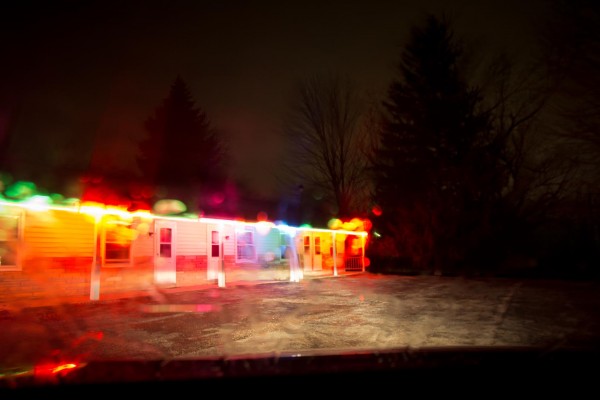
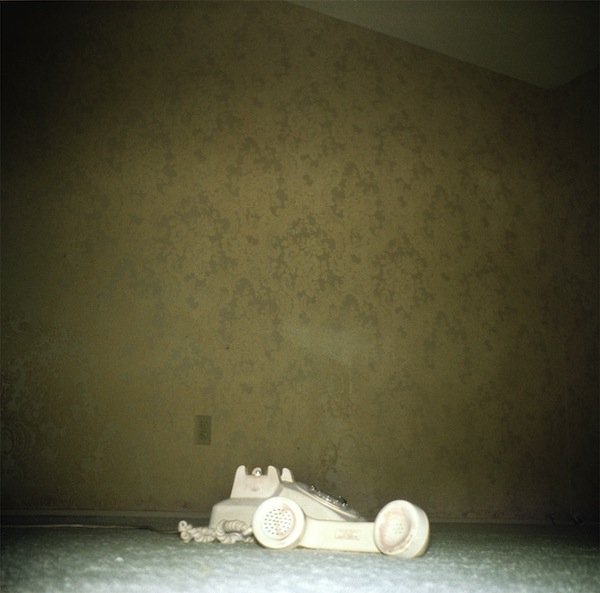
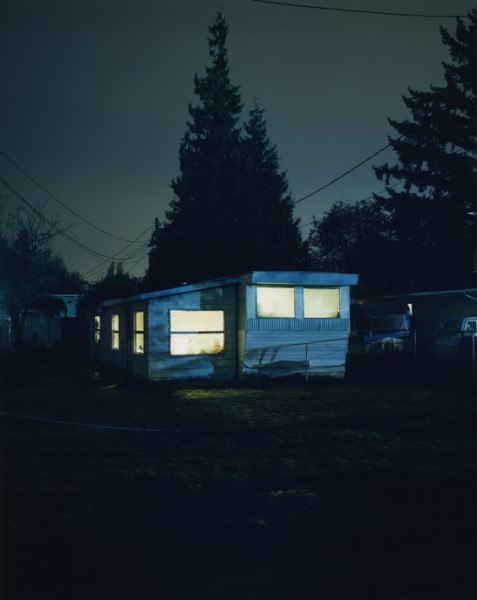
Dark and personal, is what Todd Hido (United States, 1968) calls his Excerpts from Silver Meadows. He alternates his own work with vintage prints. His photos show imminent landscapes and seemingly peaceful American suburbs, but beneath the surface something is lurking.



Silver Meadows Revisited
#10789-2109 © Todd Hido 2012
First off, I should say that I appear in this book as a model.
Todd Hido's Excerpts from Silver Meadows (Nazraeli Press 2013) describes what might be a recognizable place, geographically speaking, to anyone familiar with midwestern suburbia. Hido has taken as inspiration his old neighborhood in Kent, Ohio. Far from being a paean to place, however, the Silver Meadows of the book is more an amalgam of memories retouched and distorted by time, and luridly-painted settings for imagined narratives. Houses and untended yards appear as they would in memory, through fogged or rain-streaked windshields dappled with sun spots. Lonely, bald trees stand silhouetted against goth-grim empty flatlands, as darkness creeps into the frame from the edges. Women appear and reappear in altered dress and coiffure connoting different eras. Hido himself is present, in a blurred-over yearbook photograph from early adolescence.
Hido has said that the images are not, individually or as a series, autobiographical, and that even the scattered objects from his own life, including family photos and a newspaper clipping of his varsity footballer father, are only there to "contaminate the artifice" of the staged scenes of his own creation. But this denial of Silver Meadows as some sort of personal history seems disingenuous. The inclusion of personal objects in the series invites us to infer that the collection as a whole is at least impressionistically autobiographical, and certain characters, some real and some fictitious or possibly composite, take on a real vitality. His father emerges as a fearsome figure, appearing in his football uniform in one image and in another, holding Hido's brother in one arm and a keg in the other, in a spread that also includes an image of a wall with three holes punched through it. Of course, it doesn't matter -- who cares if it is or isn't "about" Hido? -- except that it means one might scratch one's head when one comes to the women -- and there are pages and pages of them, and many different ones, but who all seem to be employed and portrayed for the same purpose. Hardly any of them are dressed, many of them are on a bed or in the back seat of a car, or slouching against the wood-look paneling. They all seem sexually available, whether from desperation or apathy. Some are optimistically made-up and lingeried, but all are photographed without glamour, gamely attempting their best Hustler poses on dowdy woven cushions or in cheap hotel rooms with dirty carpets and merciless cheap hotel room lighting. Set as they are, many in fold-out spreads, amongst the pages that can resemble a Hido family scrapbook, these different but thematically interchangeable women might cause one to wonder at the implication that his straw-haired and bespectacled youth in the Ohio suburbs was populated by this improbable parade of nubile women spreading their cheeks for his benefit.
But ok, take it for granted that the superfluity of females and their shabby surroundings don't represent actual experiences from Hido's life, and that he never intended to imply that they did, despite having juxtaposed them with pictures of himself and his family in a project named after the street he grew up on. The scenarios are drippingly suggestive, not just of sex but of every regrettable, even disastrous, situation you can imagine involving sex and its pursuit (every situation except love, that is) -- one cannot accuse Hido of not knowing how to stage a compelling scene. It's clear why his work is so often described as "cinematic." One spread features photographs of two characters ("played" by the same model). One recalls the wild girl from high school, who climbs into a car and lies in the backseat, drinking out of a paper bag-covered bottle. The other, a smartly-dressed and undressed adult, peeks out from a dainty headscarf in one photograph, and bends in sheer panties over a naked mattress in another. There is also in this spread a found vintage photograph of a totaled car. Silver Meadows is full of image pairings like this, that hint at disaster but never admit to a plot. This is the great seductive power of the book; it creates an atmosphere of a great crime or horror story -- the clenched sphincter of suspense and the keening aftermath -- without any of the satiating details. Contributing to this atmosphere is Hido's use of color (beautiful beyond the dreams of Winsor & Newton), Hitchcock lighting and economy of detail. There is often a single object or prop that focuses the attention like a clue: a string of pearls, a receiver off its hook, a child's tricycle lying on its side against a bare wall, a gnomic-looking fluffy cat.
#9248-a © Todd Hido 2011
But as in so many horror films, the women of Silver Meadows seem to be little else than agents and victims of disaster, and their salient characteristic is their sexuality.
If the women in these images are fictions, or liberal extrapolations from real women he knew, that is actually more troubling than interpreting the collection as a not-quite credible version of Hido's life. It means that while the modern progressive axiom is that women can be anything, Hido chooses for his women to be just one thing. Hido was born and raised to adulthood in an era with women's lib well underway, when women were noisily proclaiming the multifariousness of their abilities and rejecting the narrow scope their society had traditionally allowed them. He works in a field in which he no doubt interacts with talented, formidable, surprising, even oddball women on a daily basis. Yet with what one can presume is a vast and nuanced imagination to play with, he chooses to envision and portray women as these clichés, and ones from a particularly bleak vista in our cultural landscape, at that. The "woman as sex object" trope is a trope because it's been done and done and done, and we call it a trope instead of something loftier like "motif" or "archetype" or even "tradition," because sophisticated people of both genders recognize its paltriness and are rightly tired of it. It doesn't take a prude to find something spiritually debilitating about the glut of sameness in Hido's women, their sameness to these tropes that are relentlessly flogged in our culture despite cries against women's objectification, their sameness to each other, as if a change of wig and panty color will distinguish the humanity in one woman from that of the next. One can't but note the sameness even to women in Hido's other projects: the female inhabitants of Silver Meadows also share that sameness with the ones in his Between the Two (Nazraeli 2006) series, and even with the model (also cast in Silver Meadows) in One Day (Kehrer Verlag, 2011). In the former, the coloring and lighting are mellower, the setting seems more modern, and there isn't the shadow of violence that colors Silver Meadows and infuses the book with its considerable drama, but these could be the same women -- naked or almost naked, mostly looking vulnerable or bored or ready for or resigned to whatever sex act one might propose, however grisly. Even Hido's Instagram feed (possibly the platform's most depressing), repeats it. And one has to remind oneself that it's not that the women these characters are based on (however loosely), or the models themselves, are the same or even similar; it's that Hido for some reason wants to see them that way. And not just in Silver Meadows, but, apparently, everywhere.
It turns the book into a grandiose memento masturbatori, a chronicle of a still-adolescent fixation shaped by the hand-me-down prurience of B-film kitsch, locker-room anecdotal one-upsmanship and the magazines one hides under the mattress until finally moving out of the basement.
And yet one can't really fault Hido for his obsessions. After all, whose business is it to tell an artist what or how to think -- if this troubling spectacle is what's in his soul crying to be let out, well, then, so be it. But one might wonder why this work is as applauded as it is within the art world. It's been decades since Hollywood has been able to portray women in such a simplistically obscenified way, even in corny genre films, without significant blowback. Neither could a "serious" contemporary writer get away with peopling his fiction with such one-dimensional characters without garnering verbose accusations of sexism from within his field. Fashion is in a continual battle between its own racking compulsion to exploit female insecurities and opposing forces intending to protect both the women working in the industry and the legions of women susceptible to their sometimes malign influence. In other industries, an artist dealing in the reduction and objectification of women stokes controversy (even while making plenty of money at it), and risks a diminution of his reputation as, well, a serious artist. But in the world of fine art, you can do the same and your work will sell for thousands of dollars and you will be regarded as one of the great practitioners in the artform and the top brass at the country's most prestigious photography galleries will promote your work in magazines and elsewhere.
This has all been a bit harsh. But consider Silver Meadows's women as juxtaposed with its houses and landscapes. You'll never look out a rain-spattered car window again without wishing you could see what Hido sees through it. He's a poet of muddy driveways and peeling clapboard. Silver Meadows's naked trees, snowswept hills and lonely decrepit tract housing, all supernaturally dark, vivid and familiar, elicit a deeper ache than mere nostalgia. He's taken a setting that we think we know, the cliché of the tattered suburban Midwest, and shown a hidden world that the clichés haven't begun to approach. Every tiretrack in the snow, abandoned chair in the weeds, the fierce light shining out of an unassuming home in the foggy night, seems to have not only a story to tell, but an epic of lost joys and tragedies.
#2810© Todd Hido 2001
But Hido infuses these inanimate objects with more humanity than he finds and reveals in the living women he photographs. What if he as diligently avoided cliché in his depictions of women as he does in his depictions of houses, cars, trees, street signs, the ground, the sky, etc.? What if he looked at a woman and considered that she might be nearly as interesting and complex as a broken chair?
I've generalized here -- there's one photograph of a woman, other than the occasional "found" one, that doesn't fit with my assessment of the rest. It's the one Hido made of me. This isn't due to anything special I did, except possibly that he knew I wanted to be depicted differently from what he may or may not know are informally referred to in the local photo community as "Hido Girls." Probably not even that, as he directed the shoot down to every detail, from where I looked, to the expression on my face, to where I placed my hand (and, I should point out, conducted a sitting that was spotlessly professional, friendly and fun). It's a close-up, one of the very few portraits in the book in which the model is not looking into the camera. I'm staring "offscreen" with what could be fear at what might happen or horror at something that has happened already. What's interesting about the photograph isn't that I'm not half-naked or splayed out on a bed or some awful couch, although that does set it apart from the majority of Silver Meadows's portraits. It's that while the other women seem to exist as supporting props ("character" implies more dimension than he gives them) in someone else's experience, the effect of my portrait is to draw the reader into my own experience. Whatever is to be found out about me must be sought in my eyes; my body and its possible uses are simply not available for consideration. I'll never tell what I was thinking at the moment Hido released the shutter, but the image offers the reader nothing else but to imagine what that was.
What other portrait of a woman in Hido's repertoire would one look at and wonder what she was thinking? There might be a few, but it doesn't seem like that is ever the point with "Hido Girls." This would be fair enough if the vision of the feminine that Hido offered departed from stereotype, but it doesn't. Why is it left to an obscure art reviewer to point this out when it should be clear, when it should be ballsmackingly obvious to anyone with any regard for the way women are portrayed in this or any field? For a photographer of Hido's obvious talent and stature, one who, no doubt, has friends and colleagues with both discernment and influence (on him and in the industry), one hopes that somebody will steer him to rethink his artistic relationship with the female, even if market forces never do.
#10967-2498 © Todd Hido 2012
Many of the images discussed in the above article were not available for reproduction in the press.
Het verhaal van een jeugd
Dit is niet echt. Deze foto’s zijn niet gewoon echt. Ze zijn échter dan echt. Todd Hido vertelt met de foto’s het verhaal van zijn jeugd in Kent, Ohio. Niet een heel zonnige jeugd, denk ik, die hij daar had in de buurt rond de eindeloze straat Silver Meadows.
Maar is het verhaal dat de foto’s vertellen ook compleet? Is wat Hido in zijn beelden laat zien ook het echte verhaal van zijn jeugd?
Nou, normaal gesproken klopt het natuurlijk nooit, dat weten we allemaal: een weerslag is nooit compleet, een weerslag in beelden is niet het echte. Bovendien heeft Hido nu, na zijn jeugd, nog nieuwe foto’s gemaakt ook, en die er gewoon bij gestopt. Daarom zou dit een niet-echt verslag moeten heten, niet-echt documentair, oftewel wat men noemt: fictie.
Nou, normaal gesproken klopt het natuurlijk nooit, dat weten we allemaal: een weerslag is nooit compleet, een weerslag in beelden is niet het echte. Bovendien heeft Hido nu, na zijn jeugd, nog nieuwe foto’s gemaakt ook, en die er gewoon bij gestopt. Daarom zou dit een niet-echt verslag moeten heten, niet-echt documentair, oftewel wat men noemt: fictie.
Verschillende verhalen
Mmm, maar nu andersom: dit is echt wel het verhaal dat Todd zich herinnert. Dit is het verhaal van een jeugd die voor Todd Hido nog bestaat. In zijn hoofd. Echt waar. In zijn hoofd is dit het echte verhaal.
Je zou kunnen zeggen: hoe Todd Hido zich zijn jeugd herinnert en hoe zijn jeugd écht was, dat zijn twee verschillende verhalen. Maar hoe was zijn jeugd dan écht? Hoeveel mensen moeten we spreken, hoeveel beelden moeten we zien om dáár achter te komen?
Ik zeg: het verhaal in Todds hoofd is échter. De werkelijkheid is geen tweedimensionaal fotobeeld. De werkelijkheid wordt ingevuld door geuren, stemmen, gevoelens, herinneringen, ervaringen, intelligenties. Die houden we allemaal vast wanneer we herinneren. Het geheugen kent geen losse platte plaatjes. In het geheugen zijn de moleculen heel anders georganiseerd.
Grauw. Nat. Vies.
Om te laten zien hoe dat bij hem is, die jeugd die opgeslagen ligt in zijn hoofd, en om mee te laten voelen hoe zijn verhaal voelt voor hem, zet Todd Hido een snapshot van toen hij twaalf was naast opnieuw gemaakte en geënsceneerde beelden. Hel!, soms gebruikt hij niet eens zijn eigen beelden maar foto’s die hij heeft gevonden op rommelmarkten. Alle tezamen noemt Todd dit: ‘de architectuur van mijn kindertijd.’
Nou, leuke kindertijd, met al die grauwte en dat verlatene. We zien een vrouw met overtuigende lippenstift vanuit een auto geschoten, ze kijkt als was ze een prostituee in de aanbieding. En een vrouw met een hoog en bewerkelijk kapsel, in een hoek in panty’s, kijkt ze treurig? Haar panty’s zijn raar gescheurd. Een stoeiende jongen, verlaten auto, weg, alleenstaand huis.
Grauw. Nat. Vies.
Ik bedoel, ik zie geen zonnebloemen.
Todd zegt er zelf van: ‘Conceptueel denken wordt gewaardeerd, terwijl schoonheid een lelijk woord is geworden. Ik wil schoonheid. Ik wil emotie.’
Zou Todd daarom zoveel door natte of beslagen ramen heen fotograferen? De vraag wat nou van toen is, wat later is gemaakt en of het uit een vergeten fotoboek van heel iemand anders komt, is helemaal niet interessant. In Todds hoofd zit een moeras van herinnering aan een grauwe jeugd, waarin hij gelukkig ook nog genoeg schoonheid en emotie terug kan vinden.
Je zou kunnen zeggen: hoe Todd Hido zich zijn jeugd herinnert en hoe zijn jeugd écht was, dat zijn twee verschillende verhalen. Maar hoe was zijn jeugd dan écht? Hoeveel mensen moeten we spreken, hoeveel beelden moeten we zien om dáár achter te komen?
Ik zeg: het verhaal in Todds hoofd is échter. De werkelijkheid is geen tweedimensionaal fotobeeld. De werkelijkheid wordt ingevuld door geuren, stemmen, gevoelens, herinneringen, ervaringen, intelligenties. Die houden we allemaal vast wanneer we herinneren. Het geheugen kent geen losse platte plaatjes. In het geheugen zijn de moleculen heel anders georganiseerd.
Grauw. Nat. Vies.
Om te laten zien hoe dat bij hem is, die jeugd die opgeslagen ligt in zijn hoofd, en om mee te laten voelen hoe zijn verhaal voelt voor hem, zet Todd Hido een snapshot van toen hij twaalf was naast opnieuw gemaakte en geënsceneerde beelden. Hel!, soms gebruikt hij niet eens zijn eigen beelden maar foto’s die hij heeft gevonden op rommelmarkten. Alle tezamen noemt Todd dit: ‘de architectuur van mijn kindertijd.’
Nou, leuke kindertijd, met al die grauwte en dat verlatene. We zien een vrouw met overtuigende lippenstift vanuit een auto geschoten, ze kijkt als was ze een prostituee in de aanbieding. En een vrouw met een hoog en bewerkelijk kapsel, in een hoek in panty’s, kijkt ze treurig? Haar panty’s zijn raar gescheurd. Een stoeiende jongen, verlaten auto, weg, alleenstaand huis.
Grauw. Nat. Vies.
Ik bedoel, ik zie geen zonnebloemen.
Todd zegt er zelf van: ‘Conceptueel denken wordt gewaardeerd, terwijl schoonheid een lelijk woord is geworden. Ik wil schoonheid. Ik wil emotie.’
Zou Todd daarom zoveel door natte of beslagen ramen heen fotograferen? De vraag wat nou van toen is, wat later is gemaakt en of het uit een vergeten fotoboek van heel iemand anders komt, is helemaal niet interessant. In Todds hoofd zit een moeras van herinnering aan een grauwe jeugd, waarin hij gelukkig ook nog genoeg schoonheid en emotie terug kan vinden.
BredaPhoto
Het thema van de zesde editie van het fotofestival BredaPhoto is Songs From the Heart. Het Festival duurt zeven weken, van 11 september tot 26 oktober, op verschillende locaties binnen en buiten.
Dat thema Songs From the Heart slaat op een exploratie van De Nieuwe Romantiek: volgens BredaPhoto zijn de romantische idealen van authenticiteit, oprechtheid en uniciteit ook in deze tijd nog springlevend. Daarom zal de fotografie steeds te maken hebben met de volgende deelthema’s: De Romantiek als historische stroming, De Nieuwe Romantiek en Echt versus onecht. Er doet een groot aantal fotografen mee, er zijn masterclasses en er is een Photo Talent Weekend.
Voor het programma: www.bredaphoto.nl
Het thema van de zesde editie van het fotofestival BredaPhoto is Songs From the Heart. Het Festival duurt zeven weken, van 11 september tot 26 oktober, op verschillende locaties binnen en buiten.
Dat thema Songs From the Heart slaat op een exploratie van De Nieuwe Romantiek: volgens BredaPhoto zijn de romantische idealen van authenticiteit, oprechtheid en uniciteit ook in deze tijd nog springlevend. Daarom zal de fotografie steeds te maken hebben met de volgende deelthema’s: De Romantiek als historische stroming, De Nieuwe Romantiek en Echt versus onecht. Er doet een groot aantal fotografen mee, er zijn masterclasses en er is een Photo Talent Weekend.
Voor het programma: www.bredaphoto.nl
Tijdens BredaPhoto zijn vijftig à zestig foto’s van Todd Hido te zien. Er is ook een boek: Todd Hido, ‘Excerpts from Silver Meadows’, Nazraeli Press


,2013_%20LhGWR%20gallery.jpg?w=325&h=480&mode=max&404=backup)





 Posts
Posts


