Afghanistan Photo War ...af-photo-war-03.htm Afghanistan Photo War 3 June 22, 2009
af-photo-war-02.htm Afghanistan Photo War 2 June 22, 2009
af-photo-war-01.htm Afghanistan Photo War 1 May 15, 2009
See also Recent scenes from Afghanistan ...


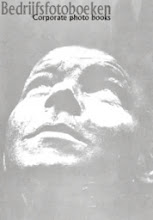
...a photoBook is an autonomous art form, comparable with a piece of sculpture, a play or a film. The photographs lose their own photographic character as things 'in themselves' and become parts, translated into printing ink, of a dramatic event called a book... - Dutch photography critic Ralph Prins
Afghanistan Photo War ...


Beyond History by Vincent Delbrouck
In a time that questions photo report VD's (aka Vincent Delbrouck) work shakes things up. He assembles recycles, decomposes and recomposes elements of his personal story to create universal photo albums, 'poetic documentaries' according to his expression. A documented journey between identity and memory, intimate diary and photo report. We are glad today to introduce an installation of a selection of photos, letters, testimonies, photocopies of 'Beyond History', a documentary VD made in Cuba between 1998 and 2006. Photography as a document, of memory. Zie voor een recensie ...
See also the Cuban photohraphy of Burt Glinn ... & the Art of the Revolution Cuba posters ... &
Alberto Korda & the photographic image of Ernesto “Che” Guevara Photography ...
rencontre avec Vincent Delbrouck
by djuliane

Cerca San Rafael (Courtesy Desiree Dolron)
Cerca san Fernandia (Courtesy Desiree Dolron)
Cerca Industria (Courtesy Desiree Dolron)

PHotoEspaña has revealed in a press conference the names of the winners of the PHotoEspaña 2009 Awards. The PHotoEspaña Director, Claude Bussac, has made public the awards in Matadero Madrid at Naves del Español, with the presence of most of the awarded artists.
The PHotoEspaña Baume & Mercier 2009 Award has been granted to photographer Malick Sidibé (Mali, 1936). The Malian photographer receives this reward as recognition to his exceptional condition of portrait artist, his sensibility and personality. All that makes him one of the most renowned photographers of Africa. With pictures taken in its own study -Studio Malick- during the 50s and 60s, Sidibé has documented an important period of the history of Africa, a phase of emancipation, cultural changes, pride and hope in the future. His sensitive, enthusiastic, and compromised look has created simple, authentic, and full of truth images showing the special complicity between the photographer and its portrayed.
The prize, gifted with 12,000 € in purchase of work, a trophy designed in exclusive by Eduardo Arroyo and a watch of the firm Baume & Mercier, has been granted before to photographers Martin Parr, Robert Frank, Hiroshi Sugimoto, William Klein, William Egglestone, Greek Almeida, Nan Goldin, Duane Michals, Chema Madoz, Luis Gonzalez Palm and Josef Koudelka in recognition to its important role in the international photographic middle.
The Bartolome Ros Award, gifted with 12,000 €, has been granted to photographer Isabel Muñoz. The jury of the prize, formed by Rose Ros, responsible for the bequest of Bartolomé Ros; Carlos Gollonet, curator of expositions and advisor of photography of the Foundation MAPFRE; Publio Lopez Mondejar, photographer and Bartolome Ros 1999 Award; Carlos Urroz, cultural agent and Alberto Anaut, president of PHotoEspaña has wanted to recognize Muñoz by her bravery, capacity of innovation and approach to diverse cultures through his full portraits of intensity coherence.
In past editions the following artists have been awarded: Ricard Terre, Javier Vallhonrat, Marta Gili, Alejandro Castellote, Kowasa library, Joan Fontcuberta, Alberto Garcia-Alix, Juan Manuel Castro Prieto, Ramon Masats, Cristina Garcia Rodero and Publio Lopez Mondejar.
Magee Art Gallery has been awarded by the Off Festival Saab Award for the exhibition Accidents of Jin Shin. The artist recreates automobile accidents and photographs them with disturbing, mysterious and sidtressing results. He offers a reflective hyperreatist interpretation of the images theat the media insert daily in our subconscious. This award recognizes the best exhibition organized in this section of the Festival. The jury of this prize has been composed by Paula Bartolome, marketing manager of Saab; Alexandra Fonseca, artistic advisor of Banc Espirito Santo; Carlos Manzano, architect and collector; and Juan Bonet, architect and collector.
The Public M2-El Mundo Award, granted by internet users of http://www.phe.es/ and http://www.elmundo.es/ to the best exhibition of the Official Section, has been granted to the exhibition Resiliencia (Resilience), organized by the Institute Cervantes and PHotoEspaña with the contribution of Spanish Agency for International Development Cooperation (AECID) and that can be seen in the Institute Cervantes until September 20th. The exhibition, curated by Claudi Carreras, gathers the work of 10 new photographers that have participated in Descubrimientos PHE -the seen of portfolios of the Festival- in its assemblies of Lima and Mexico City.
Paul Strand - Manhatta (1921)
The prize of the Best Photography Books of the Year gathers from 1998 independent publishers and publishing houses so they can present their photography books published during the last year. The finalist books of this contest are exposed at la Central de Diseño in Matadero Madrid, until July 12th. A jury composed by Gisele Tavernier, art critic of Le Journal des Arts; Alberto Heart, Designer; Pablo Berastegui, coordinator Matadero Madrid; and Alberto Anaut, president of PHotoEspaña, has awarded the following prizes: in the national category, Paul Strand, en el principio fue Manhattan (Paul Strand, in the beginning was Manhattan), published by Foundation Pedro Barrie de la Maza. This monographic catalogue reproduces the 114 photographs of the exhibition Paul Strand. Retrospective 1915-1976, organized by the Foundation itself and includes an essay illustrated by pictures of other important American photographers like Alfred Stieglitz, Clarence White, Dorothea Lange, Walker Evans, Arthur Rothstein and Mathew Brady. In the international category the winner book is Weegee the famous, published by M+M Auer. This catalogue, published because of the exhibition carried out in the Pavillon Populaire of Montpellier, gathers more than 400 photographs of Arthur Feelig, best known as Weegee, the great narrator of urban histories that documented the life and the death in the New York of the 30s and 40s.
Likewise, the jury of the prize of the Best Photography Books of the Year has granted four mentions of honour. In national category: Helena Almeida. Tela rosa para vestir (Pink Fabric for Dressing), published by Fundacion Telefonica and Constelación (Constellation), by Carmela Garcia, published by MUSAC/Turner. In international category: Looking in Robert Frank's The Americans, published by National Gallery of Art/Steidl and Boarding House, by Roger Ballen published by Phaidon Press.
The Outstanding Publishing House of the Year Award is for Errata Editions, for this project Book on Books. The books that integrate this series reproduces faithfully the integral content, page by page, of rare or out-of-print books of photography. This way, Errata Editions has published mythical books like Photographe de Paris by Atget or American Photographs by Walter Evans. Errata Editions is a small independent North American publishing house created in 2008 by Valerie Sonnenthal, Jeffrey Ladd and Ed Grazda. See for more ...
The winner of the Prize Descubrimientos PHE Epson to the best portfolio of the Festival has been the Mexican photographer Alejandra Laviada (Mexico, 1980) for her work Photo Sculptures. In it Laviada takes photographs of ephemeral sculptures created with objects found in spaces abandoned that try to alter our conception of the routine things and to register places that will be demolished or transformed. The jury of the Prize Descubrimientos PHE Epson has been composed by Susan Kismaric, curator of the photography department of the MoMA in New York; Colette Olof, curator of Foam_ Fotografiemuseum in Amsterdam; and Lesley A. Martin, executive publisher of the Aperture Foundation in New York. The prize will allow Alejandra Laviada to exhibit her work individually in PHotoEspaña 2010. In past editions, the following have been awarded Yann Gross, Harri Palviranta, Stanislas Guigui, Vesselina Nikolaeva, Comenius Röthlisberger, Pedro Alvarez, Tanit Plana, Sophie Dubosc, Juan de la Cruz Megias, Paula Luttringer and Matias Costa.
The Room Mate Hotels Revelation Award has been granted to the artist Carlos Sanva as recognition of this work, which is a splendid example of integration of the image like artistic vehicle to its higher aesthetic and conceptual level with photography of impeccable formal bill. The jury of the prize was formed by Enrique Sarasola, President of Room Matt Hotels; Alberto Chinchon, Professor of the Area of Art of the European University of Madrid and artist; and German Gomez, photographer. The prize, gifted with 6,000 € in purchase of work, recognizes the work of a Spanish artist less than 35 years old whose work or publication have noticeable during the last year. This prize has been previously granted to German Gomez, NOPHOTO, Bleda y Rosa, Joan Morey, Lucia Arjona, Paco Gomez, Carmela Garcia, Isabel Flores, David Jimenez and Xavier Rivas.
Lastly, PHotoEspaña has granted the PHotoEspaña OjodePez Award for Human Values, which is given to photographic works highlighting values like solidarity, the effort, ethics or justice. The prize, gifted with 6,000 €, corresponds the photographer Simona Ghizzoni by her work Odd days, a work on alimentary disorders and its long process of recovery. Alimentary disorders affect to a high percentage of women and it is the first cause of mortality in women between 12 to 25 years old in occidental countries. Photos have been taken in clinics that treat this type of long-term illnesses. The jury has been composed by Joanna Mister, photography editor of The New York Times Magazine; Rod Slemmons, director of Museum of Contemporary Photography of Columbia University; Anne Tellgren, photography curator of Moderna Museet of Estocolmo; Sergio Mah, general curator of PHotoEspaña and Arianna Rinaldo, editor in chief of OjodePez. The previous winner of the Prize was Olivia Arthur, by the portfolio Beyond the Veil, in 2007.
What must Erwitt make of Magnum's own blog where you can read conversations and interviews with such luminaries as Bruce Gilden, Alec Soth and Michael Subotzky? Or visit its archive and discover field reports from members in Washington, Abu Dhabi, Machu Picchu, Jakarta…
Another agency offering commentary on its own progress is Reuters. Check their blog for members' opinions on the issues and concerns that affect working photojournalists; and take the opportunity to see the 'overs' and extended edits that do not make it into print.
To savour something of the sweet aroma - or acrid stench - of freelance life, visit the highly enjoyable blogs of Jeremy Sutton-Hibbert in Tokyoland, and erstwhile Tabasco Kid (don't ask), Leon Neal.
Not for the first time, the future of photojournalism appears beset by uncertainty; meanwhile that of art photography seems almost robust by comparison. Jorg Colberg's brisk and intelligent Conscientious serves as a useful introduction to the work of some of the genre's more accessible exponents. As does the Aperture Foundation's Exposures blog, albeit from a more pronounced North American perspective.
It remains to be seen whether the extraordinary surge of interest in photography books in recent years will be sustained, or is indicative merely of a bubble. Until we find out, there is no better guide to all things photobook-related than Jeffrey Ladd's authoritative, comprehensive and ever-so-slightly-obsessive 5B4. If it all gets a bit too intense, head for the reviews section of the excellent Lens Culture blog for some light relief.
If you want a smattering of all of the above and equipment reviews and competition news – try two magazine blogs: Photo District News' PDNPulse and the British Journal of Photography's 1854.
For those with an interest in photography theory, No Caption Needed and (Notes on) Politics, Theory and Photography both offer thought-provoking, topical and user-friendly analyses of issues relating to contemporary photographic practice.
Finally, and in a display of shameless self-promotion, I can unreservedly recommend my own blog, found on the ever vibrant Foto8 site. Alongside book and exhibition reviews you can find my interviews with some of photography's most influential and respected practitioners, including Andreas Gursky, Susan Meiselas, Martin Parr, and Richard Misrach.
Of course there are many more out there - why not send us links to your favourites, with brief explanations of why you endorse them?

'Loving Your Pictures' is the title of Amsterdam-based Creative Director Erik Kessels' exhibition at Arles. Something of an avid photography collector, clearly possessed with an eye for an image and a story beyond the image, Kessels' found photographic material is certainly not short on creativity. The collection, described as 'vernacular photography', brings together a series of pictures with new meanings outside their original and intended purpose.
Ubiquitous, amateur photographic accidents are imbued with an added charm: unwitting background characters from holiday snaps are turned into the subject matter of their own portraits; accidental double exposures superimpose one image on top of another; and old photo collections, rescued from the fleamarket, tell a new story, albeit simply from the repeated appearance of a dalmation or old Dutch lady in a black taxi. Click here to see a gallery of pictures from the exhibition.
This series of found pictures shows a Spanish lady photographed over the course of many years by her husband. When the series was part of an exhibition in Barcelona, the images appeared on the news and in Spanish newspapers. A woman who had previously worked with the lady in the photographs at Telefonica came forward and revealed that she was called Josephina Aparicio Iglesias, that she had passed away and had no children. Click on the image above to view the series.
Telling the story of one woman's travels around Europe from the front seat of a black taxi, this series has an air of poignancy. The taxi driver, A.J.Paetzhold took all the images except the final one in the series, taken of him by the lady from her front seat. The pictures came into Kessels' possession via the Dutch photogrpaher Andrea Stultiens, neighbours of the Paetzholds in the Dutch city of Nijmegen. When Paetzhold's wife passed away, Andrea helped clear out the house and was given a collection of images, which were subsequently given to Kessels. On closer inspection Kessels discovered the lady in the photographs (also from Nijmegen and since passed away) was disabled, hence unable to get out of the taxi on her travels. Click on the image above to view the series.
The pictures in this series are in fact self-portarits of the deer.The pictures were taken by a camera with a motion detector placed on trees in the forests, enabling the hunters to monitor the deer population. Kessels contacted an association of hunters in America who had posted images of the deer on the internet. Click on the image above to view the series.
Kessels rescued this collection of photographs from a Brussels fleamarket. Taken on The Ramblas in Barcelona by professional photographers who snapped people on the streets, the twins always appear arm-in-arm in the same position. From the dates of the photogrpahs, Kessels concludes that one of the twins died by the end of the Second World War. In the subsequent images it appears a sif a space has been left open for her by the remaining twin. Click on the image above to view the series.
These pictures were given to Kessels by his German friend and collaborator Marion Blomeyer. The beloved dalmation forms the link in each photograph, but nothing else other than its German nationality is known. Click on the image above to view the series.
'Strangers in my photo albums'
The ubiquitous people in the background of Kessels' photographs have been given their own moment in the limelight in this series. By cropping out the main subject of each image, and making the background figures the main focus Kessels has produced a series of images with a humorous, voyeuristic quality.Click on the image above to view the series.
Formed from reject photographs, Kessels has imbued these unlikely images with a significance beyond the accidental double exposures or unfortunate compositions we've all experienced, but are slowly dying out with the ruthless efficiency of digital photography. Click on the image above to see the series. Read more about Found Photography ...
Loving Your Pictures
Erik Kessels
Een vrouw die in een zwierige bloemetjesrok en hemdje in een zonnig landschap zit en in het water staart. Een stoere politieman die er toch een beetje onhandig bij staat. Een hert in een bos, met verschrikte ogen vastgenageld in fel flitslicht. Het zijn maar een paar voorbeelden van het fotomateriaal dat werd gevonden en verzameld door Erik Kessels.
In Loving Your Picturesis een aantal van die foto’s van anonieme fotografen gebundeld. Ze werden door de oorspronkelijke makers nooit bedoeld als kunstwerken – het zijn kiekjes zoals we die allemaal wel eens maken –, maar ze krijgen in deze context een heel nieuwe betekenis. Door de manier waarop Erik Kessels ze gebruikt roepen ze vragen op over originaliteit en de definitie van beeldende kunst. Dit is volkomen nieuw voor Nederland.
Loving Your Pictures is een uniek boekje met ansichtkaarten van gevonden foto’s, die, als je ze als kaart gebruikt, nog weer een nieuw, onvermoed leven kunnen gaan leiden. Behalve een tekst van Erik Kessels zelf bevat het boekje een beschouwing van Pauline Terreehorst.

Dutch architectural photographer Iwan Baan has sent us images he has taken of Nestlé’s laboratory in Querétaro, Mexico.

Designed by Rojkind Arquitectos, the laboratory comprises cubic volumes with intersecting domes cut from underneath and is clad with metallic, reflective glass.

For more information see our previous story here.

The photographs are published in the June 2009 edition of Abitare.


13 contemporary photographers create a striking library
The 12th edition of the PhotoEspaña 2009, which debuted June 3 and will be on display until July 26 in Madrid, is comprised of 31 exhibitions, conceptually linked by the official theme of “The Everyday.” The ICO Collection will present a solo show of photographs by master of the quotidian Dorothea Lange from her Farm Security Administration-sponsored documentary-photography project. Gerhard Richter, Larry Sultan, William Eggleston, and Walid Raad are also among the artists exhibited.
So Blue So Blue – Ad van Denderen
Korrie Besems – A Contrived Past
Erik Kessels – In Almost Every Picture
Edwin Zwakman – Benthem Crouwel

Uit Hollande Velden, Hoogmade 1996
Foto: Hans van der Meer
Uit Quirk of Fate, Hongarije 1986
Foto: Hans van der Meer
Uit de nieuwste serie waaraan Hans van de Meer momenteel werkt, 2009
Foto: Hans van der Meer


Frank van der Salm (Dutch, b. 1964) Square 2006 Chromogenic color print©Interpolis (Tilburg), CourtesyMKgalerie.nl, Rotterdam/Berlin
Marnix Goossens (Dutch, b.1967) Flevotuin 2000 Chromogenic color printCourtesy Aschenbach & Hofland Galleries, Amsterdam
Henze Boekhout (Dutch, b. 1947) 'Hold it like that!' [A color study],Amsterdam1990 Chromogenic color print Collection of the artist

May 2 - June 14, 2009
What are we looking at when we’re looking at something and how precisely are we looking at it? And is our way of looking perhaps just as personal as our handwriting? These questions have intrigued designer Christien Meinderstma (1980) for some time now, reason why she eagerly accepted MU’s invitation to delve deeper into the matter.
“It would be fascinating, wouldn’t it, if it turns out that we all look at the same things in a slightly different way, if a designer looks at things differently than a bicycle mender or a judge does, and a seven-year-old differently again than a seventy-year-old, just to mention a few examples.”
To investigate this issue, Meindertsma will establish a viewing laboratory in MU in De Witte Dame between May 1 and June 14. Built on an older experiment that she and Joris Laarman carried out some time ago in the Textielmuseum, this viewing laboratory will register every visitor’s way of looking by means of eye-trackers and reproduce the result on the spot.
How do you look, for example, at a cup or a slice of bread, a bicycle or a sowingmachine? The eye-tracker follows the movements of your eyes, while a large drawing robot with a thick marker attached to the other end reproduces the viewing pattern of your eyes on paper. The same question applies to looking at your own reflection; are you looking at your eyes, your nose, your mouth, or the shape of your head? The eye-tracker registers it accurately and, linked to a printer, print out your self-portrait on the spot. The aim is to have accumulated several hundreds of eye-drawn portraits and objects at the end of the trajectory.
To Meindertsma, this collection is in turn a source of inspiration for further investigation. Not the kind of investigation that a marketeer or a scientist would conduct, but a designer’s kind of investigation. And it goes without saying that, if they wish, visitors can take their drawings home with them.
Although technical and experimental by design, ‘Spectators’ is completely in line with the oeuvre that Meindertsma has built up since her graduation from Design Academy Eindhoven in 2003. Time and again she succeeds in surprising the audience with profound and creative research resulting in intriguing visual reports that win world-wide admiration. Her graduation project Checked Bagage/Baggage is included in the collections of the MOMA, the Victoria & Albert Museum, and Caldic. And last year, she won with her book PIG 05049 the Golden Eye Dutch Design Award as well as the Rado Young Designer of the Year Award. See for PIG 05049, a conversation with Christien Meindertsma ...
The Spectators Viewing Laboratory is made possible by Tobii eye-trackers and Buhrmann Ubbens
On Thursday evening may 28 form 9 pm onwards, the exhibition hosts the cultural talk & walk show Pols Hoogte hosted by Andrea van Pol. Christien Meindertsma will be present to elaborate on her project.
Christien Meindertsma, Makers & Spectators from robertanderson on Vimeo.
Christien Meindertsma at Omroep Brabant


12-01 2008, 12:32 JB
Caldic art collection
Caldic Collectie B.V. has been entrusted with the custody of Caldic's art collection. This collection of mainly twentieth century art objects (paintings, sculptures, collages, photos, etc.) - built over the last 40 years - is now unique in its size, its diversity and its originality. Regularly (thematic) expositions are organised inside and outside the Caldic company to enable experts, employees, company relations and other people interested to enjoy the beauty of all these works. Jean Arp, Edward Ruscha, Man Ray, Louise Bourgeois, Sonia Delaunay, Wassily Kandinsky, Ellsworth Kelly, Joan Miró, Fernand Leger, Sol LeWitt, Henry Matisse, A.R. Penck, Pablo Picasso, Andy Warhol, Christien Meindertsma, Sophie Calle , Constant Nieuwenhuys / Gerrit Kouwenaar ... See also Blood on Paper - the Art of the Book ...
Artists' books are works of art realized in the form of a book. They are usually published in small editions, though sometimes they are one-of-a-kind objects called a unique. Artists' books have employed a wide range of forms, including scrolls, fold-outs, concertinas or loose items contained in a box as well as bound printed sheet. Although artists have been active in printing and book production for centuries, the artist's book is primarily a late 20th century form.
"Artists' books are books or book-like objects over the final appearance of which an artist has had a high degree of control; where the book is intended as a work of art in itself." Stephen Bury
See for Discovering Artists Books The art, the artist and the issues ...

Een van de deelcollecties van meesterverzamelaar Caldenborgh, kunstenaarsboeken, nu ten toon op het Caldic hoofdkantoor. Voorzien van voorbeeldige publicatie verzorgd door Suzanne Swarts. Lees een interview 'Ik leef met mijn ogen' ... & zie voor kunstenaarsboeken ...
Een gevarieerde tentoonstelling van grote en nog GROTERE namen. Een onvolkomen impressie, een selectie uit een overweldigend aanbod:

Penone

Alicia Martin, Zocalo, 1997

Edward Rusha, (bijna) alle boeken

Boeken op sterk water van Roman Ondak, Eternal Sleep 1996
Ondák preserves everyday objects - such as books - in formalin and exhibits them in glass showcases like those used by museums of natural history. The glass aquariums begin to act as reservoirs of knowledge, surrounded by the nostalgia of past times. Isolation, alienation and dehumanisation are the terms the artist uses to denote human culture at the end of the twentieth century. He copies the methods of classification from the exact sciences to research knowledge- and value systems in culture.

Kasper Andreasen, Tine Melzer, The Grass is Greener on the Other Side
This work is derived from a public expression in language referring to envy and neighborhood, coming from a proverb dealing with the notion of the ‘other side’, We use this notion to install rules to draw page after page with a green marker drawing lines denoting ‘grass’. These drawings also mark time passing. Texts and print works around this ambiguous saying, involving notions of the ‘rhizome’ and anecdotes on being two.

Kandinsky, Klänge, 1907

Jean Cocteau, Georges Hugnet, La Nappe du Catalan, 1964

Giacometti, Paris sans Fin, 1969

Marius Bauer, Arabian Nights, 1922, 4001 aquarellen en tekeningen in de marge en over de tekst van een zestiendelige editie van de vertellingen van 1001 nacht.

Baselitz radiert Beckett’s Bing, 1996

De atlas van Marcel Broodthaers komt uit de kast.

Barbara Kruger, Stephen King (?!), My Pretty Pony, 1988.

Modder van de grote rivieren gebruikt als basis voor handgeschept papier: Nile Papers of River Muds van Richard Long, 1991 (lees meer over ... )

Daphne, Sigmar Polke, 2004
Daphne is an artist's book created by Sigmar Polke. It is an anthology of sources of visual inspiration, a photocopied book that paradoxically reveals the artist's hand, a sketchbook for the machine age--Daphne runs and runs, is caught by the photocopier, and runs some more, only to be bound in the end.~Created directly by Polke himself, Daphne is a book with 13 chapters illustrated in large-format photocopies. Each "copy" of the book differs, as each has been photocopied and manipulated individually, pulled from the machine by the hand and watchful eye of the artist. Process is revealed, over and over again. Motifs accumulate page after page, as do small graphic cycles. The printed dot, the resolution, the subject, and the speed all determine and are determined by the apparently unpredictable and often impenetrable secret of a picture whose drafts are akin to the waste products of a copying machine. Even if the motifs in this book provide but a brief insight into the artist's hitherto secret files and archives, it is still a significant one. For the first time, we witness an artist's book with such an aura of authenticity that Walter Benjamin's seminal essay, Art in the Age of Mechanical Reproduction, bears consequent re-reading.~Produced in a limited edition of 1,000 "copies," each of which has been numbered and signed by Sigmar Polke.(cit.) Essay by Reiner Speck. Clothbound, 29 x 41 cm../ 400 black & white

Popupboek met geurkaartjes, singeltje, ballon, ingevouwen ooit werkende accordeon, het schitterende Index Book van Andy Warhol, multimediaal avant la lettre, 1967.
"My idea of a good picture is one that's in focus and of a famous person doing something unfamous. It's being in the right place at the wrong time."--Andy Warhol
Andy Warhol's Index (Book) is a compilation of interviews, art inserts, pop-ups, photographs, recording discs, and descriptions of life at the Factory. An important Warhol document and an absolutely iconic publication of the psychedelic era in New York.
Zie ook ... & zie the making of ... & the covers of the Art Deco magazine Wendingen ...

Fotofestival di Roma Book Prize Award Announced
Last week, photo-eye Book Division Manager Melanie McWhorter lead the jury of Benedetta Cestelli Guidi, Marta Daho, Erik Kessels, and Michele Smargiassi judging over 180 books in the second Italian and first International book award of Fotofestival di Roma. This year's winner for the Italian Book Award was the Damiani book Deformer by Ed Templeton. The International Gold Metal Award was given to Steidl's upcoming titled by Jim Goldberg Open See and the Silver Medal Award was given to young photographer Mariken Wessels for her book, Elisabeth. I want to eat.
"All books selected by the jury are finished works in their own right, greater than an exhibition of their parts. The narrative characteristics normally associated with the nature of a journal are present in all the final selections."—Melanie McWhorter
Mariken Wessels

‘Elisabeth’, 2008
The world of inanimate things is overwhelming; on a daily basis these objects without granting sight on their origin, draw their attention. They are signs cut off of their referential alibi : life itself. Yet they color the frames of interpretation with which the world is named.
‘Elisabeth’ is the living proof of that mechanism. The biographical material on which it is based was found in a store. These are the inanimate signs of a real lived life that can only be imagined. No direct admittance is granted to the referential key that could offer a view on its origin.
As a work ‘Elisabeth’ weaves by its careful construction a narrative structure that by grace of proximity evokes the experience of this lack. For the drama that rests in inanimate things, resides not in what they show, but what they touch upon.
De wereld van de onbezielde dingen is overweldigend; dagelijks trekken deze objecten zonder zicht te gunnen op hun origine de aandacht. Het zijn tekens die vaak afgesneden zijn van hun referentiële alibi : het leven zelf. Toch kleuren zij desondanks de interpretatieve kaders waarmee de wereld op naam wordt gebracht.
‘Elisabeth’ is het levende bewijs van dat mechanisme. Het biografische materiaal waarop het is gebaseerd werd gevonden in een winkel. Het zijn de onbezielde tekens van een echt geleefd leven dat alleen voorgesteld kan worden. Er is geen directe toegang tot de referentiële sleutel die zicht zou kunnen bieden op haar origine. Als een werk weeft ‘Elisabeth’ door haar zorgvuldige opbouw een narratieve structuur die bij gratie van een benadering dit gemis ervaarbaar maakt. Want het drama dat in onbezielde dingen schuilt, zit niet in dat wat die tonen, maar dat wat ze aanraken.


Fragment fotoboek ‘Elisabeth’
Full color
24 x 33 cm
78 pp
2008