vrijdag 6 oktober 2017

Views & Reviews Supertourist A Photographic Journey Max Pam Photography


Max Pam
Photographer, House, Fremantle, Perth
2 2 Mar 2014  26 Photos
FvF
Interviews > Max Pam
 
Max Pam is an Australian contemporary photographer. Originally from Melbourne, he now resides in the quiet yet charismatic port side area of Fremantle in Western Australia. Max first visited Perth in the 70s after a brief stint abroad. After traveling extensively in his earlier years and even calling Brunei and London home among others, Max has found his place in Perth. Max’s work is a self described mixture of photography as a contemporary art form and photojournalism. Using a developed technique and a distinctive style, Max has told a lifetime’s worth of stories through a combination of personal journals, paintings and of course, photographs. He has exhibited widely, both locally and internationally, in addition to publishing over a dozen photo books.

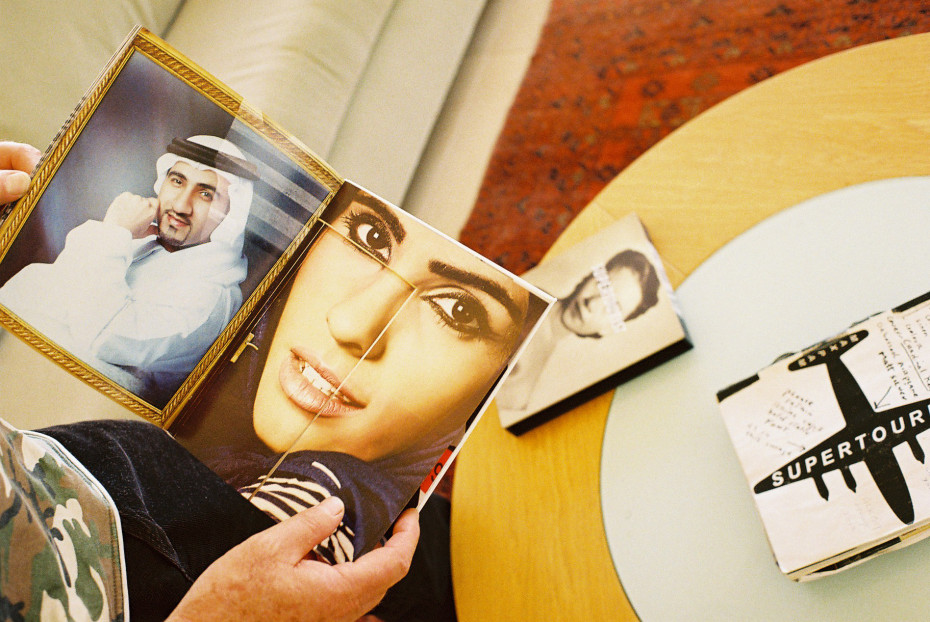
While keeping busy with photo commissions and attending his overseas exhibition openings, we tracked Max down for an afternoon at his uniquely positioned penthouse apartment with spectacular views. In the company of endless bookshelves stocked with just as much of his own work as other people’s we discussed what it means to be a contemporary photographer in the 21st century and his early years working as a photojournalist. Max’s most recent publication Supertourist is an epic artists’ monograph that was over ten years in the making. Wrapping up his last year as a university lecturer in photomedia before retirement, today he is as energetic as ever and the end of his artistic career is nowhere in sight.




Max, you’re originally from Melbourne right? What first brought you to Perth and what has kept you here?
I left Melbourne in 1973 for good. I spent quite some time away from Melbourne between 1970 and 1973, but in 1973 I left for good. I wasn’t happy with Melbourne at all and even going back there now I’m not happy with the place. Just my personal experience I suppose. My sister had her first child and she lived in Perth, so I figured that I’d get the boat from Fremantle – the port of Perth – to Singapore. You could get dormitory class on the boat back then. It was ten days on the Indian ocean for 75 dollars. It was a beautiful way to travel. So I caught the train across from Melbourne to Perth. My sister was living in Peppy Grove.

I stayed with her for about three months. I got a job working in a photo lab out in Belmont. It was kind of mass production photography with portrait snapshots, I worked in the photo lab and operated the film machine. That gave me three months experiencing Perth. I was really on my way out of Australia and wasn’t in a hurry to ever come back. That was my mindset when I got to Perth, however after three months in I figured that I really liked the place. I really connected with it in a meaningful way. So I after my trip to India I was able to contemplate coming back to Australia, which certainly wasn’t my thinking before I crossed the Nullarbor – the desert between Melbourne and Perth. Good old Perth, you got to love Perth.

Did you live in Borneo for a while during that time? Were you doing some work as a journalist there?
Yeah, I couldn’t work. I was in Brunei while my wife was working for the sultan of Brunei’s medical service. Basically the condition of the deal was that I could stay there with her, but I couldn’t work. Which suited me fine. I didn’t want to work. Jan, my wife, was earning enough for both of us. So, I started to do color editorial work for inflight magazines like Cathay Pacific and Singapore Airlines. I would think of somewhere to visit in that region, for example The Philippines or Thailand, and I’d do a story for the magazine which would usually cover the trip. I would shoot it with 35mm kodachrome 64 film and I would shoot my black and white stuff for myself with my big camera. I would create the magazine story with the picture editor of those magazines in mind.

I had really nothing but contempt for color editorial photos. What it did however, was make me much more productive in the field. It meant that I changed from shooting one roll of film per day – which was twelve shots – that were all carefully considered and slow in the way it evolved to working much faster. I think by the time the early 80s came along I didn’t have that kind of time anymore. I had a small family and doing the color photo stories made me much more efficient in the field. What would take me three to six months previously would only take me a month after that stint in Brunei. It was a pretty good education.

How much work did you do as a journalist? You talk about it like you seemed to enjoy it?
A lot of my work is informed by photojournalism. I don’t know what percentage, it could even be divided by 50 percent between the visual language of photojournalism and photography as a contemporary art form. For me doing photojournalism was and is something I can do. When we lived in London in the early 90s I worked for a French photo agency and I was the representative for the French journal Liberation in England. I did lots of stories for them and looked at stuff I normally wouldn’t go near out of my own volition, but because they were paying me and commissioning me I did it. And I got some really good enduring photos out of that. So, I’m pretty confident that if somebody said to me, “you can’t make any money out of anything other than just working on hardcore photojournalism,” I know I’d have that down. I know I could do a good job. It’s just that I only really wanted to photograph what I wanted to photograph. I think there is a pay-off for being stubborn about what you want to do about what you want to achieve.

You famously turned down an invite to the Magnum photo collective. What was your reason?
The Magnum thing. It was a real honor to be tapped on the shoulder in 92 in Paris. The president of Magnum – François Ebel at the time – came to an exhibition opening of mine. I knew François from quite a few years before. So I went to meet Magnum at the London office. It was in Brixton not far from where we lived. I really didn’t like the people I met there, I had no connection with them at all. So it wasn’t about not joining Magnum, I would’ve joined Magnum if the people in the London office had been even half human. I would have loved to have joined Magnum but the people I met once I got in the office made me think it really wasn’t worth the effort. At the same time I was invited to join this new photo agency in Paris. I went with them instead. That agency went down the toilet a few years ago. When they asked me to join it was kind of like the new kid on the block so it was exciting. I don’t regret walking away from Magnum however, that’s for sure.

You’ve just released your new book, Supertourist, your biggest work yet. You’ve been making photo books for 20 to 30 years or something now?
I’ve been doing journals since I was 20. I started my first journal on my first trip away from Australia driving a VW from Calcutta to London. I carried on from there. I was at art school in London. So it has always been part of my process from the get go. I mean it has always been a review tool for me and a repository for writing about my process, ever since 1970 – that’s quite a few decades of practice now! I’m slow to evolve with my photography so that process of keeping the books, nudging them this way and that, it helps.

The last three books you produced seem to be some of your strongest works: Ramadan in Yemen, Narcolepsey and Supertourist. It seems you’ve got more and more energy to make books as time goes by. Do you feel like you’re slowing down at all? Is your creative energy still flowing?
Yeah it is. Going to Italy recently was interesting. In Italy I was working on this thing called the Adriatic coast project. Basically I had four days to do it. It was pretty underwhelming but I was on fire. I got about 50 good pictures in four days. As you age you can still really evolve as a photographer. I think that’s really indicative of still being able to do it, still having the juice to do it, and doing it better than I ever could of before. It’s sort of interesting how, if you do have a long slow career like mine has been, it just keeps going if you have the opportunity.

I remember in the early 90s on the strength of my book GOING EAST that won the photobook prize at d’Arles I got offered quite a few projects. I remember one in particular in Andalucia, in Spain. Centered around Almeria I had a week to comment on Almeria with my camera. I had a week of rubbish really. I didn’t respond to Almeria at all. There was nothing there I really wanted to photograph but I was being well paid to do it so of course it was important to go through the process but I was really disappointed with what I got. What amazed me was that this project was so well funded. They had the list of everyone who was hot in photomedia working on the project, they had people like William Klein, Henri Cartier-Bresson, Martin Parr, among others. This was when Martin Parr was really at the height of his power and he did his best work. For his week in Almeria he did some extremely good work. It was a lesson for me. I looked at my stuff and I looked at his stuff and I learned a lot from that. I think part of my learning process is always learning from my mistakes.

Basically, I was unprepared for the project because I wouldn’t choose to go to Almeria and photograph normally, and my whole modus operandi was going somewhere where I wanted to be and commenting on it. The brief was the opposite to how I worked. But the wild thing is, here I am 20 years later doing the same thing really.

I want to talk about the cliché, how do you feel the digital age has transformed photography? I am interested to hear your perspective on it. With the internet, a million blogs, every man and his dog having a camera and wanting to be a photographer, do you think it is for the better?
For five seconds photography was very cool. Simply because it was the art form of choice for gen X and gen Y. You could say something about the specific culture you connect with and you could say something about your personal life. Maybe you’re not a good writer or you’re not good at anything else but you do have this ability to interrogate aspects of your life that you see as important and turn those things into a visual language. A lot of people got onto that with digital cameras in particular. It took the expense out of the process among other things and it gave the young questing photographer the tools to interrogate their worlds in a way that was very free and easy. But on the back of that came an almost oversubscription to photographing anything and everything that moved. There are too many photos out there.

People have been overwhelmed by photos and the idea of posting them every five seconds: this is me picking my nose, here I am massaging my scalp. The banal has kind of hijacked moments that people used to photograph because they were really aware of them. They were aware of them in a way that connected with their camera. It got lost in translation. Now it’s a question of tell me something I don’t already know or haven’t already seen. I think people are now suffering from a lot of photomedia fatigue. It’s not cool anymore, it’s just something everyone does. I actually think it’s quite an exciting time to be a photographer because there’s so much wallpaper out there. The really committed people operating a camera are going to do something strong. I think there’s always opportunities.

You have some strong artist influences in some of your work. I know August Sander’s work being one with the double portraits – an obvious one there. Is there much talent out there in the 21st century?
There’s good work out there. I like Tina Barney’s work a lot, she’s an American photographer and I like how she operates. Actually she’s not that new on the scene. Photomedia has a bit of a short attention span with regard to who’s hot and who’s not. A lot of really classy performers get lost in the woodwork. I still look for inspiration from the modernists. Not a lot that’s happened in the 21st century so far has really been meaningful for me. I still look back to the 20th century for inspiration.

There are a lot of photographs nowadays that appear to have all been taken before, which is not necessarily a bad thing. However, I’m just really amazed when I see something completely new. I guess there’s not too much room for originality.
Well, for me the last big thing to happen in photomedia was Nan Goldin, with her Ballad of Sexual Dependency in 1984. So that’s a long time ago. Some people would argue that there have been substantive players since then, but not on such a massive scale. Nan Goldin changed the way people constructed visual language. She set them all up for the 21st century.

A lot of people talk about the difference between an artist practicing photography and a photographer. What do you think about this? Would you call yourself an artist or a photographer?
I don’t know about labels. We are all photographers. I think that’s the point, we are all potentially writers as well. We are all potentially everything. I mean I taught myself how to use watercolors and I taught myself how to draw. There are lots of things we can do, but somehow these labels, I am this or I am that… I mean sure a brain surgeon, I understand how that label fits. When it comes to the notion of modernists and art and where it comes from and where you can take it, anyone can have a stab at that, and you can call yourself what you want. No one has the right to say you are not what you are.

Max thank you for the visit and chat. To find out more about Max’s photography visit his website here. His latest book Supertourist is available for purchase through Editions Bessard.

Photography: James Whineray
Interview & Text: James Whineray


woensdag 4 oktober 2017

Breach with tradition: Dutch Queen and Princesses Close up on the picture Erwin Olaf Photography


Breuk met traditie: koningin en prinsessen close-up op de foto
Tentoonstelling Erwin Olaf breekt met de traditie van afstandelijke fotoportretten van koninklijke hoogheden, in een fotoserie voor de jarige koning.
Paul Steenhuis
2 oktober 2017

Het moderne gezicht van de monarchie: koningin Máxima, voor de lens van Erwin Olaf

De Rijksvoorlichtingsdienst heeft afgelopen weekeinde vier opmerkelijke fotoportretten online gepubliceerd van koningin Máxima, prinses Catharina-Amalia, prinses Alexia en prinses Ariane, gemaakt door fotograaf Erwin Olaf.

De foto’s zijn opmerkelijk omdat ze, anders dan de meeste foto’s van leden van de koninklijke familie, van heel dichtbij genomen zijn: close-up. De vier vrouwen kijken je van dichtbij recht in het gezicht. Zo dichtbij, dat in de pupillen van de geportretteerden fotograaf Olaf te zien is. Die keuze van Olaf om zo overrompelend dichtbij te fotograferen, is een stap in de modernisering van de portretfotografie van het Nederlandse koningshuis, zegt de curator van het Fotomuseum Den Haag, Wim van Sinderen, die een overzichtsexpositie van Erwin Olaf voorbereidt. Want, zegt hij: „Door die close-up van het gezicht komt de nadruk erg op de ogen en de mond te liggen, en dat zie je niet vaak bij foto’s van koninklijke personen, wel bij autonome kunstfoto’s.”


Ook in de popcultuur zijn zulke close-ups, met wind in de haren, gebruikelijk. Olaf maakte de foto’s op 18 april 2017 ter gelegenheid van de vijftigste verjaardag van koning Willem-Alexander. Het nieuwe fotoportret van Máxima is sinds zondag te zien in het museum Jan Cunen in Oss, als onderdeel van de expositie Powervrouwen!. Dat is een expositie in drie delen, met onder meer geschilderde en gefotografeerde portretten van vijf koninginnen, Emma, Wilhelmina, Juliana, Beatrix en Máxima. Onder meer Andy Warhols beroemde portret van Beatrix hangt er.

De steeds losser wordende, moderne manier van portretteren van koninklijke hoogheden is daar goed te zien. Vooral Beatrix zorgde voor een vrijere manier van het geschilderde en getekende portret van de koningin, met portretten die onder anderen Marte Röling, Peter Struycken en Jeroen Henneman van haar maakten. Die wijken af van klassieke, afstandelijke staatsieportretten. Maar wat betreft fotografie koos de toenmalige vorstin nog vaak voor traditionele fotografie. Historica Reinildis van Ditzhuyzen deed daarom in NRC in 2007, bij Beatrix’ 70ste verjaardag, een oproep aan haar om modernere fotografen in te schakelen voor koninklijke portretten. Willem-Alexander en Máxima doen dat: ze vragen moderne Nederlandse fotografen, zoals Anton Corbijn, Rineke Dijkstra en Erwin Olaf.

Olaf maakte al eerder een fotoportret van Máxima, en hij maakte ook van koning Willem-Alexander een portret, dat voor de 2 euromunt werd gebruikt.

dinsdag 3 oktober 2017

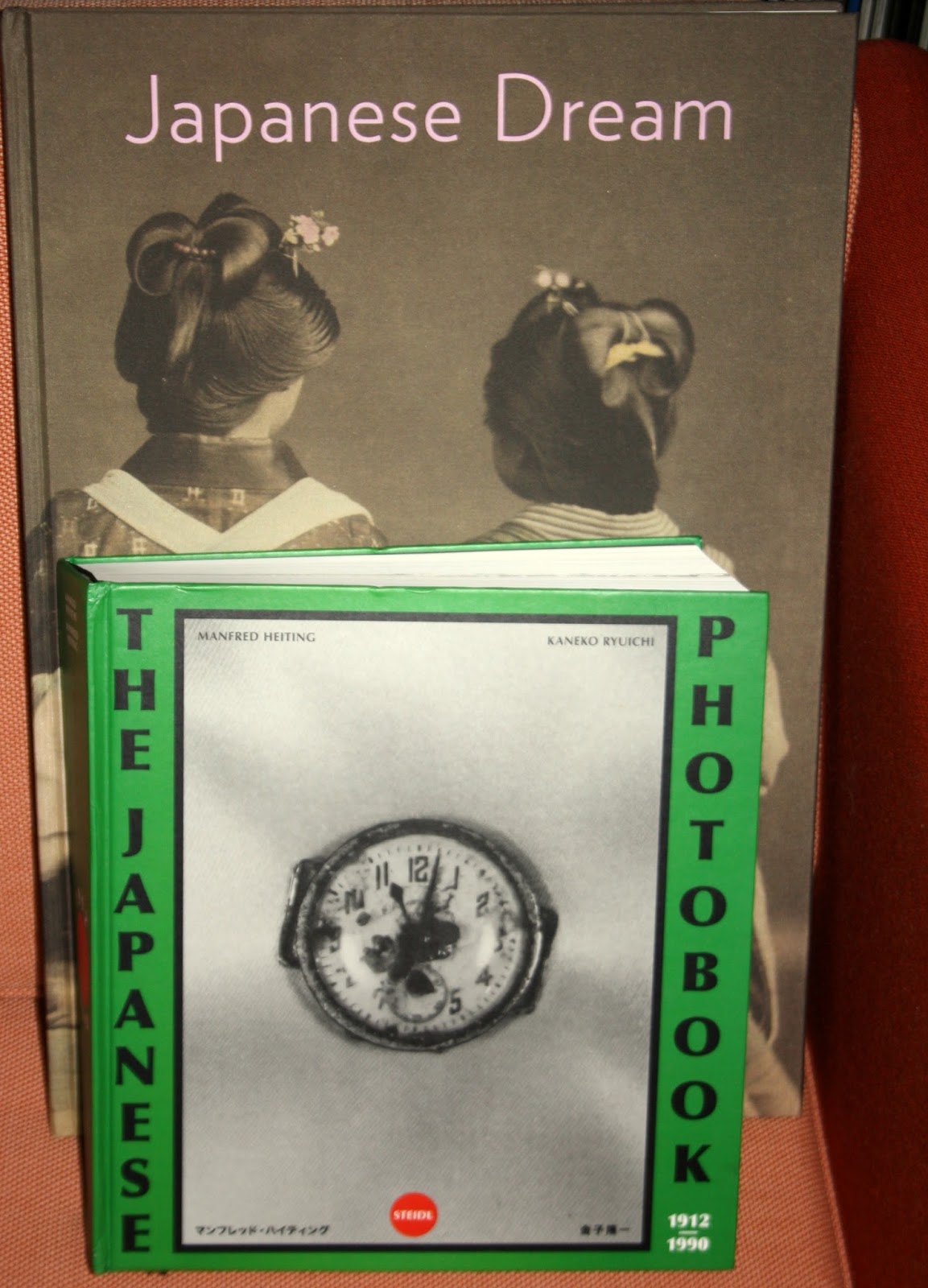
Masahisa Fukase's Ravens: the best photobook of the past 25 years? Collecting the Japanese Photobook 1912 - 1990 Photography


The Photobook Review
Collecting the Japanese Photobook
Ryuichi Kaneko interviewed by Ivan Vartanian


Ryuichi Kaneko is a leading historian of Japanese photobooks, and over the course of four decades he has amassed a formidable collection of twenty thousand volumes, including magazines and catalogues. In his role as curator at the Tokyo Metropolitan Museum of Photography, from its nascency up until this year, he oversaw the development of the institution’s public collection. As a scholar, Kaneko has been an important figure in supporting and extending scholarship surrounding Japanese photography and photobooks. Ivan Vartanian, who guest edited the latest issue of The PhotoBook Review, spoke to him about how he became one of the first and most enduring champions of the Japanese photobook, the evolution of the form, and what makes a book irresistible. This article also appeared in Issue 6 of the Aperture Photography App: click here to read more and download the app.

Ivan Vartanian: You began collecting books at a time when no one else had interest in Japanese photobooks. How and why did you start?

Ryuichi Kaneko: It started in high school and university, when I was taking photographs and realized I possessed absolutely no talent for it. But I loved photography. My father was an amateur photographer, and after the war he worked as an editor at a fashion magazine, which influenced me too, with all the exposure to material it provided. Since I couldn’t make images, I thought intensely about what I could do that would connect me with the world of photography, and started to just consume and absorb whatever materials I could get my hands on. Photobooks were a vehicle for that.

The first Japanese photobook I ever purchased was Otoko to onna [Man and Woman, 1961] by Eikoh Hosoe. And the first book I purchased by a foreign photographer, in 1967 or ’68, was William Klein’s New York [1956]. Around that time, 1967 or ’68, I started to become acquainted with a lot of photographers, and by 1974 or ’75 I started to buy books actively.
Kazuhiko Motomura is a publisher and editor who made Robert Frank’s The Lines of My Hand [1972] with Yugensha. When I ordered a copy of the book, Motomura delivered it by hand to my door. And from there started a long friendship and a sort of mentorship. He introduced me to a slew of photographers, bookstores, and bookstore owners, particularly in the Kanda area of Tokyo. After that, Kanda became my library, where books and magazines could be bought. My passion became my mission.

And it was just about this time that independent galleries were operating in Tokyo. To the photographers in these places— which were hangouts as much as they were noncommercial exhibition spaces—I became known as the guy who had all these photobooks from Japan and the West. It was an opportunity, or excuse, if you like, to talk to photographers and be connected to the medium that I loved so much. For example, at Photo Gallery Prism, I met photographers Hitoshi Tsukiji, Kineo Kuwabara, and Hiroshi Yamazaki. At Image Shop Camp, I met Keizo Kitajima. These photographers were of the same generation as me. That was an important point because they had an antiestablishment way of thinking.

IV: So what was the experience of buying photobooks at that time?

RK: It wasn’t simple. There weren’t a lot of photobooks by Japanese photographers. And of those that were in existence, only a handful were worth buying, like Shomei Tomatsu’s Taiyo no empitsu [The pencil of the sun, 1975] or Kikuji Kawada’s Sacré Atavism [1971]. But there were several gems from the West: Lee Friedlander’s Photographs [1978], Garry Winogrand, Nathan Lyons, and Bruce Davidson, as well as Aperture’s Paul Strand and Walker Evans retrospectives. There was also Dorothy Norman’s book on Stieglitz, An American Seer [1973], which I went around and showed to everyone, and it changed our impression of Stieglitz. It was this process that led me to become interested in the history of photography, too.

IV: After the mid-1970s, with the proliferation of photobooks, were you able to keep up?

RK: I bought pretty much ninety percent of everything that was published then. I don’t think you can imagine this: I would go to Kanda twice a week, and then Waseda, to visit used bookstores. And of course Shinjuku’s Kinokuniya bookstore. Unlike now, when there is a surplus of books, at that time there weren’t many Japanese photobooks to buy. How could I use the ¥10,000 I had in my hand? There were days when I couldn’t find a single book to buy and would go home feeling dejected.

IV: Were there any other people buying photobooks at that time?

RK: No! There was no one else.

IV: So how did this culture of collecting books grow in Japan?

RK: It’s thanks to me and Kotaro Iizawa. He, too, was studying Japanese photo history, and when we eventually met we realized we were both doing pretty much the same thing at the same time. Iizawa often said that we needed to change the culture from the enjoyment of taking photographs to the enjoyment of looking at photographs. That was in the first half of the 1980s, just before I started working at the Tokyo Metropolitan Museum of Photography. But the culture of actually enjoying reading Japanese photobooks didn’t evolve until after the 1990s. The 1980s were about foreign photobooks, but I was a cheerleader for Japanese photobooks.

IV: Were there any dramatic shifts in the form of Japanese photobooks between the 1960s and the ’80s?

RK: No, except for the dramatic improvements in printing technique. It was something that became apparent later. There was gravure printing in the beginning, after the war, and then after the 1970s it was all offset printing. But there still wasn’t this sense that a photobook was a function of its printing. That would be entirely the influence of the American photobook, which was recognized in Japan in the 1980s.

IV: Japanese photobooks have special value as the vehicles by which a lot of Japanese photography has been seen by the West. Do you think some distortion has resulted from this, by not seeing the prints themselves and only seeing the work in the form of photobooks?

RK: In Japan the photobook has had special significance for photographers from the 1930s onward; from the 1950s to the 1970s, there was a widely accepted understanding that there were certain modes of expression that could only be achieved in the form of a photobook. The print was forgotten to a certain degree. And when it came to academic matters of collecting, which is what I did as a curator for the Tokyo Metropolitan Museum of Photography, the first selection of images was often based on what was in photobooks. Quite frankly, many Japanese photographers are quite unconcerned with how work is shown in a gallery setting because the photobook is already out in the world and circulating among people.

It is precisely because of this imbalance that Japanese photobooks have their unique sensibility and can achieve new levels of expression. A great example of this would be the 1963 version of Eikoh Hosoe’s Barakei, which was printed in gravure. You could cut those pages out of the book and frame them. One shot of Yukio Mishima staring into the camera at close range has not only become a symbol of that body of work, it has become iconic. So when the prints from that series are sold, that image gets prominence over the other images, and the book’s context and complexity get lost.

IV: So how about contemporary photobooks? Are you actively collecting those too?

RK: [laughs] To be totally frank, it’s no different from the situation I was facing back in the 1970s. It’s very difficult to find a book I feel I must own. There are a lot of books out there now, which is like a dream come true, but sadly only a few make it into my collection. There are few books that communicate an innate need to exist, or to even be a photobook to begin with. Then there are the books that you just take one look at and know, “I must own this.” That’s what I’m looking for when I visit bookstores.

Translation from Japanese by Ivan Vartanian.

Ivan Vartanian is a Tokyo-based independent curator and author as well as the founder of the imprint Goliga.

Ryuichi Kaneko is a critic, historian, and collector of photobooks. He has authored or contributed to numerous publications, including Independent Photographers in Japan 1976–83 (Tokyo Shoseki, 1989),The History of Japanese Photography (Yale University Press and Museum of Fine Arts, Houston, 2003), Japanese Photobooks of the 1960s and ’70s (Aperture, 2009), and Japan’s Modern Divide (J. Paul Getty Museum)


Manfred Heiting is an inveterate and encyclopedic collector of the photobook. He began his career as a designer before gaining experience and acclaim as a curator, editor, scholar, and connoisseur of the genre. In 2013, the Museum of Fine Arts, Houston, added his library of books to their extensive set of four thousand prints from his collection, acquired in 2002 and 2004. This addition will include more than twenty-five thousand titles from around the world, including Germany, the Soviet Union, France, the United States, the Czech Republic, the Netherlands, and roughly two thousand volumes from Japan. As a committed outsider seeking insight via the Japanese photobook, Heiting’s interest in the form operates complementarily to historian Ryuichi Kaneko’s inside track [as discussed in App Issue 9]. In addition to the forthcoming volume Soviet Photo Books 1912–1941 (Steidl, 2015), Heiting is also at work on the book The Japanese Photo Book: 1912–1980. The following conversation with Lesley A. Martin, creative director of Aperture Foundation and publisher of The PhotoBook Review, appeared in The PhotoBook Review 008.

Lesley A. Martin: How and when did you first become interested in the Japanese photobook as a particular area of collecting?

Manfred Heiting: I started collecting Japanese photography in 1972 after a visit to Tokyo to meet with Goro Kuramochi, a curator and editor who later became a friend. He introduced me to a few photographers: Ikko Narahara, Eikoh Hosoe (who helped me a lot), Teiko Shiotani, Shoji Ueda, and others. I knew at that time that vintage prints were not part of the Japanese narrative, and during that visit I only bought a few contemporary prints from those photographers I met. I also acquired some books as part of my reference library, useful to understanding the work of the photographers; they were not seen as “collectible” at that time. It was only at the beginning of the 1990s that my interest in [photographers’] books became more focused. I see 1912 as a decisive starting point for my collection of Japanese books, based on a photobook by Kazuma Ogawa that documents the Meiji emperor’s funeral that year (which traditionally took place at night), Photographic Album of the Imperial Funeral Ceremonies. Floodlights had not been invented yet—just the magnesium flash for close range. The Japanese government purchased all the magnesium they could get and placed it alongside the road so that the long, nighttime procession could be photographed. The images are quite impressive, and I think that is a fitting beginning.

For now, however, I’ve stopped looking at books produced after the 1980s. I call most Japanese photobooks produced after that period “Eastern art for Western taste.” Before the 1980s (and in particular before the 1970s), publishing photobooks was an elaborate and expensive undertaking, and there was only a small market for them. In other words: before a publisher would take the risk, a book had to offer a very good value proposition, featuring the most acclaimed work from well-known photographers, and be well-designed and technically well-executed to ensure that the book would be a commercial success.

In the 1980s, more museums began to show photography, and more publishers saw the photobook as a new and attractive market. More buyers gave the publishers confidence to invest in photobooks, and English became the accepted language of choice for many of those publications. And when the museums rediscovered photography, the most common type of photobook became the catalogue, designed to replicate the individual print on the gallery or museum wall. You saw less diversity of printing and materials, less design, less individualistic layouts—just more and more color surrounded by more and more white paper. In my opinion, these are less “book” than just “printed, colorful paper.” This was the situation in the U.S. and Europe in the 1980s, which soon arrived in Japan and took away the most admired—and different—concepts of the Japanese photobooks of the 1960s and 1970s, with their unique design and photographic languages, and their high-quality printing. Photographers and publishers both had their eyes on the international market and adapted to our tastes in order to sell them to us. There are exceptions of course—but I shy away from most of the contemporary Japanese books.

Kazuma Ogawa, Photographic Album of the Imperial Funeral Ceremonies, Top: standard edition; bottom: palace edition. Privately published, 1912


The Meiji emperor died on July 30th 1912, aged 60, having presided over the Meiji Period since the age of four, living through a time of unprecedented change for Japan. The present official publication of the funeral ceremonies represent the first photographic record of an Imperial funeral in Japan. They are important historical documents both historically as well as photographically. Recording the night-time funeral procession presented considerable challenges in terms of timing and illumination. Ogawa Kazuma (1860-1929), who had learned his trade in the US, was a man with enormous experience as a photographer and publisher, and was thus ideally suited to cover the event. He (and other photographers at the event) used a flash system developed by the Sapporo photographer Shiina Sukemasa (1868-1933) in order to illuminate the procession. One copy in OCLC. (Titus Boeder, 4/2007)


LAM: What were your criteria for buying books when you started to collect in this area? Has that criteria changed over time?

MH: The criteria has not changed much—I am always interested in “complete-as-published” volumes—but the understanding and knowledge of what that means regarding Japanese photobooks has increased, and with the network of trusted local advisors, I now know more of what I am still missing.

LAM: Beyond its completeness and condition, what is it you look for when you buy a book, especially a Japanese photobook?
Are you interested in the design, in the quality of the pictures? Perhaps the real question: do you need to fall in love with a book in order to buy it?

MH: Of course, all of the above. As I have explained before: I am talking about the printed B-O-O-K (I have collected original photographic prints before and have closed that chapter). Therefore, I am interested in a “book” with all its unique parts and attributes: for its particular photographic language and authorship, its design, layout, size, printing, and binding quality—and that’s for each period and country. If I like a photographer’s work or think that the subject and style warrants “preserving,” I look for every book from a photographer, from every period and most subjects—provided that the book and all its attributes are of a high quality. I think this is a different way of falling in love with a book, but also an admiration for the complete result intended by the makers.

LAM: Are there any particular themes or motifs that you have found of interest or that especially define the Japanese photobook?

MH: Yes. Without being dogmatic, I categorize twentieth-century
Japanese photobooks in four distinct periods.

The pictorial period: This includes publications from amateur photo clubs (which have played an important role in Japan). Also, pictorialism extended longer in Japan than in Europe and the U.S., lasting until the beginning of the 1930s.

The avant-garde: Including the surrealist advertising and Bauhaus-influenced photobooks and advertising of the 1930s (these are not easy to find).

Propaganda: Many books and magazines were published by the imperial government, the military, and the occupying authorities in Manchuria and elsewhere. These materials are quite substantial and more “impressive” than European fascist-propaganda photobooks—but fall a bit short of the creativity seen in Soviet propaganda photobooks.

The 1960s and 1970s: This is the best-known and most widely admired period of Japanese photography and photobook making. During this period, books were it! And the quality of the photography, aesthetics, and production (mostly in sheet-fed gravure) are unmatched in other parts of our photobook culture.

LAM: The canon of the photobook has begun to solidify in the past ten years. Are there any Japanese photobooks that you feel have been left out of the surveys or best-of listings?

MH: Best-of listings are very bad for collectors who want to do more than just invest in the top/best/rarest of books. The market aspect has certainly helped to focus on a particular period or culture and has brought a lot to light, but other than “the top ten”—or, in particular, prewar photobooks—we are still mostly in the dark, or the books are unrecorded. The Japanese protest photobook is certainly on everyone’s radar, but that does not mean that we know much of what we are after. Robert Hughes, the most celebrated art critic of the later twentieth century, famously stated, “What strip mining is to nature the art market has become to culture”—this fits perfectly into our field as well.

LAM: How would you define the relationship between connoisseurship and scholarship in your role as a collector?

MH: In my particular situation, my quest and my goal cannot be separated: I seek to combine both connoisseurship and scholarship. I basically collect the twentieth-century photobook (more precisely the “printed photobook,” from about 1886 until 2000). Because of the two world wars, the twentieth century is a difficult period for the photobook—so much was produced and so much is lost forever, including most of the subject matter, and history needs to be preserved. I see the photobook in the twentieth century as one of the most important mediums in our culture and of that part of history, and recording it as a very important task for scholars, libraries, universities, museums, and collectors alike.

I also think that only a private collector is more “privileged” and can do both—if he or she is prepared to spend the time and money to accomplish both of these tasks. At the outset, one has to decide for whom and where the results will be made, deposited, and placed to keep it all together. In my case, I decided that some time ago. No one can take things with them.

Sean O'Hagan
Brooding and shatteringly lonely, the Japanese photographer's series on ravens has been hailed as masterpiece of mourning 

Bleakly atmospheric ... Koen-dori, Shibuya (1982) by Masahisha Fukase. Photograph courtesy of the artist

Monday 24 May 2010 13.14 BST First published on Monday 24 May 2010 13.14 BST
The British Journal of Photography recently asked a panel of experts, including photographer Chis Killip and the writer Gerry Badger, to select their best photobook of the past 25 years. Surpisingly, perhaps, Nan Goldin's Ballad of Sexual Dependency, from 1986, came a close second to a much less well-known book, Masahisa Fukase's Karasu (Ravens), which was published the same year.

While Goldin's book is now widely regarded as a pioneering classic of the raw, confessional style of photographic memoir, Fukase's work is described by the BJP as "an obscure masterpiece". A Japanese first edition, originally published by Sokyu-sha, currently fetches around £2,000 on the collectors' market, up to twice that if signed by the author.

My copy is, as far as I can ascertain, a third edition, which was issued in a print run of 1,000 copies by the charmingly titled Rathole Gallery in 2008. Here, the English title is The Solitude of Ravens. In her afterword, Akira Hasegawa writes: "The depth of solitude in Masahisa Fukase's photographs makes me shudder". One can see what she means. It is a darkly fascinating and obsessive work that lodges in the mind.

Fukase's images are grainy, dark and impressionistic. Often, he magnifies his negatives or overexposes them, aiming all the time for mood over technical refinement. He photographs flocks from a distance, and single birds that appear like black silhouettes against grey, wintry skies. They are captured in flight, blurred and ominous, and at rest, perching on telegraph wires, trees, fences and chimneys. Fusake photographs them alive and dead, and maps their shadows in harsh sunlight and their tracks in the snow.

Although the visual narrative is punctuated by other mysterious images – a nude, fleshy masseuse, a malevolent-looking cat, windswept girls peering over a boat rail, a homeless man drinking in what looks like a municipal rubbish tip – it is the ravens that obsess Fukase. His vision is so stark, so relentlessly monochrome, that you cannot help but wonder what kind of hold they had on his imagination. In The Photobook: A History, Martin Parr and Gerry Badger suggest one possible reading: "One climatic image of silhouetted birds in formation, wings outstretched against a grainy sky, metamorphoses into a wire news service image of overheard warplanes – a significant and traumatic image for postwar Japan."

Ultimately, though, it seems that Fukase's 10-year pursuit of the ravens was a way of trying to make sense of an altogether more personal emotional trauma. One of the most illuminating reflections on the book I have come across is by the photographer Stacy Oborn, on her always-stimulating website, the Space In Between. In an essay entitled The Art of Losing Love, Oborn notes: "Fukase's best-known work was made while reeling from loss of love." She points out that Fukase began his pursuit of the ravens just after Yoko, his wife of 13 years, left him. "While on a train returning to his hometown of Hokkaido, perhaps feeling unlucky and ominous," she writes, "Fukase got off at stops and began to photograph something which in his culture and in others represents inauspicious feeling: ravens. He became obsessed with them, with their darkness and loneliness." The Solitude of Ravens, then, is a book of mourning. (Yoko, tellingly, was Fukase's main subject before he turned his camera on the ravens.)

Fukase was born in 1934 and belonged to a generation of Japanese photographers who came to prominence in the long psychological shadow cast by their country's defeat in the war. In the late 1950s, he worked in advertising to fund his artistic projects, which included two celebrated series of darkly graphic pictures, Oil Refinery Skies (1960) and Kill the Pigs (1961), the latter a brutal depiction of a slaughterhouse. In the mid-70s, he set up a photography school called the Workshop alongside Shomei Tomatsu and Daido Moriyama, both of whom have since become internationally celebrated.

Fukase, according to Yoko, was an intense and obsessive character despite the joyousness of the images he made of her. She described their life together as moments of "suffocating dullness interspersed by violent and near suicidal flashes of excitement." After they split up, he suffered from bouts of depression and heavy drinking. "I work and photograph while hoping to stop everything," he once said. "In that sense, my work may be some kind of revenge drama about living now."

In Japanese mythology, ravens are disruptive presences and harbingers of dark and dangerous times – another reason, perhaps, why the photographer was drawn to them during his darkest hour. In 1992, five years after the book was published, Fukase fell down a flight of stairs in a bar. He has been in a coma ever since. His former wife, now remarried, visits him in hospital twice a month. "With a camera in front of his eye, he could see; not without," she told an interviewer. "He remains part of my identity; that's why I still visit him."

None of this should impinge on a critical reading of Fukase's work, which is powerful and affecting even if you come upon it, as I did, without knowing anything of the biographical background that underpins it. Nevertheless, it is now hard for me to separate his life and his photographs. "In Ravens, Fukase's work can be deemed to have reached its utmost height and to have fallen to its greatest depth," writes Hasegawa in her poetic, unflinching afterword.

For all that, there is a dark, brooding beauty in these images that is singular and affecting. In The Solitude of Ravens, Fukase found a subject that reflected his darkening vision, and he pursued it with obsessive relentlessness. It remains his most powerful work, and a kind of epitaph for a life that has been even sadder and darker than the photographs suggest.


zondag 1 oktober 2017

Views & Reviews Plastic Trash Swirling in the Ocean Beyond Drifting: Imperfectly Known Animals Mandy Barker Photography


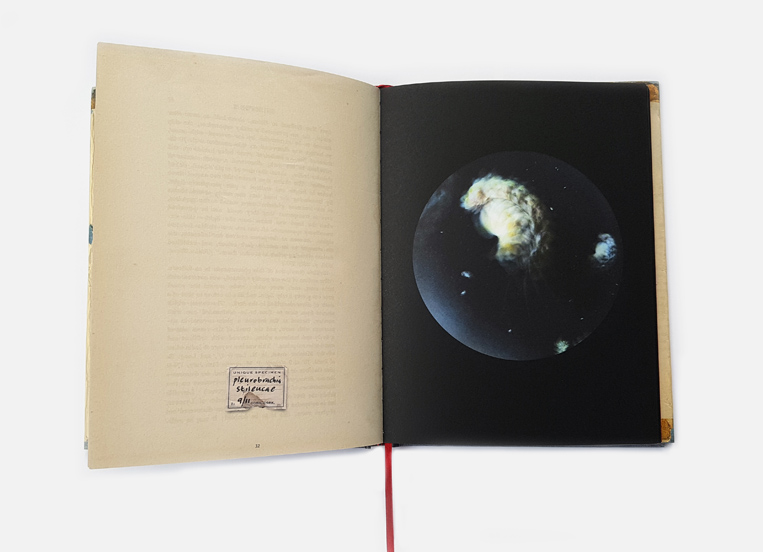
Beyond Drifting: Imperfectly Known Animals encapsulates in miniature the much larger environmental problems of an imperfect world. This work presents a unique collection of plankton specimens related to the pioneering discoveries made by naturalist JV Thompson in Cork Harbour during the 1800s. These recently found specimens are deceptive, however, and mysteriously conceal their true origin.

See also

Views & Reviews Anthroposceneries Mandy Barker Caleb Charland Yann Mingard Maija Tammi Unseen Photo Fair Amsterdam 2016 Photography


These Haunting Photographs Call Attention to Plastic Trash Swirling in the Ocean
Award-winning photographer Mandy Barker explores the beauty and tragedy of marine plankton and plastic waste

By Marissa Fessenden
SMITHSONIAN.COM
MAY 10, 2017
8351783938
At the start of creating her latest series, photographer Mandy Barker's 35-mm camera broke. She was pleased.

“It was quite interesting because it gave me unusual effects,” the Leeds, U.K.-based artist says. “The camera’s plastic light seal had deteriorated in the more than 20 years since it had been made, causing a sticky mess on the shutter that the film then stuck to,” she explains. “I thought, this was an idea to pursue because it relates to imperfection.”

Barker’s new series came to be called "Beyond Drifting: Imperfectly Known Animals." It takes a closer look at an environmental problem she has tackled before.

The photographer’s series have won international awards for tackling the grim story of marine plastic debris. Her series "SOUP" was inspired by learning about the great whirling gyre of plastic trash swirling in the mid-Pacific known as the Garbage Patch. She explored that idea even further with "‘Hong Kong Soup: 1826," featuring collections of plastic gathered from more than 30 beaches in the Hong Kong area since 2012. The trash swirls, floats, and schools like fish against a black background.

In the new series, the images resemble otherworldly life forms displaying curled, fanned or branching structures and surrounded by ghostly afterimages. Portions of the creatures are in focus and other portions are hazy, confined within a circle that evokes the field of view as seen through a microscope. Yet the creatures were never alive. As in much of her work, Barker is photographing pieces of plastic trash.

Barker had read about the tiny particles of plastic floating in the world's oceans that are being nabbed by hungry zooplankton. The miniature plastic particles have either broken down from larger pieces or started small, such as the microbeads found in face wash. By washing into the ocean, the tiny particles are creating huge problems for the health of zooplankton, oysters, corals and other sea life. Mistaking the particles for food, marine creatures fill their bellies with plastic and can succumb to intestinal blockages, perforations, poisoning from pollutants in the waste or simply feel satiated and starve to death. The microscopic zooplankton form the foundation of many marine food chains, so the effects ripple.

Barker was also inspired by a naturalist and biologist, John Vaughan Thompson. Thompson, born in 1779 in British controlled Brooklyn, published extensively on the natural history of various organisms, including marine plankton. Charles Darwin took Thompson’s memoirs, "Zoological Researches, and Illustrations Or Natural History Nondescript Or Imperfectly Known Animals: in a Series of Memoirs," on the Second Voyage of the Beagle.

Barker borrows that evocative phrase for her series and the idea of imperfection runs through the project. "The plankton are now imperfect because they have plastic in them," she says.

Ultimately, Barker broke four different cameras to complete her series. Each had the same flaw and let unexpected light leak in and alter the photographs. The series made the shortlist for the Prix Pictet, a prestigious international award focusing in photography and sustainability. An exhibition at The Victoria and Albert Museum in London opened May 6 and features all 12 of the photographers on the shortlist, including five works from Barker's 25-image series.

Barker spoke to Smithsonian.com about her new photography series.

How did you come up with the idea for the "Beyond Drifting" series?

The work actually began as part of an artist's residency in Cobh, Ireland, where I was introduced to the work of John Vaughan Thompson, a naturalist and biologist who worked in Cork Harbor. I thought it would be a really good idea to take current scientific research and tie it to the research in the 1800s. There's also the idea that in the 1800s, there wasn't any plastic around to be ingested by plankton.

I've represented plankton-like specimens from the plastic I collected from the same places in Cork Harbor where he did his work. The specimens look like plankton that are being viewed under the microscope, when in fact they're actually plastic objects that have been moved in camera to look like plankton. So it is a kind of a trick initially.

Can you tell me how you collected and selected the plastic objects?

For a month, I walked miles and miles of Cork Harbor. I engaged with the local community there and got people to come and do some beach cleans. The items that the public picked up, I've used. So it's a kind of nice collaboration.

There was lots and lots of plastic collected. I tried to select a cross-section of the sample. I picked out, for example, plastic bottles, beer can packaging, toys, plastic flowers. I wanted to get a bit of a diverse collection and all things people might use everyday. That might make them think: "How did that coat hanger end up in the ocean?"

How do you set these objects up and photograph them?

They are exactly as they were found, collected from the shoreline and unwashed. I bring them back to the studio and put them on a black velvet background. I use a fairly long exposure of several seconds, and I move the object on the velvet whilst the camera shutter is open. So this fairly long exposure gives the sense of movement. I studied the way that plankton moves in the ocean and tried to recreate that sort of motion.

What do you think people feel when they see these photographs?

I hope that they think they are sort of scientific microscope images, but when they read the captions and the descriptions, I hope it makes them think about the problem with plankton eating these pieces of plastic.

Plankton are at the bottom of the food chain, so when they eat the plastic it is detrimental to the rest of marine life and also to ourselves. Plastic pieces end up in fish and oysters that we eat.

I hope people will be shocked. I'm trying to create images that are beautiful in some way and attractive enough to draw the viewer in, make them curious. Then I want to shock them.

I think that science and discoveries are often put out are through scientific research journals or papers or things read in science circles. But it's hard to connect people to that. I feel that's my job as an artist and quite a powerful way of engaging an audience.

Your work has garnered a lot of attention and awards. Have you been surprised at this reaction to your photographs?

Yes, I'm constantly surprised. Perhaps my work has coincided with more attention on this issue, research-wise. Initially it was my "SOUP" series that was picked up about seven years ago. At that time, I don't think there was much public knowledge about the issue. Those images just went viral and since then people seem to enjoy my work. I feel very lucky.

That sounds like your work is doing what you hope—shocking people and grabbing them.

It does seem to work. I get a lot of emails from people saying it has made them think about their contributions of plastic waste. I couldn't be happier: That is my whole aim to make people think about what they have been using, to buy less plastic. If my work does that, then it has succeeded on some level.

This project involves more than photographs. Can you tell me about the pieces that accompany the plastic plankton images?

I've tried to recreate an old science book from the 1800s and emulate the work of John Vaughn Thompson. I wanted people to have a book to look at and take their viewing from there. Initially, I hope it will be viewed as an old specimen book that people will open and then realize what it is trying to tell.

And there are two specimen drawers. One has some marine plastic objects collected from around the world and in Cobh, as well as some microbeads—these are what they are finding in plankton. I balance that with the other specimen drawer, which shows a kind of old take on plankton specimens. They are my images, but they've been put in the drawer and pinned with old-style specimen labels.

So I've tried to recreate old and then current research.

What was it about John Vaughn Thompson's work that grabbed you?

There are lots of famous discoverers and adventurers—Charles Darwin, for instance. But Thompson was a very unsung hero. A scientist who works on plankton in the Cork Harbor explained this to me. John Vaughn Thompson really did a lot of fundamental research but scientists now haven't heard much about him. It was quite nice to highlight his work.

Do you have any new projects on the horizon?

For my next project, I hope to highlight the issue of synthetic fibers, which have now become a problem in the ocean. These are the sort of synthetic fibers that come from synthetic clothes. They are actually shedding off in the wash and going straight out to sea. Now, they can be found in the stomachs of fish. So this new research will be my next focus.

Peruse Barker's work digitally on her website or during her takeover of Smithsonian Magazine's Instagram feed May 6 - 12. Visit the work in person at the Victoria and Albert Museum in London May 6 - 28. Meet the photographer herself during Photo London, held May 18-21 at the Somerset House. Barker will be signing the book associated with her new series in the East Wing Gallery there on May 20 and 21.