
Édouard-Denis BALDUS (1813-1889). Chemin de fer du Nord - Voyage de Paris à Compiègne par Chantilly - Petites vues Photographiques. Vers 1860. 77 photographies présentées dans un très bel album oblong. Reliure plein maroquin bleu nuit aux armes de la famille de Rothschild, écoinçons au chiffre JR surmontés d’une couronne (pour le baron James de Rothschild). Titre en lettres d’or au dos. Chasses décorées de frises à motifs floraux et gardes moirées rouge vif. Très belle page de titre et index aux lettres enluminées. Légendes et n° de planches calligraphiés sur chaque montage au-dessus des images. Planches numérotées de 1 à 74, trois sont numérotées 11 bis, 66 bis et 69 bis. Format moyen des épreuves : 6,5 x 7,5 à 8 x 16 cm. Album : 23,5 x 33 x 4 cm. Très rare album réalisé à la demande du baron James de Rothschild (1792-1868), président de la Compagnie des chemins de fer du Nord. Cet exemplaires à ses armes est probablement son album personnel. Littérature : « Des photographes pour l’empereur, les albums de Napoléon III », BnF, Paris, 2004. Voir la notice page 68. Belles épreuves aux tonalités homogènes. Très belle reliure qui nécessite toutefois une restauration (manque une des gardes en fin d’album).

After Baldus |Cary Markerink
After Baldus is a multi disciplinary international research project that investigates the relationships between history, memory, memorialization and photography in the built landscapes of Picardy, France. Developed collaboratively by Dutch artists/photographers Cary Markerink and Theo Baart and American writer/historian/curator Alison Nordström, the project will lead to an exhibition an publication in 2017.
The inspiration and starting point for this project is the 1855 photographic album Chemin de Fer du Nord by Eduard-Denis Baldus. Commissioned by Baron de Rothschild, Baldus, and probably other photographers as well, photographed the newly constructed railway line between Boulogne-sur-Mer and Paris by which Queen Victoria would travel during her state visit to France.
The album contains 50 large albumenized salt-prints that depict, not only the stations, bridges and other structures directly related to the railroad, but also reveal the built landscapes that defined and were defined by the railroad, including the harbor, chateaux, cathedrals and other places of interest not visible from the train. Although the images vary in content, they share a straight informational style that, in the 20th century, would have been called documentary. The photographs embody the inherent tension between the descriptive and the artistic that we find in many early historical photographs, and raise profound issues about how we know what we know of the past.
The Chemin de Fer du Nord album is of interest for several additional reasons. It is, in a sense, one of the world’s first photographic books, produced in an edition of 25 and distributed to the train’s royal passengers and wealthy sponsors. Historically, its images can be read as markers of their time, what noted art historian Malcolm Daniel called “icons of Second Empire Grandeur”, noting the photographer’s “monumental depictions of France’s architectural patrimony, dramatic landscapes and his visual celebrations of the achievements of modern architects and engineers.” Of greatest significance to this project, it also constitutes an early systematic photographic survey of a region that has continued to be subject to similar efforts for military, economic and artistic reasons. This is the aspect of the early work thatAfter Baldus will address and interpret.
In both the book and the exhibition of After Baldus, Baldus’s images will be accompanied by 50 large color photographs by Baart and Markerink that examine the visual present of this area in the context of its past. Emphasising the built elements of highways, trains, bridges, and housing, the work will consider the influences people and the land have had on each other. The exhibition will be accompanied by a publication of these old and new photographs combined with texts that consider the history and the visuality of the region, readings of the historical album, the role of the 'engineer' photographer as author, the history of changes in use and understanding of these images, and the circumstances of the project’s making.
Twenty-five-year-old
Édouard Baldus arrived in Paris to study painting in 1838, shortly before Louis Daguerre first showed his magically precise photographic images to the world. In Paris, the self-taught Baldus worked outside the École des Beaux-Arts and atelier system, but submitted work to each of the annual Salons of painting and sculpture in Paris from 1841 to 1851. As a painter he met with little success and achieved no critical mention, but in the decade that followed, from 1851 to 1861, Baldus abandoned the easel and took up the camera, rose to the top of his new profession, won international critical acclaim, secured commissions from government ministries and captains of industry, and created a body of photographs now considered early masterpieces of the art.
Baldus first experimented with photography in the late 1840s, when the negative-positive process for paper photographs, invented by the Englishman William Henry Fox Talbot, began to flourish in France. By 1851, he was recognized as one of the few photographers to combine aesthetic sensitivity with an astonishing technical prowess in the still experimental and handcrafted medium. In that year he was one of five artists selected by the Commission des Monuments Historiques, a government agency, to carry out Missions Héliographiques, photographic surveys of the nation’s architectural patrimony, focusing particularly on those monuments in need of restoration. Baldus was sent south, to Fontainebleau, through Burgundy, the Dauphiné and Lyonnais, Provence, and a small part of Languedoc.
So impressive were Baldus’ pictures from the standpoint of clarity, beauty, and scale (some, printed from multiple negatives, reached three feet in length), that he quickly won government support for a project entitled Les Villes de France photographiées, an extended series of architectural views in Paris and the provinces designed to feed a resurgent interest in the nation’s Roman and medieval past. After focusing on the chief monuments of the French capital in 1852, Baldus traveled again to the south of France in the autumn of 1853, approaching his subjects with a rigor that banished precisely those picturesque elements and anecdotal details traditionally considered necessary to animate topographic prints of the period.
The following summer, Baldus coursed the dirt roads of the countryside by horse-drawn cart, moving from ruined castle to thatched hut, from pilgrimage church to paper mill, from town square to wooded chasm, through the fertile lowlands and rugged mountains of the Auvergne, in central France. Perhaps owing to the different physical character of this region, Baldus made photographs of the land itself, adding a poetic force to the graphic power and documentary value of his earlier photographs.

By 1855, Baldus had established a reputation as the leading architectural photographer in France, and his pictures drew much public attention and critical notice at the 1855 Exposition Universelle in Paris. In August of that year, Baron James de Rothschild—banker, industrialist, and president of the Chemin de fer du Nord (Northern Railway)—commissioned Baldus to produce an album of the highest quality. Showing views along the rail route from Paris to Boulogne-sur-Mer, the album was intended as a gift for Queen Victoria, a souvenir of her passage on the line during her state visit to Paris. The lavishly bound album is still among the treasures of the Royal Library at Windsor Castle, and the beautifully composed and richly printed photographs of cathedrals, town, and railroad installations included in it are among the photographer’s finest. They embody a classic, objectified vision softened by lessons learned in the landscapes of the Auvergne, and an equilibrium of documentation and artistry, of descriptive directness and picturesqueness, of presenting the scene to the viewer and inviting the viewer into the scene.
Also in 1855, Baldus began photographing on the work site of the New Louvre, documenting for architect Hector Lefuel every piece of statuary and ornamentation made for the vast complex linking the Louvre and Tuileries palaces. As individual records, these photographs served a practical function on the bustling work site, keeping track of the hundreds of plaster models and carved stones sculpted for the project; but as a collected whole, they formed a new means of comprehending and communicating a complex subject, bit by bit, to be reconstituted by the mind. Only photography—precise, omnivorous, prolific, and rapid—and then only in the hands of an artist both sensitive and rigorous—could produce an archive as a new form of art. Baldus’ photographs of the grandest of Napoleon III’s building projects were assembled in albums (four volumes in each set) and presented by the emperor to government ministers, the imperial family, and the reigning monarchs of Europe.
In June 1856, in the midst of his work at the Louvre, Baldus set out on a brief assignment, equally without precedent in photography, that was in many ways its opposite: to photograph the destruction caused by torrential rains and overflowing rivers in Lyon, Avignon, and Tarascon. From a world of magnificent man-made construction, he set out for territory devastated by natural disaster; from the task of recreating the whole of a building in a catalogue of its thousand parts, he turned to the challenge of evoking a thousand individual stories in a handful of transcendent images. Baldus created a moving record of the flood without explicitly depicting the human suffering left in its wake. The “poor people, tears in their eyes, scavenging to find the objects most indispensable to their daily needs,” described by the local Courier de Lyon, are all but absent from his photographs of the hard-hit Brotteaux quarter of Lyon, as if the destruction had been of biblical proportions, leaving behind only remnants of a destroyed civilization.
In the years that followed, Baldus expanded his highly successful series of large-format views of historic monuments, in both Paris and the provinces, and around 1860 he photographed the rough alpine regions of southeastern France. But it was in the second of his two railway albums, commissioned in 1861 by the Chemins de fer de Paris à Lyon et à la Méditerranée, that Baldus again pioneered new aesthetic ground and drew from a decade’s work to speak forcefully and eloquently about the relationship of history and progress. The album is a masterfully composed sequence of sixty-nine photographs of the landscape, towns, principal sites of interest, and railroad structures along the line from Lyon to Marseille and Toulon. By interspersing boldly geometric images of the railroad tracks, stations, tunnels, and viaducts with his classic views of historic architecture—the ramparts of Avignon, the Maison Carrée, Saint-Trophîme, the Pont du Gard—Baldus presented Second Empire engineers as the natural heirs to a great tradition of building that stretched back to Roman and medieval times.
The final section of the album presents the natural beauty of the Côte d’Azur, including the majestic rock formations at La Ciotat. The concluding pair of images restate the album’s central theme of progress: wilderness and civilization—Nature and Man—are juxtaposed. The rocky Ollioules Gorge is barren and untamed, walled in by cliffs at left and right (an effect emphasized by the dark edges of the photograph). Turn the page and one is in a different world: at the railroad station of Toulon, there is a Cartesian order to the arrangement of space and structures; the materials are iron and glass, dressed stone and brick; everything is crisp, industrial, modern. Most dramatically, the tracks race straight back through the station, as if pointing toward Nice and the Italian frontier (lines already viewed as the logical extension of the rail network)–and toward the future.
The photographs of Édouard Baldus are inextricably linked to the principal ideas of his age. Beginning with the Mission Héliographique, his views of historic monuments presented the vestiges of the past with unromanticized clarity for the architect, archaeologist, historian, and armchair traveler. His photographs of the construction of the New Louvre celebrated the glory of the Second Empire and created an art of the archive. And his presentation of a landscape transformed by modern engineering confidently espoused a belief in technological progress. In ten years, Baldus established the model for photographic representation in genres that barely existed before him.
Malcolm Daniel
Department of Photographs, The Metropolitan Museum of Art
October 2004
Theo Baart & Cary Markerink / After Baldus: Travels in a Wounded Landscape
10.12.2016–5.3.2017
Boulogne-sur-Mer © Cary Markerink
- Na hun gelauwerde fotoprojecten Nagele en Snelweg richtten Theo Baart en Cary Markerink hun lens op het cultuurlandschap van Noord-Frankrijk
- In het spoor van de 19e-eeuwse fotograaf Édouard Baldus
- Geïnspireerd door een van de oudste fotoalbums: Le Chemin de Fer du Nord
- Anderhalve eeuw veranderingen in het cultuurlandschap van Noord-Frankrijk: de impact van industrialisatie, verstedelijking, globalisering en oorlog
Geïnspireerd door het fraaie 19e-eeuwse fotoalbum Le Chemin de Fer du Nord traden Theo Baart en Cary Markerink – gelauwerd om hun documentaire fotoprojecten zoals Nagele en Snelweg – in het spoor van fotograaf Édouard Baldus (1813-1889) en richtten zij hun lens op het cultuurlandschap van Noord-Frankrijk. In hun serie After Baldus registreren ze – in kleur – de veranderingen die deze regio in anderhalve eeuw onderging ten gevolge van industrialisatie, verstedelijking, globalisering en verschillende oorlogen. Van 50 foto’s maakten ze afdrukken voor hun eigen album, dat qua formaat en opzet gelijk is aan dat van Baldus. Waar in musea doorgaans niets mag worden aangeraakt, biedt deze tentoonstelling in Huis Marseille de unieke mogelijkheid om het album van Baart en Markerink met handschoenen aan voorzichtig door te bladeren.
De kiem voor het fotoproject After Baldus werd gelegd in 2009, toen Baart en Markerink in het depot van het George Eastman House te Rochester, New York, de gelegenheid kregen om Baldus’ album te bestuderen. De Franse fotograaf vervaardigde Chemin de Fer du Nord. Ligne de Paris à Boulogne. Vues Photographiques in 1855 in opdracht van baron James de Rothschild, de vermogende bankier en financier van de gloednieuwe spoorlijn uit de titel. Op monumentale wijze demonstreert het grootformaat album het technische vernuft van de Franse industrie: niet alleen dat van de spoorlijn en de infrastructuur langs het traject, maar ook dat van de nog jonge uitvinding fotografie zelf. Dit album vormde het uitgangspunt voor Baart en Markerinks serie After Baldus, waarvoor zij in het spoor van de Franse fotograaf traden.
In samenwerking met cultuurhistoricus Alison Nordström (destijds als conservator verbonden aan het George Eastman House) begonnen Baart en Markerink hun onderzoek naar de (fotografische) geschiedenis van het gebouwde landschap tussen Boulogne-sur-Mer en Parijs. Hun foto’s vormen nadrukkelijk geen één-op-één vertalingen van die van hun voorganger, maar registreren op vergelijkbare wijze de status-quo van het cultuurlandschap langs hetzelfde traject in de 21e eeuw. Waar Baldus’ omgeving nog aan de vooravond van de industrialisatie stond, heeft die van Baart en Markerink niet alleen het hoofd geboden aan industrialisatie, maar ook aan verstedelijking, globalisering en verschillende oorlogen.
Waar in musea doorgaans niets mag worden aangeraakt, biedt Huis Marseille de unieke mogelijkheid om het grootformaat album met 50 kleurenfoto’s van Baart en Markerink met handschoenen aan voorzichtig door te bladeren. Dit fysieke aspect van de kijkervaring is immers inherent aan het medium. Het antiquarische album van Baldus zelf, met zijn 50 albuminedrukken, is te zeldzaam en kwetsbaar voor een dergelijke hantering, maar in een video slaat een conservator van het George Eastman Museum bladzijde voor bladzijde om in de veilige omgeving van het depot.
Theo Baart (1957) en Cary Markerink (1951) studeerden beiden fotografie aan de Gerrit Rietveld Academie te Amsterdam. Sinds 1987 ondernemen ze regelmatig gezamenlijke fotoprojecten. Een terugkerend onderwerp in beider oeuvre is het cultuurlandschap: de door mensen en machines gevormde omgeving. Voor hen vormt het fotoboek een belangrijk medium, omdat dit de mogelijkheid biedt om hun werk, dat een documentair karakter heeft, in een samenhangende context te tonen. Hun fotoboeken geven ze in eigen beheer uit via hun stichting Ideas on Paper. Individuele projecten van Baart en Markerink zijn o.a. Werklust, biografie van een gebruikslandschap (Baart, 2015) en Memory Traces (Markerink, 2009). Het fotoboek After Baldus: Travels in a Wounded Landscape, met het gelijknamige essay van Alison Nordström, verschijnt in 2017 bij Ideas on Paper (onder voorbehoud).
Édouard Baldus, Saint-Riquier (Chemin de Fer du Nord, 1855), Courtesy George Eastman Museum, Rochester NY
ATM – Boulogne-sur-Mer © Cary Markerink
Édouard Baldus, Gare de Longueau (Chemin de Fer du Nord, 1855), Courtesy George Eastman Museum, Rochester NY
Saint-Denis © Theo Baart
Édouard Baldus, Église d'Auvers (Chemin de Fer du Nord, 1855), Courtesy George Eastman Museum, Rochester NY
Saint-Léonard © Theo Baart


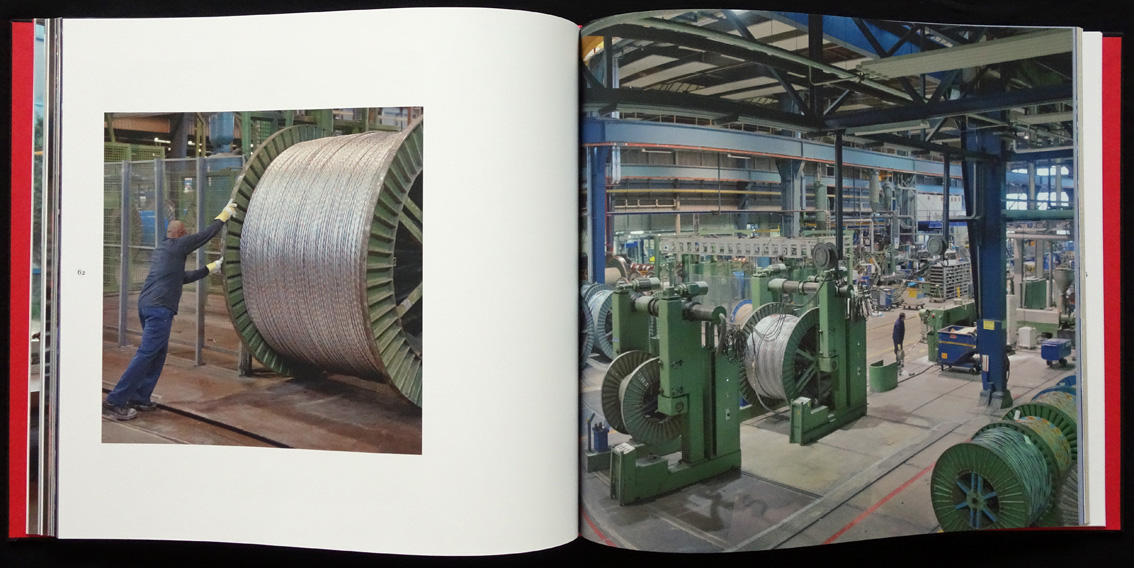
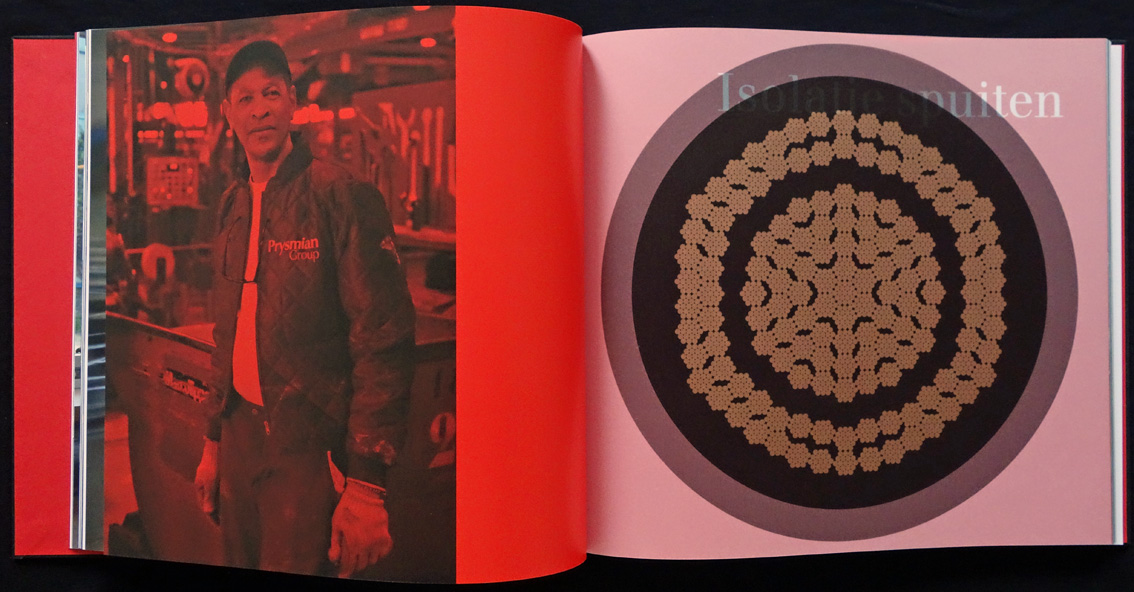
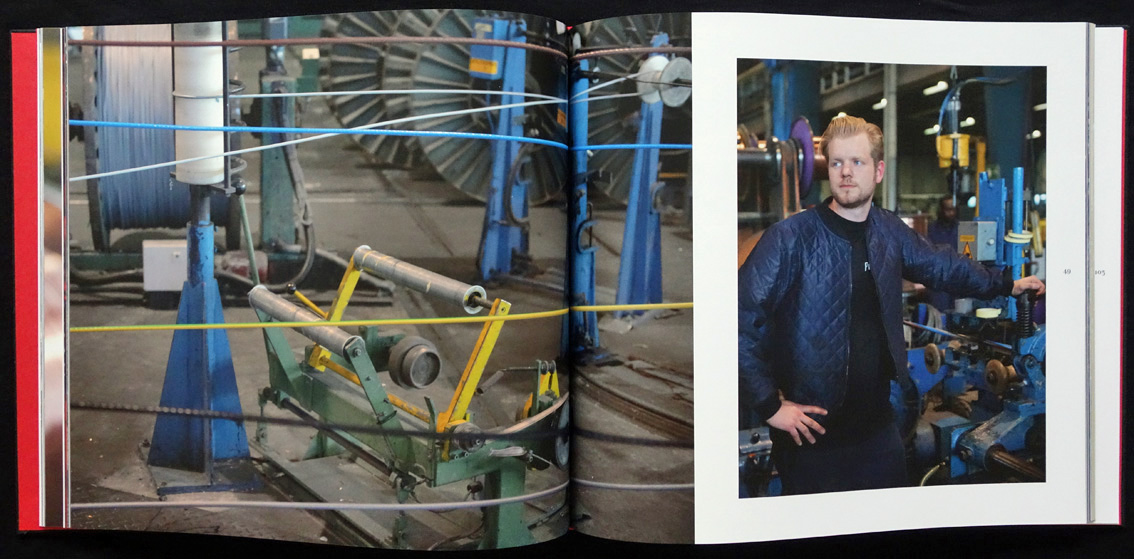
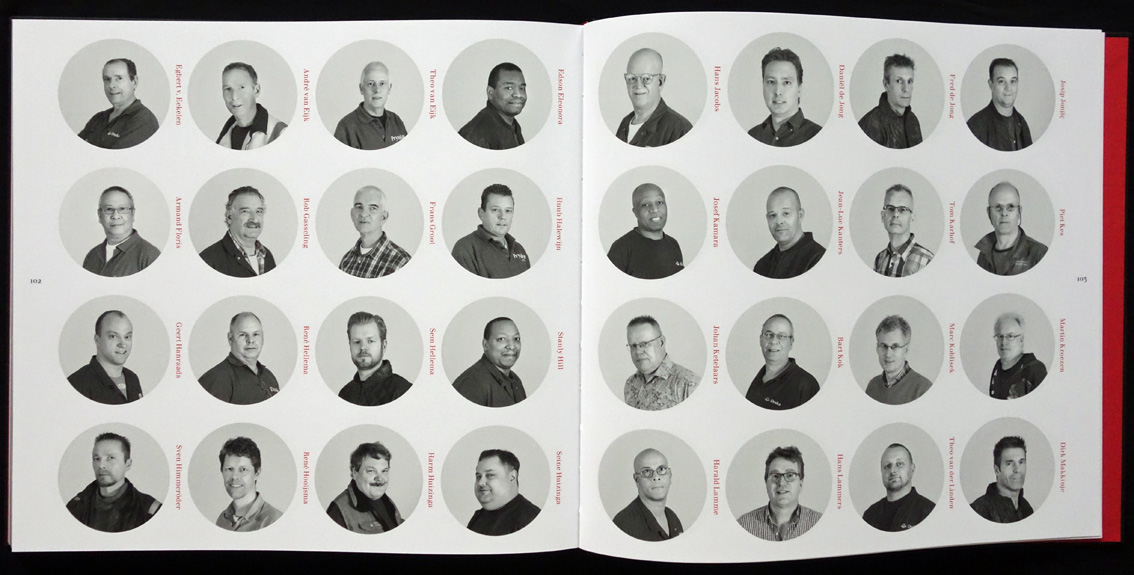
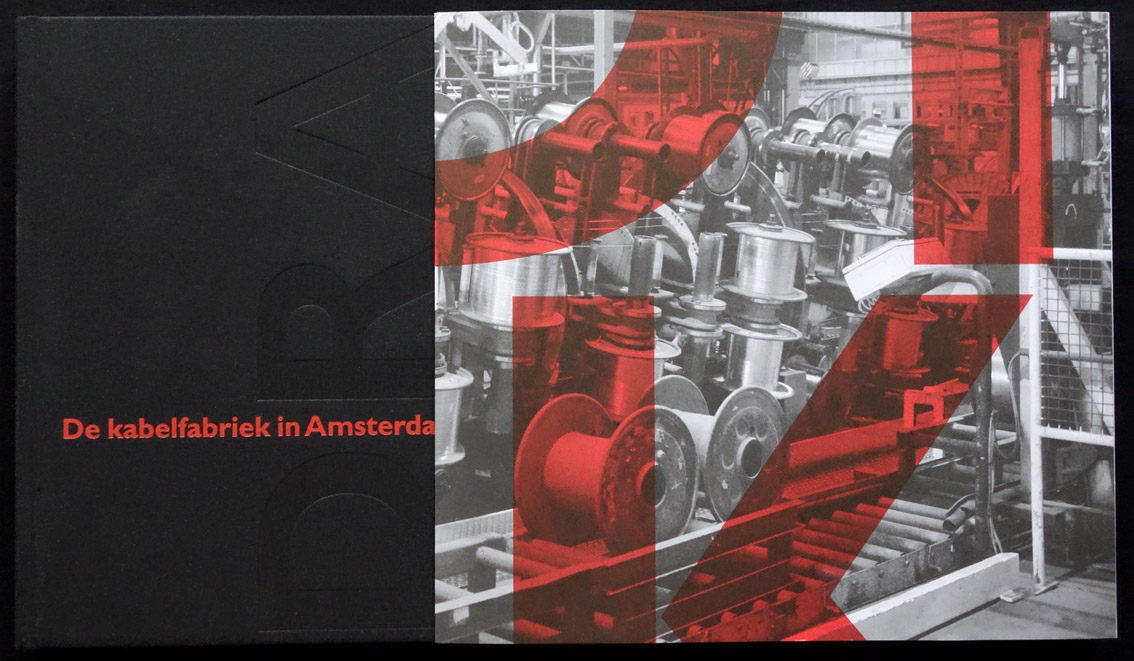
 once commented succinctly on his work as follows: 'They get what they ask for, but I deliver damn good work' - the very thing that makes industrial photography books so attractive. The books show work from a period during which photographers could not make a living as artists/photographers and depended on such prestigious commissions. With this highly professional approach, photographers like Violette Cornelius Violette Cornelius and Ata Kando: Hungarian Refugees 1956






 Posts
Posts


