zaterdag 11 februari 2012

Why is great British documentary photography overlooked at home? Chris Killip Documentary Photography


Why is great British documentary photography overlooked at home?

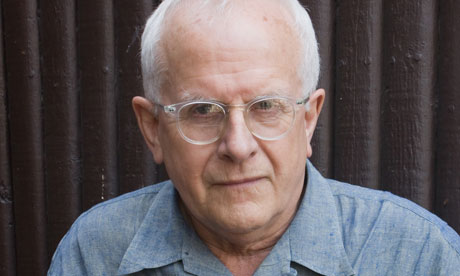
Photographer Chris Killip has a major retrospective show in Germany – but his gritty, hard-hitting images of England deserve more recognition from British galleries


Time for recognition ... Photographer Chris Kilip. Photograph: Kent Rodzwicz


Last week, a major retrospective of Chris Killip's work opened in the Folkwang Museum in Essen, Germany. For the uninitiated, Killip is a British photojournalist whose best known work is a book called In Flagrante, published in 1988, and is sometimes described as "the most important photobook to come out of England in the 1980s." (It currently changes hands on the collectors' market for £300 to £400, but you can purchase a recent reissue from Errata Editions for just under £30.) See for a review ...

Killip belongs to a generation of great British photojournalists that emerged in the 1970s and 1980s and also includes Tony Ray-Jones, Graham Smith, Chris Steele-Perkins and Brian Griffin. All worked predominantly in black-and-white and looked long and hard at the changing face of British society in the 1970s and 1980s. Though it would be hard to think of another British photobook as influential as In Flagrante, Killip's work, like that of his contemporaries, is all but overlooked by British curators at the moment. The fact that a major retrospective of his work is currently taking place in Germany rather than in his native Britain surely raises questions for our major art institutions, not least why it wasn't held at Tate Britain or the Hayward, which seems to have all but given up on photography of late. Or at the Baltic in Gateshead? (Killip lived and worked just across the Tyne in Newcastle from 1975 until the late 1980s, and made some of his most powerful images in the north-east.)

Surely, too, a group retrospective of the above-named pioneers of British photojournalism is long overdue? My instinct is that this kind of work has long been out of fashion with our arbiters of culture in Britain. It is black-and-white, gritty, hard hitting and politically provocative – the photography critic, Gerry Badger, correctly described In Flagrante as "taken from the point of view that opposed everything Thatcher stood for". For all the above reasons, of course, Killip's brilliantly composed photographs have a certain renewed potency at a time of enforced austerity in a Britain that is, if anything, even more divided. More than that, though, they are great photographs per se and, as such, should be seen. It's time the lost generation of great British documentary photographers were acknowledged for their groundbreaking work at home as well as abroad.
Watch a slideshow of Chris Killip's images on his website


donderdag 9 februari 2012

El rectángulo en la mano Sergio Larrain (1931 - 2012) Latin American Photobook Photography


The photographer Sergio Larrain (1931 - 2012) passed away yesterday morning at his home in Chile. Born in Santiago, Chile, in 1931, Sergio Larrain studied music and forestry before discovering photography in 1949 during a trip to Europe and the Middle East. He joined the staff of the Brazilian magazine O Cruzeiro before finding work at the MoMA in New York.


In 1958, a grant from the British Council enabled him to make an eight-month study of large British cities. (Pictures from the study were published as London in 1998). The same year, Henri-Cartier Bresson, after seeing Larrain’s street scenes and portraits of children, invited the Chilean to Paris, where he stayed and worked for two years.
He got involved with Magnum in 1959 and became a member in 1961, the same year he photographed the poet Pablo Neruda’s house. In 1966 the photographs were published in a book, Una Casa en la arena, accompanied by a text from Neruda.
Before his return to Chile in 1963 and with the encoura gement of the Brazilian poet Tiago de Melo, Larrain published his first book, El rectángulo en la mano, featuring a selection of photographs of children wandering the streets of large cities like Valparaiso and Santiago.
“I started in Valparaiso, roaming the hills night and day. The little girls walking down a staircase was the first magic photo that presented itself... A good photograph is born from a state of grace, and grace manifests itself once we are delivered of conventions, free like a child discovering reality.”
After meeting the Bolivian Oscar Ichazo, Larrain gave up photography to concentrate on his study of mystical Eastern cultures, writing and painting but rarely picking up his camera. He retired from social life to live in solitude and live a life that reflected his newfound philosophical principles.
Bernard Perrine
A growing appreciation of the photobook has inspired a flood of new scholarship and connoisseurship of the form--few as surprising and inspiring as The Latin American Photobook, the culmination of a four-year, cross-continental research effort led by Horacio Fernandez, author of the seminal volume Fotografia Pública. Compiled with the input of a committee of researchers, scholars, and photographers, including Marcelo Brodsky, Iatã Cannabrava, Pablo Ortiz Monasterio and Martin ParrThe Latin American Photobook presents 150 volumes from Argentina, Bolivia, Brazil, Chile, Colombia, Cuba, Ecuador, Mexico, Nicaragua, Peru and Venezuela. It begins with the 1920s and continues up to today, providing revelatory perspectives on the under-charted history of Latin American photography, and featuring work by great figures such as Claudia Andujar, Barbara Brändli, Manuel Álvarez Bravo, Horacio Coppola, Paz Errázuriz,Graciela Iturbide, Sara Facio, Paolo Gasparini, Daniel González, Boris Kossoy, Sergio Larrain and many others. The book is divided into thematic sections such as "The City," "Conceptual Art and Photography" and "Photography and Literature," the latter a category uniquely important to Latin America. Fernandez's texts, exhaustively researched and richly illustrated, offer insight not only on each individual title and photographer, but on the multivalent social, political, and artistic histories of the region as well. This book is an unparalleled resource for those interested in Latin American photography or in discovering these heretofore unknown gems in the history of the photobook at large.


Sergio Larrain’s first book is the impossible to find El Rectangulo En La Manopublished in 1963 to accompany an exhibition in Santiago, Chile. It is a staple bound booklet of 12 folios (a folded sheet of paper) containing 17 images that are mostly from a series he shot of vagabond children in Chile. The copy that I have seen has the last page and image in the book cut out and a quote by Hass (Ernst?) is “whited out.” The owner of that copy thinks this was done by Larrain’s hand. A copy has been found recently and is reported to have the 17th photo still intact with no text “whited out.” The copy that is shown in Martin Parr’s Photobook (page 102) is the same that I have seen and Parr’s description states that it is a book of 16 images. This small rarity gets more mysterious all the time.

It is a wonderful book that teases you into the work of Larrain. You are left wanting more and more. Most would say that it suffers from poor reproductions as they are simple, rather dirty looking letterpress but it contains a great deal of charm in its lo-fi production. If you are ever in Paris, there is a copy at the Romeo Martinez library in the basement of the Maison Europeenne de la Photographie that you can request to see. Also I (5B4) have been told that MOMA in NYC has copy in their research library. Either would be worth the trip actually.


dinsdag 7 februari 2012

Greetings from Jakarta Postcards Dutch East Indies Scott Merrillees Photography


Greetings from Jakarta: Postcards of a Capital 1900-1950 is the most comprehensive visual record of Jakarta ever published covering the first half of the twentieth century which was also the last half century of colonial rule. Four hundred and sixty postcards from the author's own collection are brought together here to reveal a city that has largely vanished and is barely recognizable even to most life-long residents. Three hundred and sixty-two of the postcards have individually researched captions and are linked to period maps which enable the reader to identify the precise location of the each image.

This book is the result of twenty years of collecting and research by Scott Merrillees to try and answer the questions: what did Jakarta look like in the past and how did it evolve into the city it is today? It is a continuation of Scott's first book, Batavia in Nineteenth Century Photographs, which focuses on Jakarta during the second half of the nineteenth century. The aim of both books is to transport the reader back to the Jakarta of an earlier age and bring it back to life for the understanding and enjoyment of modern residents and visitors alike before it is lost forever.

See also Indonesia 500 Early Postcards ...

G. Kolff & Co.   (1852-1922)
Batavia (Jakarta), Java

Gualtherus Johannes Kolff moved to the Netherland Indies in 1850 and opened a bookshop at Batavia two years later. Soon after he began publishing various lithographic produts eventually including postcards. These cards included chromolithographic and monochrome images of local views and types. These cards gained a wide audience and Kolff later opened offices in Bandung and in Amsterdam.

Boekhandel Visser & Co.
Weltevreden [Jakarta], Batavia (Jakarta),
Buitenzorg (Bogor) & Bandoeng (Bandung), Indonesia


F.B. Smits Boekbinderij - Encadrementen te Batavia


TIO TEK HONG, "Weltevreden. Special Depot of Java postcards.

Photobooks & Photography Dutch East Indies | Promote Your Page Too


Greetings from Jakarta Postcards Dutch East Indies Scott Merrillees Photography


Greetings from Jakarta: Postcards of a Capital 1900-1950 is the most comprehensive visual record of Jakarta ever published covering the first half of the twentieth century which was also the last half century of colonial rule. Four hundred and sixty postcards from the author's own collection are brought together here to reveal a city that has largely vanished and is barely recognizable even to most life-long residents. Three hundred and sixty-two of the postcards have individually researched captions and are linked to period maps which enable the reader to identify the precise location of the each image.

This book is the result of twenty years of collecting and research by Scott Merrillees to try and answer the questions: what did Jakarta look like in the past and how did it evolve into the city it is today? It is a continuation of Scott's first book, Batavia in Nineteenth Century Photographs, which focuses on Jakarta during the second half of the nineteenth century. The aim of both books is to transport the reader back to the Jakarta of an earlier age and bring it back to life for the understanding and enjoyment of modern residents and visitors alike before it is lost forever.

See also Indonesia 500 Early Postcards ...

G. Kolff & Co.   (1852-1922)
Batavia (Jakarta), Java

Gualtherus Johannes Kolff moved to the Netherland Indies in 1850 and opened a bookshop at Batavia two years later. Soon after he began publishing various lithographic produts eventually including postcards. These cards included chromolithographic and monochrome images of local views and types. These cards gained a wide audience and Kolff later opened offices in Bandung and in Amsterdam.

Boekhandel Visser & Co.
Weltevreden [Jakarta], Batavia (Jakarta),
Buitenzorg (Bogor) & Bandoeng (Bandung), Indonesia


F.B. Smits Boekbinderij - Encadrementen te Batavia


TIO TEK HONG, "Weltevreden. Special Depot of Java postcards.

Photobooks & Photography Dutch East Indies | Promote Your Page Too


woensdag 1 februari 2012

God is dead, and naked human beings face the world shameless and without pride Man and Woman Eikoh Hosoe Photography


Eikoh Hosoe was born in Yonezawa, Yamagata in 1933 and graduated from Tokyo College of Photography in 1951. He exhibited in his first solo show in 1956 and has since established himself as an internationally acclaimed photographer. Hosoe's figures have a Surrealist quality that is startlingly intimate, yet also render the flesh abstract and strange.

His approach to photography is philosophical, "… To me photography can be simultaneously both a record and a mirror or window of self-expression… The camera is generally assumed to be unable to depict that which is not visible to the eye and yet, the photographer who wields it well can depict what lies unseen in his memory." Renowned Japanese author, Yukio Mishima wrote of Hosoe’s photographs, “God is dead, and naked human beings face the world shameless and without pride.”

Eikoh Hosoe’s work has been exhibited in such significant institutions as the International Center of Photography and Museum of Modern Art, New York; the Nikon Salon, Tokyo; the Victoria and Albert Museum, London, and the Smithsonian, Washington D. C. Published works include: Man and Woman, 1959, Embrace, 1971, The Cosmos of Gaudi, 1986 and Eikoh Hosoe, 1986, among numerous others. He has been a professor of photography at Tokyo Institute of Polytechnics since 1975 teaching various photography workshops worldwide.


Review by GEOFF GEHMAN, The Morning Call ...
For Hosoe, photography has always been a forum for autobiography. Evacuation from his native Tokyo to the countryside during World War II helped make him a wanderer; the destruction of Nagasaki and Hiroshima helped make him a lonely wanderer. Factor in rebellions against his father, a Buddhist priest, and conservative Japanese photography, and it becomes clear why he's such a theatrical humanitarian.
In "Kamaitachi," a 1965-68 series, Hosoe allegorizes his, and Japan's, isolation. A sad clown, named for an invisible "sickle-toothed weasel," roams rural districts in a mental fog. He perches like a frog in the corner of a giant fence; he looks utterly miserable in the middle of a happy crowd. Using an actor to express a childhood self could have been awkward, even melodramatic. But Hosoe's choreography is subtle, touching, strikingly ambiguous.
Estrangement turns ghostly in the 1971-75 series "Simmon: A Private Landscape." An androgynous female member of an environmental theater company haunts an industrial area near Tokyo's Arakawa River, one of Hosoe's haunts. Simmon's glowing presence and Hosoe's compelling composition elevate wasteland to psychological park.
"Man and Woman" (1959-60) was Hosoe's first revolutionary act. To criticize Japan's repressed sexuality, and Gen. Douglas MacArthur's oppressive occupation, he worked with members of the Butoh Dance Troupe, a company formed to counter numbed, spasmodic post-war Japan. In Hosoe's photos, performers model naked bodies as surrealistic abstractions. Whether turning a backside into a cello/table, or a bent arm into a vise for a head, Hosoe nimbly walks a tightrope between eroticism and death, detachment and attachment.
"Embrace" (1969-70) confirms bare flesh as inviting sculpture. Three pelvises are aligned tightly, pictured from the side, and cropped impressively; a bulging dark arm wraps a china-white midsection like marble animated by Bernini. Credit Hosoe for imposing his will on strong-willed subjects and raising their mutual charisma.
Hosoe's most aggressive partner is author Yukio Mishima, renowned for his samurai mentality. In the 1961-62 "Barakei (Ordeal by Roses)" series, Mishima's warrior body anchors a phantasmagoria of religious symbols, architectural elements and wild dreams. While the collages seethe with curiosity and vitality, they're too disconnected, too jigsawed. They predict Mishima's suicide, but they fail to capture his assessment of Hosoe's images: "God is dead, and naked human beings face the world shameless and without pride."
Hosoe's portraits of quieter subjects speak louder. People inform their spaces, and vice versa, no matter how plain the setting. Prints from the "Kimono" series are styled as exquisitely as Chinese porcelains. Hosoe accomplishes the neat trick of giving a fashion model the suggestion of an intriguing interior. Too bad only three prints are displayed; it would have been good to see an image of a mourning widow, a relatively public stance for a relatively private country.
Perhaps Hosoe's most meta deed is "The Cosmos of Gaudi." He waited 13 years before he began photographing Antonio Gaudi's architecture, then devoted seven years to depicting these wondrous creations. The wisdom of patience, of mentally absorbing and arranging, obviously paid off.

A foreshortened view of Gaudi's famously fanciful Barcelona cathedral is both Gothically stern and playfully futurist. Oozingly plastic close-ups of ornaments are as luscious as vegetables photographed by Hosoe mentor Edward Weston. Once again, Hosoe changes, blends and improves the natures of very different creatures; once again, he's a prying poet.


See also 40 definitive publications in Japanese Photobooks of the 1960s and 70s Photography