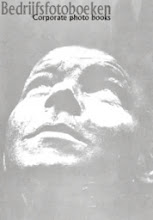
...a photoBook is an autonomous art form, comparable with a piece of sculpture, a play or a film. The photographs lose their own photographic character as things 'in themselves' and become parts, translated into printing ink, of a dramatic event called a book...
- Dutch photography critic Ralph Prins
For four months I have been working with Arnold van Bruggen on The Sochi Project. In this time, there has been a lot of interest in the way in which we are trying to finance this project. We are relying principally on donations to ensure that for five years we are able to intensively document the developments around Olympic Sochi. And that seems to be working. More than 100 donors have now come forward, donating a total of nearly €9,000. We’re not there yet, but we’re well on the way...
Sochi and sanatoria are inextricably linked. During the Communist era Sochi was a health resort where workers were sent for a holiday or to recuperate. In the run-up to the Games almost all of the sanatoria will undergo a facelift in order to lose their Soviet image. Before that happens, The Sochi Project will devote extensive attention to these historic buildings. At the end of November we will bring out our annual publication; a homage to the Soviet sanatorium (only available to donors of The Sochi Project). In the summer of 2010 we intend to organise a trip for people interested in staying in one of these not-yet-renovated Soviet sanatoria.
• The nominations for the Kasseler Fotoforum Photo Book Award 2008+2009 (which includes 101 Billionaires) have been compiled in a beautiful catalogue, which can be viewed and ordered on the website photobook.ph. • The autumn issue (#196) of Aperture Magazine contains an eight-page portfolio from 101 Billionaires. • With the book, I have also been nominated for the Deutsche Börse Photography Prize 2010. The shortlist will be announced at the end of October.
For several years I have been taking photos of my neighbours, Willem & Kid, in the Utrecht problem neighbourhood Ondiep. A selection of these can now be seen in the portfolio on my website. The demolition of our neighbourhood has now come to within 50 metres of our front doors. We expect to have to move out of our houses in around a year. Of course I will continue to follow Willem & Kid.
Agenda September 2009 - November 2009 01.09.2009 - 10.10.2009 Work from Russia (2003 - 2009) will be exhibited in the Fotofestival Noorderlicht satellite programme. Bookshop Godert Walter, Oude Ebbingestraat 53 in Groningen. godertwalter.nl 19.11.2009 - 22.11.2009 Flatland Gallery will present new work during Paris Photo. The Sanatorium book will also be launched on Friday at 4pm. www.parisphoto.fr
JANSSEN, CUNY- - India: Foto's van Cuny Janssen. SIGNED. (Amsterdam), Privately published, 2002. Booklet, 32 x 24 cms., consisting of 16 pp. including 15 colour plates showing portraits of Indian youngsters wrapped in 12 blank leaves, 38 x 27 cms., with minor letterpress on the lower side, stapled. Loosely inserted an envelope containing a card with title of the publication, hand-numbered in red ink (421). Copy from an edition of 450 copies.
Dutch photographer Cuny Janssen’s landscapes and portraits of children track her travels from Iran to India, Macedonia, France, and back to the Netherlands. Her social concern is evident in the choice of locations and subjects, and even in her timing: she went to Macedonia after ethnic violence had left many families displaced. Although the sitters are not identified by name in her final works, Janssen spends a substantial amount of time with each child and his or her family. What emerges is a highly contemplative body of work, and an ultimately optimistic view of matters of survival and beauty. Janssen cites among her influences Thomas Struth, Robert Adams, eighteenth-century Swiss portrait painter Ferdinand Hodlerand Marcel Proust.
Think of post-war Paris and chances are that this is one of the images that spring to mind. The little boy with the baguette was one of the immortal shots by Willy Ronis, who died yesterday at the age of 99.
Ronis was the last of the band of photographers, known as the humanist school, who snapped everyday Parisian life in the two decades after 1945, usually in black and white and in the poorer quarters. The period now seems like a golden age. The work of Ronis and his friends Robert Doisneau, Henri Cartier-Bresson and Brassai became poster clichés in the 1980s but they were recognised as masters earlier than most realise. As early as 1953, the Museum of Modern Art in New York honored them with an exhibition. They influenced all photographers of the era. I remember my father, a keen amateur photographer, taking slice-of-life pictures in the style of Cartier-Bresson and Ronis in the north of Scotland.
Ronis, the son of Jewish immigrants from east Europe, began as a photographer in the late 1930s using an old Rolleiflex. He was very ill in his final years but remained lucid to the end. In July he drew a big crowd when he appeared at the annual photographic exhibition in Arles.
Ronis, like his colleagues and all self-respecting thinkers in the post-war years, was a leftist. He mainly chronicled the lives of the labouring classes. He was by all accounts an extraordinarily gentle man. "I never took a mean photo," he said when he was given a Paris show in 2005. "I never wanted to make people look ridiculous. I always had a lot of respect for the people I photographed." In Arles, this summer, he said he had always felt empathy with his subjects. "I met very few bastards."
President Sarkozy paid tribute to Ronis as the "chronicler of postwar social aspirations and the poet of a simple and joyous life." Frédéric Mitterrand, the Culture Minister, said Ronis immortalized "for each of us the poetry of our daily lives and saved it from lost time."
The work of some of the humanists has been slightly discredited in recent years with the discovery that they posed some of their seemingly spontaneous snaps of street life. Robert Doisneau admitted late in life that he used paid drama students to stage the kiss in the celebrated "Baiser de l'Hotel de Ville". He confessed only after he was sued by a couple who falsely claimed to be the pair in his picture. I talked to Doisneau at the time and he told me that he regretted the picture because so many couples claimed over the years to have been its subject.
Ronis said he arranged only one of his shots. He came across the little boy with the baguette and asked him to run past the baker's shop two or three times. One of his other great photos, "Les Amoureux de la Bastille" [below], was just luck he said. He was on top of the monument to take views of Paris. "I didn't see anyone and thought I'd be left in peace. I turned round and saw two lovers ...looking at the view. I loaded the camera, the young man kissed the temple of his girlfiend. They didn't notice that I had photographed them."
Nowadays of course that would be impossible in France. Although almost everyone carries a telephone camera it is illegal to publish the photograph of anyone without their permission. The couple would now be able to sue Ronis for a fortune.
Think of post-war Paris and chances are that this is one of the images that spring to mind. The little boy with the baguette was one of the immortal shots by Willy Ronis, who died yesterday at the age of 99.
Ronis was the last of the band of photographers, known as the humanist school, who snapped everyday Parisian life in the two decades after 1945, usually in black and white and in the poorer quarters. The period now seems like a golden age. The work of Ronis and his friends Robert Doisneau, Henri Cartier-Bresson and Brassai became poster clichés in the 1980s but they were recognised as masters earlier than most realise. As early as 1953, the Museum of Modern Art in New York honored them with an exhibition. They influenced all photographers of the era. I remember my father, a keen amateur photographer, taking slice-of-life pictures in the style of Cartier-Bresson and Ronis in the north of Scotland.
Ronis, the son of Jewish immigrants from east Europe, began as a photographer in the late 1930s using an old Rolleiflex. He was very ill in his final years but remained lucid to the end. In July he drew a big crowd when he appeared at the annual photographic exhibition in Arles.
Ronis, like his colleagues and all self-respecting thinkers in the post-war years, was a leftist. He mainly chronicled the lives of the labouring classes. He was by all accounts an extraordinarily gentle man. "I never took a mean photo," he said when he was given a Paris show in 2005. "I never wanted to make people look ridiculous. I always had a lot of respect for the people I photographed." In Arles, this summer, he said he had always felt empathy with his subjects. "I met very few bastards."
President Sarkozy paid tribute to Ronis as the "chronicler of postwar social aspirations and the poet of a simple and joyous life." Frédéric Mitterrand, the Culture Minister, said Ronis immortalized "for each of us the poetry of our daily lives and saved it from lost time."
The work of some of the humanists has been slightly discredited in recent years with the discovery that they posed some of their seemingly spontaneous snaps of street life. Robert Doisneau admitted late in life that he used paid drama students to stage the kiss in the celebrated "Baiser de l'Hotel de Ville". He confessed only after he was sued by a couple who falsely claimed to be the pair in his picture. I talked to Doisneau at the time and he told me that he regretted the picture because so many couples claimed over the years to have been its subject.
Ronis said he arranged only one of his shots. He came across the little boy with the baguette and asked him to run past the baker's shop two or three times. One of his other great photos, "Les Amoureux de la Bastille" [below], was just luck he said. He was on top of the monument to take views of Paris. "I didn't see anyone and thought I'd be left in peace. I turned round and saw two lovers ...looking at the view. I loaded the camera, the young man kissed the temple of his girlfiend. They didn't notice that I had photographed them."
Nowadays of course that would be impossible in France. Although almost everyone carries a telephone camera it is illegal to publish the photograph of anyone without their permission. The couple would now be able to sue Ronis for a fortune.
The American photographer Fazal Sheikh (1965) is no stranger to the Netherlands. In his previous exhibitions held at the Nederlands Fotomuseum (1997, 2001) and during the photograhy festival Noorderlicht (1997), he showed his impressive portraits of homeless people and refugees in African and Asia. By now Fazal Sheikh has developed his body of work substantially. In monumental and tranquil black/white portraits, Sheikh gives names and faces to the people in refugee camps in Kenya, Tanzania and Pakistan. He also records their stories in extensive statements.
Huis Marseille brings these and other series together in a retrospective, which has been realized in close collaboration with the artist, curator Carlos Gollonet and FUNDACIÓN MAPFRE in Madrid.
Publicatie / Publication: Fazal Sheikh, met teksen van / with essays by Carlos Gollonet, Liz Jobey, Eduardo Cadava en Carlos Martín, Madrid: Fundación MAPFRE 2009, ISBN 978-84-9844-1772
Fazal Sheikh Fazal Sheikh was born in 1965 in New York City. His previous books include A Sense of Common Ground (Scalo 1996), The Victor Weeps (Scalo 1998), A Camel for the Son and Ramadan Moon (International Human Rights Series 2001), and Moksha (Steidl 2005). His work has been exhibited at Tate Modern, London; the Henri Cartier-Bresson Foundation, Paris; the International Center of Photography and the United Nations, New York; and the Museum of Contemporary Art, Moscow. His photographs are held in the permanent collections of the Metropolitan Museum of Art, New York, George Eastman House, Rochester, and the San Francisco Museum of Modern Art.His awards include the International Henri Cartier-Bresson Grand Prize, the Infinity Award from the International Center of Photography, the Prix d’Arles, and the Leica Medal of Excellence. He has received fellowships from the Fulbright Foundation and the National Endowment for the Arts. In 2005 Sheikh was named a MacArthur Fellow.Sheikh is represented by Pace/ MacGill Gallery in New York City.
The American photographer Fazal Sheikh (1965) is no stranger to the Netherlands. In his previous exhibitions held at the Nederlands Fotomuseum (1997, 2001) and during the photograhy festival Noorderlicht (1997), he showed his impressive portraits of homeless people and refugees in African and Asia. By now Fazal Sheikh has developed his body of work substantially. In monumental and tranquil black/white portraits, Sheikh gives names and faces to the people in refugee camps in Kenya, Tanzania and Pakistan. He also records their stories in extensive statements.
Huis Marseille brings these and other series together in a retrospective, which has been realized in close collaboration with the artist, curator Carlos Gollonet and FUNDACIÓN MAPFRE in Madrid.
Publicatie / Publication: Fazal Sheikh, met teksen van / with essays by Carlos Gollonet, Liz Jobey, Eduardo Cadava en Carlos Martín, Madrid: Fundación MAPFRE 2009, ISBN 978-84-9844-1772
Fazal Sheikh Fazal Sheikh was born in 1965 in New York City. His previous books include A Sense of Common Ground (Scalo 1996), The Victor Weeps (Scalo 1998), A Camel for the Son and Ramadan Moon (International Human Rights Series 2001), and Moksha (Steidl 2005). His work has been exhibited at Tate Modern, London; the Henri Cartier-Bresson Foundation, Paris; the International Center of Photography and the United Nations, New York; and the Museum of Contemporary Art, Moscow. His photographs are held in the permanent collections of the Metropolitan Museum of Art, New York, George Eastman House, Rochester, and the San Francisco Museum of Modern Art.His awards include the International Henri Cartier-Bresson Grand Prize, the Infinity Award from the International Center of Photography, the Prix d’Arles, and the Leica Medal of Excellence. He has received fellowships from the Fulbright Foundation and the National Endowment for the Arts. In 2005 Sheikh was named a MacArthur Fellow.Sheikh is represented by Pace/ MacGill Gallery in New York City.
IJmuiden / 1958 / 80 p. / hb./paperback, celluloid wrappers / 31x25cm / 46 b&w photographs, 8 color / portretten, bedrijfsreportage, documentaire en suggestieve foto's / Hoogovens in bedrijf en werknemers). - Ill. (5 b&w photographs / technische tekeningen en een komische filmstrip). / NN / Firmenschrift / Wirtschaft, Firmengeschichte - Photographie - Anthologie - Auftragsphotographie, commissioned photography - Nederland, Niederlande - 20. Jahrh. / Printed by Drukkerij Meijer NV, Wormerveer (offset). - Opdrachtgever: De Koninklijke Nederlandsche Hoogovens en Staalfabrieken NV (afscheid). - Filmisch scenario. De eerste druk uit 1958 (paperback) is voorzien van een onbedrukt celluloid stofomslag. De tekst is gezet uit de Baskerville. In het fotoboek is een groot aantal aflopende en contrasterende foto's en fotostroken afgedrukt. De oplage bedraagt 3500 exemplaren. Er zijn verschillende edities bekend: een paperback uitvoering voor het personeel en in 1961 verschijnt een Engelse editie onder de titel Fire beside the sea. In 1962 komt een tweede druk uit, bijgevoegd is een vouwblad met een schematische tekening van de ligging van Hoogovens aan het Noordzeekanaal (De IJmond in vogelvlucht). In het Paul Rodenko archief berust een handgeschreven tekst met de oorspronkelijke titel van het boek: van brute grondstof tot menselijke waarde.
[Schrofer, Jurriaan]Vuur aan zee. [Redactie: Jurriaan Schrofer. Tekst: Paul Rodenko].
Koninglijke Nederlandsche Hoogovens en Staalfabrieken N.V. Koninglijk Instituut van Ingenieurs. / Wormerveer / Meijer / 1962 / 2e druk / 80 p. / kt. / 4° / b&w and color photographs / - / MSK / Buch, Festschrift / Photographie - Anthologie - Nederland, Niederlande - Industriephotographie - Industrie, Schwerindustrie, Stahlwerke - 20. Jahrh. - Cornelius, Violette - Elsken, Ed van der - Huf, Paul - Kando, Ata - Oorthuys, Cas - Rodenko, Paul / First printing published in Dec. 1958 as a farewell gift for Ir. A. H. Ingen Housz, chairman of the board, Koninglijke Nederlandsche Hoogovens en Staalfabrieken N.V., Ijmuiden. The second printing was published for thed membership meeting of the Koninglijk Instituut van Ingenieurs in Haarlem, 25.-26.05.1962.
...Photography is the visual medium of the modern world. As a means of recording, and as an art form in its own, it pervades our lives and shapes our perceptions...