...a photoBook is an autonomous art form, comparable with a piece of sculpture, a play or a film. The photographs lose their own photographic character as things 'in themselves' and become parts, translated into printing ink, of a dramatic event called a book...
- Dutch photography critic Ralph Prins
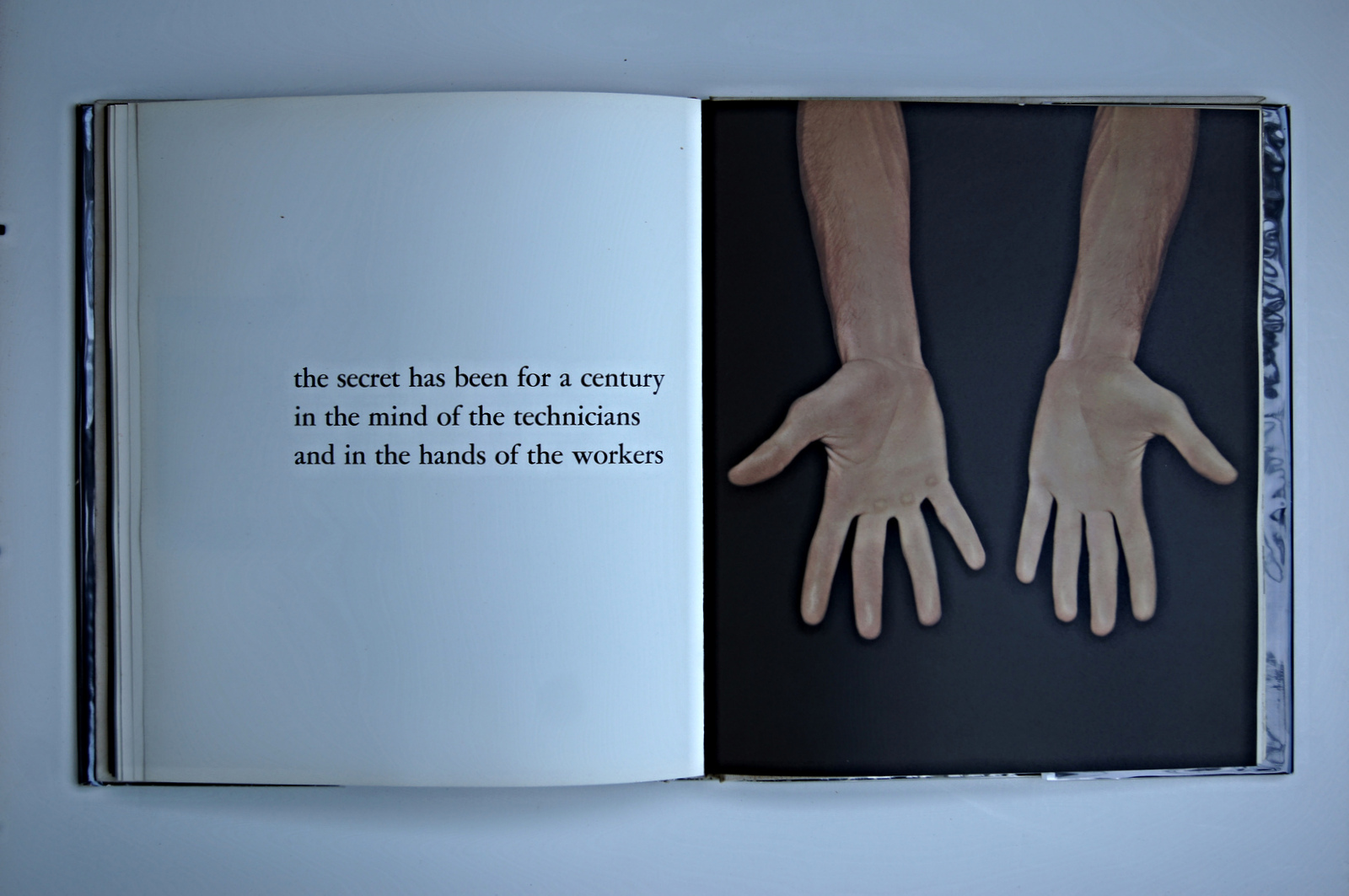
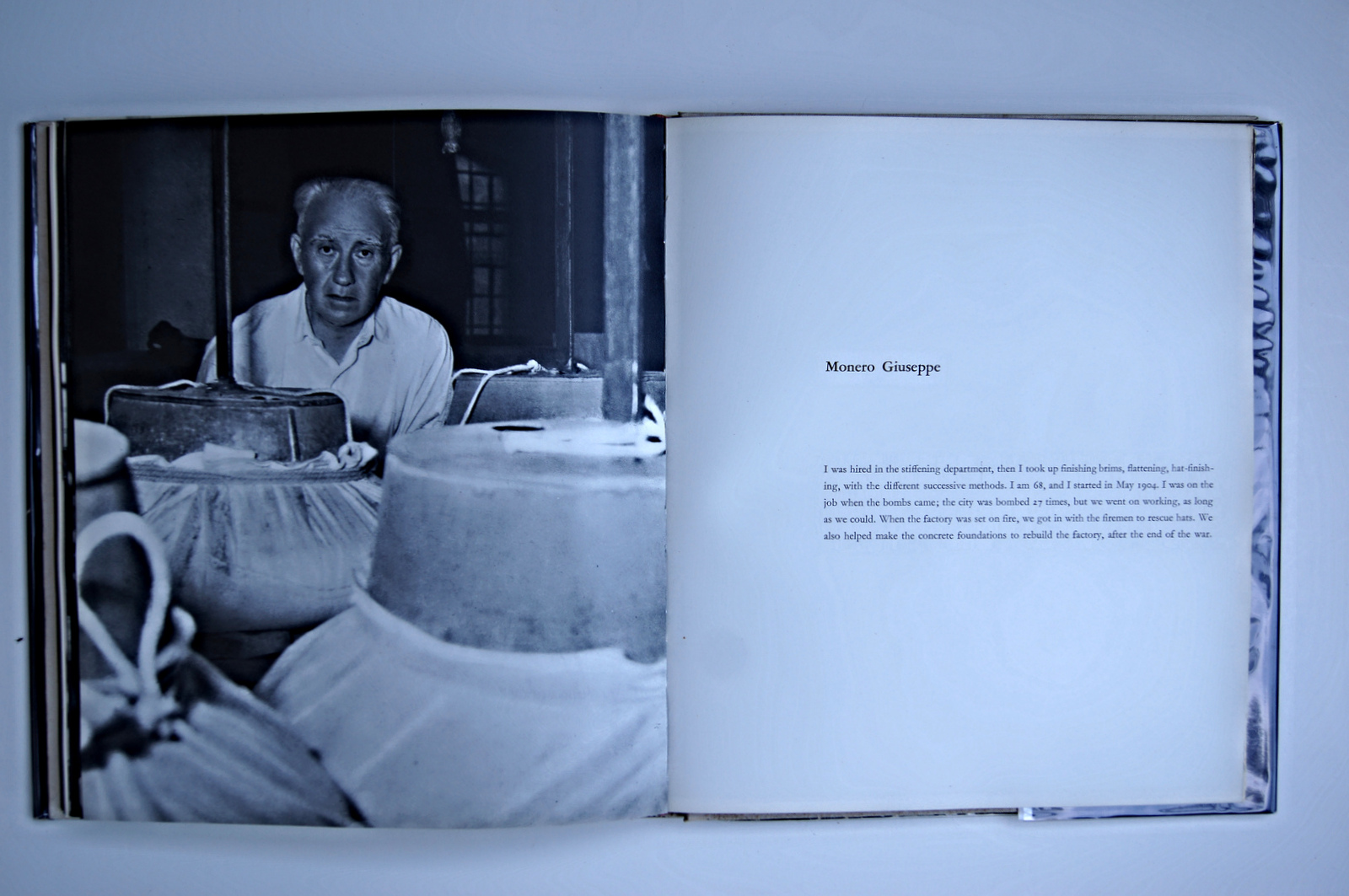
For CEO’s Onlyis a selection of international company photobooks from the private collection of professional photographer Bart Sorgedrager, based in Amsterdam. Research assistant Clara Jankowski (MA Master Photographic Studies, Leiden University) has compiled a bibliography and captions for this particular selection of company photobooks and is presented in the exhibition as FOR CEO’S ONLY (alluding to the title of a company photobook by Richard Avedon for M&A Group in New York). Omaggio Al Cappello [A Tribute to the Hat] Publisher: Arti Grafiche Amilcare Pizzi, Milan Year of publication: 1957 Binding: hardcover (linen cloth with embossed title; illustrated dust jacket) Size: 292 x 255 mm Number of pages: 150 Number of illustrations: 79 black & white photographs; 1 color Type of illustrations: company profile; historical and portrait photography Printer: Arti Grafische Amilcare Pizzi, Milan Type of reproduction: offset Text: Mario Carrieri; Giuseppe Trevisani; Massimo Vignelli (eds.) Type: commemoration book (100 year anniversary) Collection: Bart Sorgedrager, Amsterdam
The 100th year anniversary of the Borsalino company resulted in a bulky tribute to headdress. The publication is composed of pictures, photography and reproductions of paintings which makes it a versatile design. The dust jacket is printed on two sides: on the outside the assemblage of a hat is depicted, and hidden on the inside flaps is a photograph of the apartments of employees. The inside work is compiled of a series of reproductions of famous paintings that show people with hats. These reproductions are pasted on black pages. The second section in the book contains various humorous and fashion illustrations, with the hat as central topic. The third section displays full-page portraits of employers with a short but quite a personal history introducing each person. Omaggio Al Cappello conveys to the reader the company’s fascination for and affection with the (making of the) Italy’s famous headdress.
Sarah Mei Herman’s winning portrait is part of her ongoing series Julian and Jonathan, which she has been working on since 2005. The series portrays the triangular relationship between her, her half brother Jonathan and their father Julian. Her memories of the relationship with her father are now mirrored in her half brother, twenty years her junior. By photographing him, she tries to approach the unusual sibling relationship that she is part of at a physical distance. Work from the series was published in the Foam Talent issue (2010) and was showcased during Nuit Des Images at Musée de l’Elysée in Lausanne, Switzerland (2017).
Sarah Mei Herman (NL, 1980) studied photography at the Royal Academy of Fine Arts in The Hague (BA, 2005) and the Royal College of Art in London (MA, 2010). Recurring themes in her work are relationships and intimacy, the transitions young people go through on their way to adulthood and the grey area between friendship and love. Her work has been shown at the National Portrait Gallery in London, at Le Chateau d’Eau in Toulouse and at JIMEI X ARLES International Photo Festival 2016 and 2017.
The jury report on Sarah Mei Herman's winning portrait: ‘In principle, a double portrait is complicated. Is it actually a portrait? After all, this is not about a single person. Your eyes constantly go from one to the other. Yet everything comes together in this picture. The photo is subdued, the timing is exceptional. It is clear that this picture is about the mutual relationship between the two people portrayed. The photo calls for an insight into the relationship between these people. The tension between both is palpable. The photographer also plays an emphatic role and squeezes, as it were, herself between them. This creates a triangle relationship in which everyone has taken their position. The father looks towards the camera, the photographer's half-brother looks away.
Ultimately, there was the photographer who observed and ruthlessly captured the situation. The light and the view that you are granted through the net curtain reinforce the confrontation. In a time of superficial scanning and quick judgment, this is a portrait that invites you to look closer.'
The jury for 2018 consisted of chair Philippien Noordam (Head of Art Affairs, Ministry of Foreign Affairs), Bart Rutten (Artistic director Centraal Museum - Utrecht), Jitske Schols (winner Dutch Photographic Portrait Prize 2016), Koos Breukel (portrait photographer), Narda van 't Veer (Van Ravesteijn Gallery / UNIT) and Sabine Verschueren (art director).
Sarah Mei Herman wint Dutch Photographic Portrait Prize
Interview winnaar portretprijs Sarah Mei Herman won donderdag de Photographic Portrait Prize met Julian & Jonathan, een portret van haar vader en stiefbroer.
Rianne van Dijck
15 november 2018
„Ik ben opgegroeid als enig kind. Mijn hele jeugd heb ik me afgevraagd hoe het zou zijn om een broer of zus te hebben. Die vanzelfsprekendheid die je met elkaar deelt als je uit eenzelfde nest komt, dat leek me zo fijn. Daar gaat mijn werk over. Het is een onderzoek naar relaties en intimiteit.”
Sarah Mei Herman (Amsterdam, 1980) ontving donderdag in Utrecht de Rabobank Dutch Photographic Portrait Prize 2018. Voor de portretprijs, die de aandacht wil vestigen op de traditie van Nederlandse portretkunst in de fotografie, waren ook Carla Kogelman, Hellen van Meene, Dana Lixenberg en Wouter le Duc genomineerd. Herman won de prijs met Julian & Jonathan (2017), een portret van haar vader en stiefbroertje.
Waar gaat deze foto over?
„Dit portret van Julian en Jonathan is er een uit een serie, mijn meest langlopende en meest persoonlijke project. Ik maak portretten van hen sinds ik in 2005 afstudeerde aan de Academie in Den Haag. Toen Jonathan werd geboren was ik 21, mijn vader 56. Hij en mijn moeder hebben nooit samengewoond en ik groeide voornamelijk op bij mijn moeder. Sinds Jonathan er is heb ik, voor het eerst in mijn leven, een broertje.”
Waarom koos je dit als thema?
„In mijn werk onderzoek ik hoe we ons verhouden tot de ander, hoe dichtbij we die laten komen, of juist niet. Op de academie had ik al werk gemaakt over broers en zussen. En over tweelingen; het intrigeert mij hoe symbiotisch zo’n relatie kan zijn. Wat moet dat prettig zijn, dacht ik altijd, om altijd die ander te hebben. Gewoon omdat je in dezelfde familie geboren bent.”
Foto uit de serie Julian and Jonathan van Sarah Mei Herman.
Foto Sarah Mei Herman
Heb je dat gemist, die nabijheid van een broer of zus?
„Ik ergerde me er altijd aan als mensen toespelingen maakten dat het zielig zou zijn om enig kind te zijn. Want dat is het niet. Ik kreeg lekker veel aandacht, kon goed met volwassenen overweg. Maar stiekem fascineerde het me wel. En ik idealiseerde het. De broers en zussen die ik op de academie fotografeerde waren heel close. Maar dat is natuurlijk lang niet altijd zo. Een warme band is niet vanzelfsprekend.”
Hoe is je band met Jonathan?
„In het begin was het lastig. Hij vond het moeilijk dat er nog iemand anders was die zijn vader ‘papa’ noemde. Toen hij vier was draaide hij zijn rug naar me toe als ik binnenkwam. Duwde me weg als ik hem wilde knuffelen. Maar dat is veranderd. Hij is nu zeventien, ik fotografeer hem al bijna zijn hele leven. Naast onze familieband hebben we ook een soort van werkrelatie.”
Wat delen jullie?
„Als enig kind heb je geen broer of zus met wie je de zorgen over je ouders kunt delen wanneer ze ouder worden. Ik vind het fijn dat ik met Jonathan over onze vader kan praten. Wat we van hem vinden, hoe het met hem gaat. Dat we allebei vinden dat hij nooit die versleten leren stoel weg mag doen die hij al zijn hele leven heeft. Daar hebben we dierbare herinneringen aan. Bij hem op schoot, samen boekjes lezen. Dat we diezelfde ervaring hebben, dat bindt ons.”
De portretten van hen zijn verstild, ze stralen iets eenzaams uit.
„Ik werk analoog met een middenformaat camera, een aparte lichtmeter en meestal ook met een statief. De traagheid van dat proces heeft een functie; namelijk dat mensen naar binnen keren, dat er verstilling is. Ik vertel daarmee níét dat ze zo zíjn. Die foto is niet de enige waarheid over hen. Het is slechts een moment dat ik opzoek. Vader en zoon, en een dochter en zus die daar gefascineerd naar kijkt.”
Dutch historical photobooks by women photographers included in the How We See Reading Room publication include historical photobooks by women photographers from 1843 to 2010
Beeldroman
Andriesse, Emmy; Charles, J.B.
Published by Den Haag, Bert Bakker/Daamen, 1956
cloth, 4to 106 pp., ca. 70 photogr plates in b/w kenmerkende fotografie van Emmy Andriesse met begeleidende teksten van J.B. Charles; Spanje, Parijs, London; portretten;
Peking Studies. Sketches by F. H. Schiff.
Catleen (Thorbecke), Ellen.
Verlag: Shanghai, Kelly & Walsh, 1934., 1934
Folio. 87pp. With numerous photographic illustrations by Catleen and coloured plan and illustrations by Schiff. Orig. pict. cloth with illustr. dustwrapper and transparent wrapper. First edition. - Bookseller's label on inner back cover: The Peking Bookshop. Grand Hotel des Wagon-Lits, Peking.
People in China - Thirty-two photographic studies from life
THORBECKE, Ellen
Published by London: George G. Harrap & Co., 1935
First edition. Quarto. With Dust jacket. Brown paper covered hard boards with cloth spine, with an image of a Chinese woman on the front board which is repeated on the dust jacket. 141 pages, with 32 gravure photographic plates tipped in, each accompanied by a page of text describing and explaining the subject. Colour plate immadiately after the introduction by Frederich Schiff (who colaborated with Thorbecke on several of her other books about China and Hong Kong). Thorbecke’s subjects for this book came all walks of life, including The Manchu Duke, The Eunuch, and The Ultra-Modern Girl all the way to The Slave and The Cabbage Vendor.
Meid, wat ben ik bewust geworden": Vijf jaar Dolle Mina. [1970-1975]. [Eerste druk; First edition].
SOEST, Marjo VAN (text), Eva Besnyö (photographs and final editing, et.al.),
Den Haag, Stichting Uitgeverij Dolle Mina, 1975. large 8°. Original limp glossy wrappers. Covertitle in bold red and white coloured type with a large illustration at top. 166pp. Numerous captioned monochrome illustrations after photographs by EVA BESNYÖ, featuring a a historic record in chronology of radical actions organized by a group of anarcho-radical dutch feminists, monochrome cartoons in text by Peter van Straaten (et.al.), chronology of events 197-1975 at rear end. Dutch language commemmorative volume celebrating the 5th anniversary of a dutch radical group of female feminists battling in word and street actions for dutch women's lib, shocking the dutch bourgeois population. Phhotographed for the greater part by Eva Besnyö, famous photographer from Hungarian descent.
Fotografische Dokumentation einer Strassenkreuzung. Über mehrere Monate wurde die Wolvenstraat in Amsterdam von der Künstlerin täglich aus der gleichen Perspektive fotografiert. S/w Abbildungen in chronologischer Reihenfolge dokumentieren dabei den jeweiligen Tag. Wenn die Künstlerin an einem Tag nicht zugegen war, weist eine handschriftliche Notiz darauf hin. Über 700 s/w Aufnahmen (Format: 6x4). Ca. 50 S., 20x25 cm. Niederländisch /Englisch. Mit zahlreichen s/w-Abbildungen. Einband und Rücken leicht berieben, Schnitt leicht angebräunt, wenig angeschmutzt, Seiten etwas angebräunt, sehr wenig lichtrandig, sauber, Gesamtzustand gut. Jutka Rona (1934, in Budapest - 2016, Amsterdam) war eine niederländische Fotografin und Fotojournalistin ungarischer Herkunft. Sie spezialisierte sich auf Film- und Theaterfotografie und auf Soziofotografie. Rona war die Besitzerin der Fotoagentur ABC Press. Der Vorläufer der Agentur war das 1937 von ihrem Vater (Imre Rona) gegründete Fotobureau, das unter anderem Robert Capa und Henri Cartier-Bresson vertrat. Size: gr.8°.
Dutch photobooks in How We See :
In this Dark Wood
Tonnard, Elisabeth
Published by Elisabeth Tonnard, Rochester, New York, U.S.A., 2008
This is a copy of the original first edition of In this Dark Wood, published by the artist during her stay in Rochester, 2008. Below you'll find a text on this wonderful book. The gallery represents the artist's work, including the limited editions of One Swimming Pool, Interior Monologue and The Man of the Crowd. "This book is a modern gothic. It pairs images of people walking alone in nighttime city streets with 90 different English translations I collected of the first lines of Dante¿s Inferno. The images, showing a crowd of solitary figures, are selected from the same archive as used for my book Two of Us (the extraordinary Joseph Selle collection at the Visual Studies Workshop which contains over a million negatives from a company of street photographers working in San Francisco from the 40¿s to the 70¿s). The book is set up in a repetitious way, to stress a sense of similarity, endlessness and interchangeability. The images are re-expressions of each other, and so are the texts." (text by Elisabeth Tonnard).
A beautifully printed one image publication, handbound in varying gradations of light grey, mud green and pale blue cloth, with some pink exceptions. Archipelago is dedicated to one single image. It is the depiction of a fungus that developed in the drywalls of an exhibition space after the intentional flooding of the premises by Arno Brandlhuber as part of his spatial intervention in the context of the exhibition ‘im Archipel’ in KOW gallerie, Berlin, 2012. The image of Archipelago is intrinsically linked to the concept of the urban environment as a fragmented and open system of independent and interdependent urban occurrences, continuously oscillating between form and process.
Hardcover, clothbound
230 x 280 mm, 9,05 x 11 inch
8 Pages
1 Image
Edition of 100copies limited and numbered.
Publication date November 2014
Erica Overmeer
Landscape Files / 01
O Book Publisher /
Artist Publications / 2010
Landscape Files / 01
On Landscape and Territory
Softcover, 205 x 260 mm, 8,07 x 10,03 Inch
Hardcover, 210x 255 mm, 8,26 x 10,23 Inch
8 Pages
2 BW Illustrations
English / German Text
Edition of 100 ex limited and numbered.
Landscape Files / 01
Publication date November 2010
Hardcover / 01 EU 45,00
Softcover / 01 EU 18,00
Landscape Files is a multi issue publication
project. Started in 2010, upcoming issues
will follow over the course of 2011 / 15.
"How We See" Reading Room | October 25-27, 2018
by Deirdre Donohue
October 24, 2018
Every Night Temo Ser La Dinner book coverOn Abortion book coverHannah Hoch Picture Book coverWoman with a Monkey book coverFor Bird's Sake book coverMuseum Bhavan book coverRestoration Will book cover
The New York Public Library's Wallach Division of Art, Prints, and Photographs is pleased to host the How We See Reading Room, a public space to browse and view the 100 21st-century photobooks selected for the How We See: Photobooks by Women book and tour. The Reading Room will be open October 25-27, 2018, 10 AM-5:45 PM at The Margaret Liebman Berger Forum (Room 227) in the NYPL Stephen A. Schwarzman Building at 42nd Street and Fifth Avenue.
As part of the program, please join us October 25 at 6:30 PM for a conversation with two of the ten experts who selected the photos for the series, and one of the editors from the 10X10 team, as they examine how important the photobook is as a medium for women today, 175 years after the publication of the first photographically produced book. Learn more or register for the event.
More on How We See: Photobooks by Women
How We See: Photobooks by Women, the latest project in the nonprofit 10x10 Photobooks’ ongoing series of reading rooms, presents a global range of 100 21st-century photobooks by female photographers.
With historical records establishing 19th-century British photographer Anna Atkins’s British Algae: Cyanotype Impressions (1843-1853) as the first photobook, it is not surprising that women have consistently contributed to the rich history of photobook making. However, despite their significant presence within the photobook community, the women have a relatively small place among top prizes, within prominent photobook publisher inventories, and among widely promoted books compared to their male peers.
10x10 Photobooks has organized How We See—a hands-on reading room, 'books on books' publication and series of public events—to explore the distinctive qualities of photobooks created by women photographers. The goal is not to isolate these books, but rather to closely examine their content, design, and intellectual attributes as a means of understanding and re-establishing their place within the larger photobook practice.
Women with Cameras book coverMy Birth book coverThe Girl Who Used to Be book coverMuseum Studies book coverChen Koan book coverLiz Johnson Artur book coverAlways In Spite of Everything book cover
How the 100 How We See Reading Room Books are Selected
The project’s reading room selection of 100 books was chosen by 10 women (either in teams or individually) from around the world, who have each selected 10 photobooks (hence, the organization’s name, 10x10). The project’s selectors are specialists in the photobook field, and have focused their selections on photobooks published in the 21st-century, with 60% of their selections coming from their respective regions.
The How We See Reading Room launches on October 25, 2018 at the New York Public Library’s Margaret Liebman Berger Forum (Room 227) in the Stephen A. Schwarzman Building at 42nd Street and Fifth Avenue, and tour through 2020 to multiple venues including the Museum of Fine Arts (Boston, March 2019), PGH Photo at the Carnegie Museum of Art (Pittsburgh, April 2019), Fototeca Latinoamericana (Buenos Aires, December 2018), and other venues.
Talks and presentations on photobooks by women are planned for all venues. At the end of the tour, the books will be donated as a complete collection to the Museum of Fine Arts in Boston. A second collection of the 100 reading room books has been acquired by the Miriam and Ira D. Wallach Division of Art, Prints and Photographs at the New York Public Library.
As 10x10 Photobooks has done in their three previous reading room projects, a comprehensive 'books-on-books' publication with images and text for all the photobooks in the reading room, will be released on October 25. In addition to all 100 books in the How We See Reading Room, the publication includes an annotated history, reference lists of historical books by women photographers, author and visual indexes, and essays by Ishiuchi Miyako, Kristen Lubben, and Valentina Abenavoli.
Female photographers whose books appear in How We See include: Valentina Abenavoli, Laia Abril, Ying Ang, Olivia Arthur, Sophie Calle, Xiaoyi Chen, Zoe Croggon, Cristina de Middel, Laura El-Tantawy, Abigail Heyman, Hannah Höch, Dragana Jurišic, Kristina Jurotschkin, Pixy Liao, Susan Meiselas, Lucia Moholy, Zanele Muholi, Yurie Nagashima, Catherine Opie, Maya Rochat, Guadalupe Ruiz, Eva Saukane, Collier Schorr, Ketaki Sheth, Lieko Shiga, Dayanita Singh, Mitra Tabrizian, Carrie Mae Weems, and many others.
The women who selected books for the How We See Reading Room:
Ilgin Deniz Akseloğlu (Middle East)
Delphine Bedel & Frédérique Destribats (Western Europe)
Federica Chiocchetti (Western Europe)
Iona Fergusson (South Asia & Australasia)
Amanda Ling-Ning Lo (China & Taiwan)
Lesley A. Martin (United States)
Oluremi C. Onabanjo (Africa)
Mariela Sancari (Latin America)
Miwa Susuda (Japan)
Daria Tuminas (Eastern Europe)
Reference lists of historical photobooks by women photographers included in the How We See Reading Room publication include historical photobooks by women photographers from 1843 to 2010. These subjective lists (again, of ten books each) are provided by historians, librarians, curators, and writers in the photography and photobook field and lay the foundation for an historical context for the contemporary-leaning photobooks within the reading room and publication. Historical lists are provided by Sagrario Berti, Clara Bouveresse, Hinde Haest, Anne E. Havinga, Carole Naggar, Sayaka Takahashi, Barbara Tannenbaum, Jennifer Tobias, Stephanie H. Tung, and the women on the 10x10 Photobooks team.
More on 10x10 Photobooks
10x10 Photobooks is a nonprofit 501(c)3 organization based in New York City with the mission to foster engagement with the global photobook community through an appreciation, dissemination, and understanding of photobooks. Founded in 2012, 10x10 offers an ongoing multi-platform series of public photobook events, including reading rooms, salons, publications, and partnerships with arts organizations and institutions.
The 10x10 Photobooks Organization / How We See Project Team: Olga Yatskevich (10x10 co-founder/director), Russet Lederman (10x10 co- founder/director) and Michael Lang (10x10 director)
Laura Coombs (Publication Designer) Jeff Gutterman (Publication Photographer) Emily Rubin (Publication Copy Editor) Miyuki Hinton (Research Coordinator) Francesca Teodori (Senior Researcher) Felix Chan and Anna Kate Kelley (researchers)
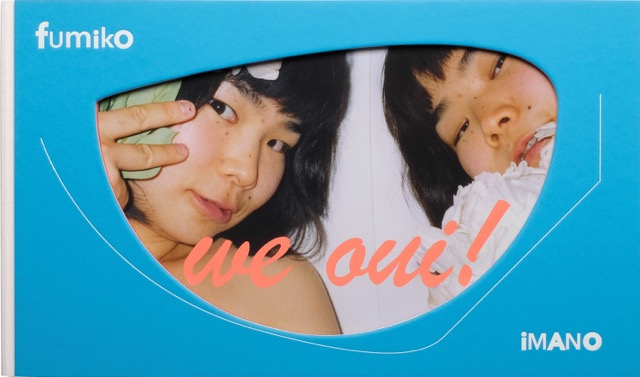
In the Shadow of the Pyramids book coverFaces + Phases 2006-14 book coverKitchen Table series book coverSuite Venitienne book coverDear Clark book coverWe Oui! book coverExperimental Relationship book coverBlind Date book cover
...Photography is the visual medium of the modern world. As a means of recording, and as an art form in its own, it pervades our lives and shapes our perceptions...












 Posts
Posts


