zondag 7 december 2008

Prizewinners Deutschen Fotobuchpreis 2009 Photography

Die Siegertitel des Deutschen Fotobuchpreises 2009


Steidl GmbH & Co. KG:
Berenice Abbott

Hrsg.: Ron Kurtz, Natalie Evans
Fotografie: Berenice Abbott
Text: Hank O'Neal
Gestaltung: Steidl Design
Begründung der Jury


Steidl GmbH & Co. KG:
The Mill

Hrsg.: Thomas Weski
Fotografie: Matthias Schaller
Text: Thomas Weski
Gestaltung: Claas Möller
Begründung der Jury


Steidl GmbH & Co. KG:
The Roma Journey

Fotografie: Joakim Eskildsen
Text: Cia Rinne, Günther Grass
Gestaltung: Joakim Eskildsen,
Steidl Design
Begründung der Jury


teNeues Verlag:
Pictures

Hrsg.: teNeues Verlag
Fotografie: Tim Walker
Text: Robin Muir
Gestaltung: Rhea Thierstein
Begründung der Jury

Galerie Vevais:
Endurance & Suffering

Narratives of Disease in the 19th Century
Hrsg.: Alexander Scholz
Fotografie: George Henry Fox,
O.G. Mason
Text: Prof. John Wood
Gestaltung: Denise Avayou
Begründung der Jury


Bildschöne Bücher:
Komm, mein Mädchen, in die Berge/The alps

Fotografie: Andrea Stultiens
Gestaltung: Vivi-Ann Sigernes
Begründung der Jury


Hatje Cantz Verlag:
Frank Kunert

Verkehrte Welt
Hrsg.: Thilo von Debschitz
Fotografie: Frank Kunert
Text: Uta von Debschitz
Gestaltung: Q Kreativgesellschaft mbH, Wiesbaden
Begründung der Jury


Hatje Cantz Verlag:
Gregory Crewdson

Beneath the Roses.
Werke 2003 - 2007
Fotografie: Gregory Crewdson
Text: Russell Banks
Gestaltung: Miko McGinty,
Rita Jules
Begründung der Jury


Hatje Cantz Verlag:
Jürgen Schadeberg

Hrsg.: Ralf-P. Seippel
Fotografie: Jürgen Schadeberg
Text: Robert von Lucius
Gestaltung: Hackenschuh communication design
Begründung der Jury


Hatje Cantz Verlag:
NOH Suntag

Ausnahmezustand
Hrsg.: Württembergischer Kunstverein
Fotografie: NOH Suntag
Text: Hans D. Christ,
Iris Dressler
Gestaltung: L2M3 Kommunikationsdesign
Begründung der Jury


Hatje Cantz Verlag:
Wolfgang Tillmans

Lighter
Hrsg.: Joachim Jäger
Fotografie: Wolfgang Tillmans
Text: J. Ault, D. Birnbaum,
J. Jäger
Gestaltung: Karl Kolbitz,
Frederico Martelli
Begründung der Jury


Herber Verlag:
Close the Gap

Studium bei Timm Rautert
Hrsg.: Galerie Löhrl, Mönchengladbach
Galerie Kleindienst, Leipzig
Text: Ch. Krause, T. Scheffler,
K. Stremmel
Gestaltung: Kay Bachmann,
Andrej Loll
Begründung der Jury


von dem Knesebeck GmbH:
Equus

Das Pferd - Eleganz in Perfektion
Fotografie: Tim Flach
Text: Heide Horn
Gestaltung: Cameron Gibb
Begründung der Jury


Prestel Verlag:
THE HYENA & OTHER MEN

Fotografie: Pieter Hugo
Text: Adetokunbo Abiola
Begründung der Jury


Schaden.Com:
CHARACTER THIEVES

Hrsg.: Schaden.com feat.
Fotografie: Oliver Sieber
Text: Mariko Takiúchi
Gestaltung: Oliver Sieber
Begründung der Jury


Steidl GmbH & Co. KG:
Bill Wood's Business

Hrsg.: Diane Keaton, Marvin Heiferman
Fotografie: Bill Wood
Text: Diane Keaton, Marvin Heiferman
Gestaltung: MGMT/
Adam John Ward
Begründung der Jury


Steidl GmbH & Co. KG:
Eye on infinity

Hrsg.: Michael Ruetz
Fotografie: Michael Ruetz
Text: Michael Ruetz
Gestaltung: Julia Melzner,
Michael Ruetz
Begründung der Jury


Steidl GmbH & Co. KG:
F. C. Gundlach

Das fotografische Werk
Hrsg.: K. Honnef, H.-M. Koetzle,
S. Lux, U. Rüter
Fotografie: F. C. Gundlach
Text: K. Honnef, H.-M. Koetzle,
S. Lux, U. Rüter
Gestaltung: F. C. Gundlach/
G. Steidl
Begründung der Jury


Steidl GmbH & Co. KG:
The circle

Hrsg.: Fazal Sheikh, Liz Jobey
Fotografie: Fazal Sheikh
Text: Fazal Sheikh
Gestaltung: Fazal Sheikh, Sarah Winter
Begründung der Jury


Tübinger Vereinigung für Volkskunde:
Foto-Ethnographie

Die visuelle Methode in der volkskundlichen Kulturwissenschaft
Hrsg.: Hermann Bausinger u.a.
Fotografie: Diverse
Text: Ulrich Hägele
Gestaltung: Manuela Siegert
Begründung der Jury


Steidl GmbH & Co. KG:
Imagining Paradise

The Richard and Ronay Menschel Library at George Eastman House, Rochester
Hrsg.: Sheila Foster,
Manfred Heiting
Text: S. Foster, M. Heiting, R. Stuhlman
Gestaltung: Manfred Heiting,
Steidl Design
Begründung der Jury


Pearson Education Deutschland GmbH / Addison-Wesley:
Der entscheidende Moment

Ein Weltklasse-Fotograf packt aus
Fotografie: Joe McNally
Text: Joe McNally
Gestaltung: Addison-Wesley
Begründung der Jury


Pearson Education Deutschland GmbH / Addison-Wesley:
Schärfe Deinen Blick

Außergewöhnliche Portraitfotografie in Kontext, Theorie und Praxis
Fotografie: Diverse
Text: Roswell Angier
Gestaltung: Addison-Wesley
Begründung der Jury

Hall of Fame Dutch Photobooks Photobibliothek.ch Photography

Die Bibliothek zur Geschichte der Photographie ist eine Privatbibliothek in der Nähe von Schaffhausen in der Schweiz.

Das Hauptziel der Bibliothek ist es, die Geschichte der Photographie in ihrer Gesamtheit in Originaldokumenten darzustellen. Bis zum Ende des 19. Jahrhunderts ist dies in erster Linie eine Geschichte der Technik. Die Analogien zwischen der Erfindung des Buchdrucks und der Erfindung der Photographie in ihrem Einfluss auf die Entwicklung der Gesellschaft werden ebenso aufgezeigt wie die Entwicklung der Drucktechnik, welche die massenhafte Verbreitung von Photographien überhaupt erst ermöglichte. Auch die bereits im 18. und 19. Jahrhundert erfundenen Illusionstechniken (Laterna magica, Guckkasten, Panorama, Diorama) kommen nicht zu kurz. Im 20. Jahrhundert liegt dann das Schwergewicht mehr auf der künstlerischen Entwicklung der Photographie. Wichtige technische Weiterentwicklungen werden aber weiterhin als Meilensteine aufgezeigt.

1935: Führer durch Rotterdam Fotos van Rotterdam. / Paul SCHUITEMA. – o.O. o.V. o.J. [ca. 1935]. – 8°. [27] Bl. Tfln. Ringbindung, Deckel aus Kuststoff, dreifarbig bedruckt. 8SCHU – Photoliteratur 2732/S – Ref.: Oaklander Books, New York, 500 US$ (Internet, 27.11.99).

1947: Die untergetauchte Kamera Amsterdam tijdens de hongerwinter. / De ONDERGEDOKEN CAMERA. Ruim 100 foto's met en inleiding van Max Nord. – [Erstausgabe.] – Amsterdam: Contact u. De Bezige Bij o.J. [1947]. – 4°. [128] S. mit Tdr.-Abb. Hln.In den letzten Kriegsjahren schlossen sich einige Photographen auf Initiative von Fritz Kahlenberg zusammen, um das Leben der Holländer unter der Naziherrschaft zu dokumentieren. Die geheime Organisation nannte sich «De Ondergedoken Camera» («Die untergetauchte Kamera»). Namhafte Photographen, wie Cas Oorthuys und Emmy Andriesse, gehörten ihr an. Der eindrückliche Band über den Hungerwinter 1944/1945 wurde 1947 veröffentlicht.4ON – Photoliteratur 12337/S – Ref.: Koetzle, Das Lexikon der Fotografen, S. 334 (Abb.). Parr/Badger, The Photobook, volume I, S.196/197.

1948: Holländische Photographie FOTO '48. Tentoonstelling in het Stedelijk Museum te Amsterdam. Speciale editie van de Kroniek van Kunst en Kultuur. – Amsterdam: Uitgeverij Contact 1948. – Gr.8°. 15, [17] S. mit Abb. Br. Querschnitt durch die holländische Photographie. S. 4-8: Piet Zwart, Gereinigde fotografie. 8FO – Photoliteratur 9472/S

1953: Eindrückliches Photobuch soll die Spendenfreudigkeit der Massen wecken De RAMP [Die Sturmflut]. Nationale uitgave [Nationalausgabe]. / Met een voorwoord van HM de Koningin [Mit einem Geleitwort Ihrer Majestät der Königin]. – Amsterdam: Boekhandels te Amsterdam 1953. – 4°. [96] S. mit Abb.; beiliegt: Faltkarte mit den überschwemmten Gebieten, 16seitige Broschüre mit deutscher Übersetzung. Pbd. ill.Das eindrückliche Photobuch über die Sturmflut, die am 31. Januar 1953 Holland heimsuchte, sollte die Spendenfreudigkeit der Massen wecken. Unter der Leitung des Verlagshauses De Bezige Bij wurde eine Gruppe von Photographen, darunter auch Ed van der Elsken, um Photographien angefragt. Die Publikation wurde dann von Han de Vries, Hans Redeker und Piet Klaassen über die Amsterdamer Buchhändlervereinigung in einer Auflage von 675'000 herausgegeben. Alle Exemplare enthielten eine lose Faltkarte mit den überschwemmten Gebieten, und Ausgaben für's Ausland wurden noch zusätzlich mit einer entsprechenden Übersetzung ausgeliefert (vorliegend die deutsche). 4RA – Photoliteratur 503/S

1958: Auf Safari Bagara. / Foto's uit Equatorial Afrika van Ed van der ELSKEN. Lay-out: Jurriaan Schrofer. – [Erstausgabe.] – Amsterdam: Bezige Bij o.J. [1958]. – 4°. 176 S. Tdr.-Abb (teilw. farbig), 23 S. ausklappbare Text-Broschüre. Ln. Kritische Auseinandersetzung mit Afrika, die folgenden Hinweis nötig macht: «Die in diesem Band abgebildeten Personen haben nichts mit den im Text beschriebenen Jagden zu tun.» (Übersetzung aus der deutschen Ausgabe.) 4EL – Photoliteratur 1897/S – Ref.: Auer, Photobook, S. 380.


1962: Eine neue Art Photobuch Liebe in Saint Germain des Prés. / Ed van der ELSKEN. – [Erstausgabe.] – Reinbek bei Hamburg: Rowohlt 1962. – 4°. [112] S. mit Abb. Pbd. SU. 4EL – Photoliteratur 11539/S – Ref.: HBK2 14168. Lecointre & Ozanne.

1966: Das süsse Leben Sweet Life. / Ed van der ELSKEN. Aus dem Holländischen. – Buchgemeinschaftsausgabe. – Gütersloh: Bertelsmann [1967]. – 4°quer. [30] S. Text, 179 S. Tdr.-Abb. Ln. SU. 4EL – Photoliteratur 3017/S – Ref.: HBK2 14240, 17220.

vrijdag 5 december 2008

PhotoBooks Christmas 2008 The Times Photography

The Times Christmas Books 2008: Photography
Joanna Pitman From The Times December 4, 2008


ANYONE WITH an eye for the cultural romance of 1920s Paris will love the sumptuous two-volume monograph, Berenice Abbott (Steidl, £70/offer £63). In 1926, having studied with Man Ray, Abbott opened a portrait studio in Paris and for the next few years photographed its artists, intellectuals, writers and salonistes with grace, honesty and authority. The first volume covers her portraits, the second her vision of New York in the 1930s, every bit as revealing as her human portraits.

Black and white photographs of Mexico in the 1930s fill Photopoetry, a monograph on Manuel Alvarez Bravo (Thames & Hudson, £42/ £37.80). There are portraits - of Leon Trotsky with Diego Rivera and André Breton, of Frida Kahlo, of Sergei Eisenstein - and nudes as well as landscapes and softly weathered architecture. The photographs are simple and beautiful. At times Alvarez Bravo has the elegiac punch of the French photographer Eugene Atget, but his work is overshadowed by Mexican anguish.

Unknown aspects of our contemporary world are the focus of the polemical book, Vanishing Landscapes (Frances Lincoln, £35/£31.50), a collection of contemporary photographs by 21 photographers including Hiroshi Sugimoto, Michael Kenna and the Czech-born Jitka Hanzlova. Nothing takes the light more gratefully than a plane of blue-green ice and Olaf Otto Becker photographs ice sheets in Greenland with clinical beauty. While the texts harangue us about the moral burden of man-made climate change, the photographs speak calmly with wisdom and authority.

Nina Berman's book, Homeland (Trolley Books, £24.99/£22.49), takes a wry look at the fantasies of war in the United States since 9/11. Between 2001 and 2008 Berman photographed some of the simulation drills, involving thousands of ordinary participants, in which various war scenarios are imagined: Islamic terrorists with nuclear bombs, bioterrorists, shopping mall terrorists. In her photographs, happy families creep through the suburbs clutching anti-nuclear pills, evangelical Christians dress in Afghan burkas, even senior citizens become extras in a War on Terror script.

Kaveh Golestan's images of war are real. An Iranian photographer who died in 2003 after stepping on a landmine in northern Iraq, his book Recording the Truth in Iran (Hatje Cantz, £29.99/£26.99) records in searing intimacy the horrors of the revolution in Iran, the Iran-Iraq war of 1980-88, the 1988 uprising in Kurdistan and other local conflicts.
Lees verder ...

Philip Jones Griffiths, who died earlier this year, is well known for his war photojournalism, but Recollections (Trolley Books, £40/£36), on which he was working when he died, is a delicately observed album of British society, photographed in black and white in the 1950s and 1960s. Uniformed nannies chat with the policemen outside 10 Downing Street while their young charges stare fascinated at the camera; young women cheer at the Last Night of the Proms, 1960; the Beatles tune up for their first concert at the Empire Theatre, Liverpool. It is a Britain of Norman Wisdom and working men's clubs, of Welsh miners and ban the bomb marches. While we know Jones Griffiths' Vietnam work well, these photograph demonstrate how sharply attuned his eye was to the glances, gestures and expressions of his homeland.

Richard Avedon, who died in 2004, was another photographer who directed his finely calibrated gaze at people and their anxieties or joys. In his Portraits of Power (Steidl, £30/ £27) he records high achievers and significant figures in every sphere of cultural and political influence, defining a view of the second half of the 20th century. His concern is not with beauty or dignity, but with the human predicament, and posed against a stark white background, he captures the often painful essence of his subjects: of Ezra Pound, of Norman Mailer, of the Kennedys and Malcolm X, George Bush Sr when director of the CIA. My favourite is Charlie Chaplin playing a horned devil, photographed the day before he left America after being accused of being a communist.

Martin Parr's Objects (Chris Boot, £19.95/£17.96) is full of photographs of Parr's own collections of kitschy objects and ephemera, which together, in a different way, define the second half of the 20th century. Over 30 years Parr has gathered items from eBay auctions and elsewhere that are part of his reflection on history, what he calls his “shadows of human foible”. There are Margaret Thatcher mugs, plates, egg cups, a teapot and even a dart board. There is his collection of Saddam Hussein watches, cigarette lighters and masks, and Spice Girls Cadburys chocolate bars.

Glamour is the subject of Edward Steichen: In High Fashion (Thames & Hudson, £42/£37.80). Drawn from Condé Nast's archive of vintage prints, this book reproduces the best of Steichen's beautifully composed portraits of politicians, actors, singers and artists as well as his sumptuous fashion plates made for Vogue and Vanity Fair in the 1920s and 1930s.


See for more tips : photobooks for christmas by lucy davies ... &


best photography books of 2008 by pdn ...


donderdag 4 december 2008

Dutch Turkish Eyes Ahmet Polat Neither here nor there Photography

A H M E T P O L A T Y O U N G P H O T O G R A P H E R

The Dutch photographer Ahmet Polat was born in 1978 in Roosendaal, a small city in southern Netherlands. Since studying photography at St. Joost Academy in Breda, Holland, Polat has exhibited, lectured, and published prolifically.

Polat's mother is Dutch and his father is Turkish. After a few years of traveling, he moved to Turkey to explore his heritage through photography. His book Gurbetci was the result of fieldwork documenting Turkish immigrants from Holland, Germany, and France in their villages.

His work is photojournalistic in nature, and has included poor areas of The Hague and Istanbul, the homeless population in Tilburg, and the aftermath of Turkey's devastating 1999 earthquakes.

Like Henri Cartier-Bresson, Polat has a preternatural instinct for capturing visual symmetry and for treating his subjects with both dignity and a touch of humor.

Polat often shoots in black-and-white, further underscoring the similarity between his work and that of classic photojournalists. Polat has participated in more than twenty exhibitions since 1999, at galleries including Stroom (The Hague), RAM (Rotterdam), the Photo Museum (The Hague), Karsi Sanat (Istanbul), and Galeri X-ist (Istanbul).

See also Heimat Hotel Breda Photo Festival 2008 Martin Parr Photography ...


woensdag 3 december 2008

the Nostalgia Medium Polaroid Photography

The Polaroid Book

Crist, Steve (ED)Hitchcock, BarbaraHardcover, 17.5 x 21.5 cm (6.9 x 8.5 in.), 400 pages

Defining moments
In existence for over 50 years, the Polaroid Corporation's photography collection is the greatest collection of Polaroid images in the world. Begun by Polaroid founder Edwin Land and photographer Ansel Adams, the collection now includes images by hundreds of photographers throughout the world and contains important pieces by artists such as David Hockney, Helmut Newton, Jeanloup Sieff, and Robert Rauschenberg. The Polaroid Book, a survey of this remarkable collection, pays tribute to a medium that defies the digital age and remains a favorite among artists for its quirky look and instantly gratifying, one-of-kind images.
• over 400 works from the Polaroid Collections
• essay by Polaroid`s Barbara Hitchcock illuminating the beginnings and history of the collection
• technical reference section featuring the various types of Polaroid cameras.

See for the biggest Polaroid-picture-collection of the planet to celebrate the magic of instant photography... & lees verder Het medium van de weemoed ...


See for Warhol & Polaroid ...

See for a polaroid magazine Tickl a erotic cabinet ... & lees verder Een intiem instrument ...

Lees verder Gefixeerde imperfectie ...

maandag 1 december 2008

Photobooks for Christmas by Lucy Davies Photography

Haunting: William Eggleston, Untitled

Christmas books: photography
Last Updated: 12:01am GMT 01/12/2008

Lucy Davies enjoys a visual feast of the amazing and the odd

This has been a good year for photography books about America. Helen Levitt's images of the working-class neighbourhoods of New York and Chicago stretch back to the Thirties. I have never seen work with such an eye for gesture and form. Some of her subjects seem to dance past each other on the street. Others are so engrossed in their activities - hunching over a newspaper, scrabbling under a car - that they seem to have crumpled into deformity. Helen Levitt (Powerhouse, £37.50) shows her best-loved pictures alongside newer work. Levitt's super-saturated colour photos of the Seventies and Eighties compare with William Eggleston, the subject of a monograph (Yale, £35). Both are masters at lifting the everyday into a haunting new realm.

Eugene Richards's Blue Room (Phaidon, £35) is an eloquent investigation into abandoned houses of the American West. Enigmatic scenes - a wedding dress hanging on a wall, snow falling on a bed by a window - take on a poignant, enigmatic quality.


Wayne Miller: 1942-58 (Powerhouse, £36) documents America's wartime experience (including empathetic portraits of Hiroshima survivors) and the storefront churches, fish peddlers and drunks of slumtown America. In less capable hands they might have been contrived, but they are quiet, imaginative pieces.

Bill Wood's Business (Steidl, £25) is a collection of "found" photography. Salvaged from a studio in Fort Worth, Texas by the actress Diane Keaton, these images are a portrait of one town's citizens over 30 years or so that is by turns beautiful, mawkish, awkward, ugly, hilarious ("man and woman examining carpet") and odd.

Larry Towell's The World from My Front Porch (Chris Boot, £40) is a well-blended selection of photographs of his Canadian farm: a menagerie of barefoot children and animals, remnants from his great-aunt's Edwardian family album and his father's songbooks. Towell has an Arcadian style: wet hair rippling the surface of a glassy lake; the same surface iced and skate-scarred six months later.

There has also been a wealth of vintage photography this year: monographs on stalwarts such as Fox Talbot (Phaidon, £19.95) and Lewis Carroll (Phaidon, £19.95), and Josef Heinrich Darchinger's images of the reconstruction frenzy in Germany after the Second World War (Wirtschaftswunder, Taschen, £24.99).

Did you know that the Moon's surface was photographed in detail as early as 1862? Brought to Light (Yale, £35) is a terrific chronicle of scientific photography from its dawn in 1840 until 1900, and includes experiments with electricity, motion studies, X-rays microscopes, and even the spirit world. Spelterini (Scheidegger & Spiess, £45) is a forgotten series of aerial photographs from a Swiss balloonist born in 1852, who sailed as far as Cairo.

Fashion seems to have fallen out of fashion this year. Two books that merit a mention are Steichen (Thames & Hudson, £42), a plush look at Twenties and Thirties couture, and Gothic (Yale, £19.99), a wide-ranging examination of the visual vocabulary of death, decay and the erotic macabre employed by Dior, McQueen et al. Valerie Steele draws on 18th-century horror literature, cinema and Victorian melodrama in her fascinating narrative.

Portraiture triumphed in Second: the Face of Defeat (Magenta, £25), a wry look at sore losers, and two hefty books from Richard Avedon, Portraits of Power (Steidl, £30) and Performance (Abrams, £40), and a debut by Danielle Levitt, We Are Experienced (Powerhouse, £36), picturing the vagaries and vanities of American teens in all their baton-twirling, anorexic, prom-date glory. I loved Vee Speer's costumed children in Birthday Party (Dewi Lewis, £30) and James Mollison's The Disciples (Chris Boot, £40): fans emulating their rock star idols (fat Rod Stewarts, and so on).
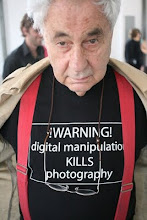
Robert Wilson's Helmand (Jonathan Cape, £30), featuring his portraits of soldiers in Afghanistan, is a picture of strength and resilience. The wildcard award goes to Simon Foxell's Mapping England (Black Dog, £40): maps of the British Isles going back 450 years. Try looking at the 1940 German board game based on air battles for England without shuddering.

Martin Parr's Objects (Chris Boot, £19.95) includes pictures of his ephemera, from Abba soap to cans of lager from the Fifties featuring a woman in various poses: reclining on a brown sofa, sitting by the fountains in Trafalgar Square and emerging from a car, "testing our new service van".

Thanks, and on behalf of Rod's two superfans, by James Mollison/James Mollison