vrijdag 28 november 2008

Valparaiso Du Sergio Larrain Photography

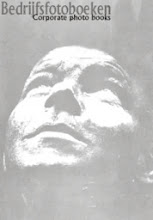
Du. Atlantis. Kulturelle Monatsschrift. Conzett & Huber, Zurich, February, 1966. 150 pp. with 16 pp. feature on Larrain accompanied by Neruda's text.

View the entire Valparaiso series on the Magnum site.

"Sergio Larrain began photographing the famous Chilean port in the 1950s but it was not until 1963 that he spent more time there, this time, in the company of the poet Pablo Neruda. The text and photographs in Valparaiso were published in the journal Du in 1966. But it had to wait until 1991 before it was published as a book, which has since gained a cult following. Not only did Sergio Larrain ceaselessly climb the narrow streets, the stairs, and the hills of this city frozen in time, but he also shed light on an entire bohemian lifestyle in the neighborhoods nearby the port, which then counted some one hundred brothels and cabarets. The result is a series of pictures that has become an essential reference in the work of this photographer who escapes categorization."--Magnum Photos

Also see Jeff Ladd's piece on Larrain, posted on his always excellent photobook blog, 5B4


donderdag 27 november 2008

Best Photography Books of 2008 by PDN Photography

pdn has announced their list of Best Photography Books of 2008.

With the fall publishing season in full swing and 2009 fast approaching, PDN gathered together some of our favorite books for a look at the publishing year that was.

woensdag 26 november 2008

Desirée Dolron Erwin Olaf Wijnanda Deroo Auction Christie's Amsterdam Photography

Desirée Dolron (DUTCH, B. 1963) Fleur du Mal transparency in lightbox 56.5 x 56.5 x 16.5 cm. See for a review ... & read more ...

Desirée Dolron (DUTCH, B. 1963) Study for Xteriors X. signed, dated, inscribed with title and numbered 'Desirée Dolron 2005 19/100' (on the reverse)gelatin silver print 37 x 30 cm.
Desirée Dolron (DUTCH, B. 1963) Esperito Y Carne I transparency in lightbox 153 x 125 x 18 cm.
Désirée Dolron (DUTCH, B. 1963) Espirito Y Carne II transparency in lightbox 153 x 125 x 18 cm.

Erwin Olaf (DUTCH, B. 1959) Royal Blood, Julius Caesar, +44 B.C. signed, dated, numbered, inscribed and with the artist's label 'HC1 2000 Erwin Olaf Amsterdam' (on the reverse)c-print mounted on perspex 120 x 120 cm. From an edition of 7 and 2 artist's proofs and 1 hors commerce.

Erwin Olaf (DUTCH, B. 1959) Royal Blood, Sissi, +1898 signed, dated, numbered, inscribed with title, inscribed and with artist's label 'A.P.2, 2000/Erwin Olaf, Amsterdam' (on the reverse)c-print mounted on perspex 140 x 120 cm. From an edition of 7 and 2 artist's proofs and 1 hors commerce.

Wijnanda Deroo (DUTCH, B. 1955) Flamingo, 1996 c-print 70 x 70 cm. and Another c-print by the same hand, entitled Mobile home, dining room, 26.5 x 26.5 cm., from 1995.

See for more ...

Architectural America Sticks & Stones by Lee Friedlander Photography

see the slideshow ...

Lee Friedlander Sticks and Stones

Lee Friedlander (b. 1934) has been photographing for nearly sixty years. A 1967 exhibition of his work, along with that of Diane Arbus and Gary Winograd, at New York's Museum of Modern Art, propelled him into the front ranks of American photographers. He has worked in series over the years, but whether photographing people, landscapes, cityscapes, or nature, his focus has been on American subject matter and his artistry one of subtle wit, keen observation, and disciplined understatement.

Friedlander's most recent series, Sticks and Stones, photographed over a twelve year period, consists of cityscapes observed not for their glamour or urban buzz, but with an emphasis on the mundane. A selection of thirty-four (from the collection of 192) of these black and white photographs, printed in uniform squares of about about fifteen inches, make up the current exhibition at Fraenkel Gallery.

The photographs are completely devoid of images of people, though the presence of people is palpable in the way the the images cumulatively define what people have created as their urban and suburban visual environments. Some of the photographs were taken from the inside of a car, suggesting the perhaps dominant viewpoint from which Americans observe their surroundings. "Las Vegas," for example, shows the massed highrises of fantasy-fulfillment hotels through the driver's window, but also slyly exposes the more ordinary, lowrise buildings caught in the side-view mirror. "Great Falls, Montana" shows a clean-lined modern, brick factory with aluminum framed-windows of reflective glass. The effect is to make the interior of the building a complete mystery, at the same time contrasting it with the older buildings across the street, seen reflected in the glass.

Indeed, contrast is the principal subtext of these works. "Arkansas" has a flatbed truck moving a mobile home down the street of a town. In the rear there's the modest neoclassical facade of a small commercial building; in the foreground, an elaborate street clock rests on an Ionic pedestal. Together the images speak to the modesty of small town life as well as its striving for something grander. "San Diego" shows nondescript buildings and some dumpsters arrayed in a parking lot, but at the curb is a small garden of flowers protected by a low picket-type fence. One of the "New York City" photos looks through a rooftop opening in an older building, ornamented with sophisticated brickwork and a large architectural urn on a pedestal; the building seen in the distance is a colorless commercial curtain-wall high rise.

Sometimes Friedlander foregoes the thematic, simply finding compositional interest in the accidental juxtaposition of diverse elements, as in "Bismarck, North Dakota" or "Tarrytown," the latter contrasting the textures of brick in the foreground building with the frame structure across the street, the street itself on a sloping hill that provides a strong angular element, and the shadows of electrical wires thrown on the frame facade adding further complexities with their linear tracery. November 7, 2004 by Arthur Lazere Read more ...

zondag 23 november 2008

Iwan Baan Architectural Photography & Bush in Mongolia

Iwan Baan the influential Dutch photographer has over the last couple of years been documenting the construction of both OMA's CCTV building and Herzog & de Meuron's birds nest. His background in documentary photography is apparent in the work. In his photographs he considers the relationship between the building and it's surroundings and many times the architecture becomes just the backdrop in the photograph. His photographs from the CCTV building shows the workers living on the site and ordinary families living in the shadow of these monumental building. See for more ...