...a photoBook is an autonomous art form, comparable with a piece of sculpture, a play or a film. The photographs lose their own photographic character as things 'in themselves' and become parts, translated into printing ink, of a dramatic event called a book...
- Dutch photography critic Ralph Prins
First Edition, Limited Edition of 750 Copies Paperback
Description
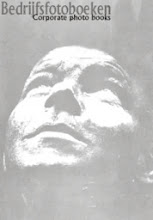
Very Good Staple-bound b/w photo-illustrated wraps; 113x113mm; pp. [16], with b/w photo-illustrations showing Andy Warhol and Muhammad Ali together, printed on the recto only. Covers a little scuffed along spine and edges; rear cover dust-smudged. Inscription on inside front cover, otherwise internally clean and unmarked.
For several years,Paul Kooiker and Erik Kessels have organized evenings for friends in which they share the strangest photo books in their collections. The books shown are rarely available in regular shops, but are picked up in thrift stores and from antiquaries. The group’s fascination for these pictorial non-fiction books comes from the need to find images that exist on the fringe of regular commercial photo books. It’s only in this area that it’s possible to find images with an uncontrived quality. This constant tension makes the books interesting. It’s also worth noting that these tomes all fall within certain categories: the medical, instructional, scientific, sex, humour or propaganda. Paul Kooiker and Erik Kessels have made a selection of their finest books from within this questionable new genre. Incredibly small photobooks is the second volume (after Terribly awesome photobooks) showing this amazing collection. PHOTOBOOKS CHALLENGING THE EDGES OF THE MEDIUM. A conversation with Paul Kooiker about two newsprint editions on photobooks, in cooperation with Erik Kessels and published by APE: Terrible Awesome Photobooks and Incredible Small Photobooks by Mirelle Thijsen (MT):
MT: Then you also selected expensive antiquarian books, as Nothing Happens (1978) by Victor Bockris [Andy Warhol]. The sales price on Auction.fr is 300 euros. Is this booklet part of your collection? PK: No, that’s Erik’s… MT: I read a description on Abebooks.com – in fact, I am able to find there more bibliographic data on the selections than in your newspaper, Haha …Apparently Nothing Happens is a catalogue of the Whitney Museum containing portraits from the 1970s. PK: What you see is Andy Warhol standing next to Mohamed Ali! It is a meeting between those two icons and they look past each other. There are four to six pictures in that booklet. And that’s it. You look at two celebrities, standing awkwardly close to each other. It is a mysterious book, one of my favourites. And square booklets are often so ugly, but this one’s just right. You hardly find square books these days…
FRANS LANTING | DIALOGUES WITH NATURE
This summer the Nederlands Fotomuseum in Rotterdam, The Netherlands, will present a major retrospective of Frans Lanting’s work. Born in Rotterdam, Lanting has been hailed as one of the great photographers of our time. For more than four decades, he has documented the natural world from the Amazon to Antarctica to promote understanding about the earth through images that convey a passion for nature and a sense of wonder about our living planet.
This exhibition will be the first to show the range and depth of Lanting’s work over the course of his career. It will feature images from five of his signature projects produced over a period of forty years. Lanting’s work is presented as an ongoing dialogue with nature, and this exhibition reveals how those conversations have been influenced by art and literature as much as they have been informed by science, technology, and his own experiences with wildlife and wild places on all seven continents.
The Magic of Reality: Holland
Frans Lanting (b. Rotterdam, 1951) began making images in the 1970s, when he was studying environmental economics at Rotterdam’s Erasmus University. His first photographs were impressions of the seasons in the city’s Kralingse Bos park. Lanting was inspired by magic realism in paintings and literature, and by the work of Japanese haiku poets. His images capture the spare feeling of haikus and a sense of the otherworldly in the natural world.
A World Out of Time: Madagascar
In the 1980s Lanting was one of the first photographers to work in Madagascar after the country ended decades of self-enforced isolation from the West. During extensive fieldwork he documented wildlife and cultural traditions that had never been photographed before, and produced his first major story for National Geographic. His images opened the eyes of the world to the diversity as well as the conflicts of this island continent and fueled conservation efforts to protect Madagascar’s remarkable natural heritage.
Intimate Encounters: Eye to Eye
The photographs in Lanting’s Eye to Eye portfolio, first published in the 1990s, reveal the unique personal aesthetic he brings to wildlife photography, as well as the startling new perspective on animals his images provoke. “Mr. Lanting’s photographs take creatures that have become ordinary and familiar and transform them into haunting new visions,” writes The New York Times. In earlier projects Lanting’s images showed the relationship between animals and their worlds, including the human environment which more than ever shapes their fate today. In Eye to Eye he removed animals from the context in which they live, and brought together species and situations from around the world in order to celebrate the kinship of all animal life.
A Journey Through Time: Life
Life: A Journey Through Time is Frans Lanting’s lyrical interpretation of the history of life on Earth from the Big Bang to the present, expressed through images of the natural world that provide a window on its evolution through time. Produced over a period of seven years and first released in 2006, Lanting’s Life project was also realized as a multimedia symphony with music by American composer Philip Glass. Life is a synthesis of Lanting’s career. From his beginnings as a wildlife photographer pursuing animals one at a time his perspective grew to include their habitats, and in his iconic images, animals became ambassadors for ecosystems. Over time, biodiversity superseded ecosystems as a concept for understanding nature as a network made up of untold numbers of species, and Lanting’s vision expanded to view the collective force of all life on earth as a singular element that shapes our planet.
The Future of Life
Images from Lanting’s project to explore the state of global biodiversity at the turn of the millennium are featured in The Future of Life, along with recent photographs that explore our relationship with a natural world that has been profoundly impacted by humans. Lanting’s images speak to our conflicts with wildlife and the risks to the diversity of life as well as to new discoveries and restoration, and what it means for the fate of life on earth.
Frans Lanting’s influential work has appeared in exhibitions and publications around the world. His books have received awards and acclaim: “No one turns animals into art more completely than Frans Lanting,” writes The New Yorker. Lanting has received top honors from World Press Photo, the title of BBC Wildlife Photographer of the Year, and the Sierra Club’s Ansel Adams Award. He has been honored as a Fellow of the Royal Geographic Society in London and is a recipient of Sweden’s Lennart Nilsson Award. In 2001 H.R.H. Prince Bernhard inducted Lanting as a Knight in the Royal Order of the Golden Ark to honor his contributions to nature conservation. He serves as an Ambassador for the World Wildlife Fund and on the Leadership Council of Conservation International, and he is a Trustee of the University of California at Santa Cruz. Lanting makes his home in Santa Cruz, California, with his wife and partner, Chris Eckstrom, an editor, videographer, and former staff writer at National Geographic with whom he collaborates on fieldwork and publishing projects.
HUNTING WITH A CAMERA | PIONEERS OF DUTCH NATURE PHOTOGRAPHY
Nature is everywhere: in the forest, at the beach, on the street, and always portrayed in a myriad of photographs. Since 1873, Dutch nature lovers have enjoyed caputering the glory of the countryside in print. By bringing together the works of the earliest Dutch nature photographers, the exhibition Hunting with a Camera | Pioneers of Dutch Nature Photography is the very first exhibition of its kind to offer such a complete overview of the many marvels of the diverse Dutch landscape. Visitors can experience nature through the eyes of these photography forerunners and appreciate how important their role was in fighting for conservation. A special selection has been made from over 90,000 historic nature photos that the museum has in its collection, and these will be shown to the public for the first time. Through these exclusive photographs, we can marvel at the inventive photography techniques that were used to capture plants, animals and unique landscapes, some of which are now rare or even extinct in the Netherlands.
The very first photographs of nature Through Hunting with a Camera | Pioneers of Dutch Nature Photography we can experience the magnificence of nature captured on film throughout the Netherlands during the 1900s. These historic images show landscapes where roads were scarce and populated only by walkers, cyclists or horse-drawn carts. The pioneers frequently trained their camera lenses on birds, and over 40 species of bird can be seen in the exhibition including threatened species such as the stone curlew, the great reed warbler, the little bittern and the purple heron. Be surrounded by dozens of sharply focused, beautifully staged photos of flowers and plants in ‘De Tuin van Tepe’ (Tepe Gardens).
Photographing wild animals would be anything but easy during that time, as was apparent from the pioneers’
countless publications and diaries. The photographers disappeared into the wilderness under very basic
conditions, weighed down by the most impractical and heavy equipment. For days they would lie hidden in
bushes, tents or camouflaged huts waiting with their cameras for a special bird or a wild animal to appear. Only once back at home could they see if their images were successful. There was always the possibility of under- or overexposed pictures; they could also discover that the bird had just flown away or that the animal turned its back on the photographer just at the moment suprême.
Call for conservation
In addition to these groundbreaking photographs, the pioneers had another clear goal in mind – to make the
public aware of nature’s beauty and the absolute need to protect it. By educating the public with beautiful images of nature, the photographers hoped to instill an understanding of the importance of conservation. Their efforts were rewarded in 1905 with the establishment of the Vereniging Natuurmonumenten (Dutch Society for Nature Conservation).
In the footsteps of the pioneers
To this day, nature has remained a prevalent and popular subject in photography, which is why the Nederlands Fotomuseum will also be dedicating a small part of the exhibition to contemporary photography. In this exhibition, the museum will not be presenting nature photography in the literal sense of the word, but will show the work of artists and photographers that reflects on how we interact with nature. The exhibition will display recent work by Kim Boske (1978), Charlotte Dumas (1977), Anne Geene (1983), Erik Kessels (1966), and Luuk Wilmering (1957).
●●●●○ Vanuit een dode os een vosje vangen
Rianne van Dijck
15 juni 2016
Elephants at Twilight, Botswana 1989. Foto Frans Lanting
Wie geen telelens heeft moest slim zijn. Om in de 19de eeuw een vogel, hoog in het nest, of een schuwe ree, verscholen in een dicht bos te fotograferen, had enige creativiteit en een avontuurlijke inslag nodig. Handzame fototoestellen waren er nog niet, dus bouwde een fotograaf een houten toren van een meter of 4 hoog en zeulde zijn zware plaatcamera naar boven. Of hij ging in een bootje naar een nest op het Naardermeer, statief mee, glasnegatieven, lenzen, verrekijker, schuiltentje en rubberen laarzen.
Jacht met de camera - Pioniers van de Nederlandse natuurfotografie in het Nederlands, t/m 4/9 in Nederlands Fotomuseum, Rotterdam.
De Britse gebroeders Kearton, zo’n beetje de David Attenboroughs van hun tijd, vroegen hun slager een os te slachten en die uit te hollen. In hun opgezette rund trokken ze de natuur in, om torenvalken en kieviten, herten en vosjes, door een gaatje in de kop van de os te fotograferen.
In het Nederlands Fotomuseum in Rotterdam is deze zomer een prachtige expositie te zien over de pioniers van de natuurfotografie. Het museum heeft uit de collectie een selectie gemaakt die het verhaal vertelt van de opkomst van het genre. De foto’s gunnen ons een blik op verdwenen landschappen, uit de tijd dat Nederland ontdekt dat de eigen natuur, ondanks het ontbreken van bergen en snelstromende rivieren de moeite waard is om te koesteren. En te beschermen, want door verstedelijking en industrialisatie moest steeds vaker het „liefelijke, zwijgende rijk der planten” plaatsmaken voor de „woelenden en tierenden mensch”, zoals Frederik van Eeden in 1886 schreef.
We zien hier de eerste vogelfoto, van een zwarte stern; een albumineprint gemaakt door Alexander Clark Kennedy in 1852. Een monumentale eik in Park Twickel in Delden, in 1907 gefotografeerd door Richard Tepe. En het schitterende filmpje uit 1924 van J.C. Mol, die zich toen al bezighield met timelapse-fotografie, en waarin we zien hoe een bloemknop langzaam ontluikt tot bloem.
De historische foto’s worden aangevuld met hedendaags werk van onder andere Charlotte Dumas (wolven), Kim Boske (bossen) en Erik Kessels, die foto’s van herten kocht van jagers die ‘motion detection’-camera’s gebruiken bij de jacht.
Natuurlijk hadden de pioniers uit de 19de eeuw deze techniek – het dier zorgt door eigen beweging dat er een foto wordt gemaakt – al lang zo’n soort techniek bedacht: Johannes Vijverberg ontwikkelde rond 1910 een elektrisch mechanisme waarbij door middel van twee draden in het nest de vogels zelf contact maakten met de camera waardoor het sluitermechanisme werd geactiveerd; een heuse vogelselfie.
The work of the American photographer Stephen Shore (b. 1947, New York City) has shaped contemporary photography and inspired generations of photographers. He has never stopped exploring the boundaries of photography, and has selected subjects that were not seen as obviously photogenic. He has effortlessly switched back and forth between black and white and colour, and has experimented with a wide variety of cameras and every possible format. This exhibition covers the period 1960–2016 and shows important turning points in his career.
In the early 1970s Stephen Shore roamed across his homeland, America, and photographed things in the same way he looked at them: factually, and with a style apparently devoid of artistic pretension. He photographed unspectacular subjects like motel interiors, a pancake breakfast, car parks, and traffic intersections. He did not shrink from the use of harsh flash, and he photographed in colour, something that celebrities such as Walker Evans (Shore’s great example) had deemed vulgar and which until then had been used only in advertising.
Stephen Shore and Ivy Nicholson, 1966
‘The quiet, shy teenage Stephen Shore, discreetly taking his photos at the Factory after school, alongside the glamorous model Ivy Nicholson who had recently arrived in New York from Europe… I remember Stephen didn’t like this photo because he thought he looked like a gangster.’
Shore started with photography at a young age. At age eight he received his first camera, at fourteen he sold his first three photographs to the MoMA, and at 24 he was exhibited (as its second-ever living photographer) in the Metropolitan Museum of Art. Between 1965 and 1967 he was a regular at Andy Warhol’s Factory, and documented the artist and his entourage during their day-to-day activities.
After a brief period spent experimenting with conceptual photography, over the following two decades Shore devoted himself exclusively to colour photography. A grant from the National Endowment for the Arts and the Solomon R. Guggenheim Foundation funded more travels throughout America. This colour-photo crusade resulted in several extensive series. American Surfaces (1972–1973) consists of hundreds of snapshots that together form a visual diary of his travels. Shore had photographed everything: what he ate, where he slept, and who he met. The series was first exhibited in the LIGHT Gallery in 1972. The garishly-lit snapshots were rather at odds with the work of established photographers like André Kertész and Paul Strand, both masters of black and white composition, and the work was initially given a very critical reception.
Shore was always exploring the limits of the medium and of his own technical skills. He started with a 35mm Rollei, occasionally switching to a Mick-o-Matic, a camera shaped like a Mickey Mouse head. For the series Uncommon Places (1973–1981) and Landscapes (1984–1988) he moved to 4×5” and 8×10” film. The unwieldiness of the view camera and tripod that these formats required made it difficult for him to take snapshots, but Shore used them anyway as he wanted to record more detail. This resulted in serene compositions of the North American urban landscape: diners, street corners and shop windows.
In the 1970s Shore, together with William Eggleston and Joel Meyerowitz, was one of the few photographers working in colour in the context of artistic photography. Twenty years later nobody was still working in black and white. Once again Shore turned his back on convention with his two series Essex County (1992–1995) and Archaeology (1994): detailed black and white documentations of tree barks, stones, and archaeological digs. Shore’s technical genius and urge to innovate was also evident in New York City (2000–2002), a series of large street photographs in the Garry Winogrand tradition, but made using the same cumbersome 8×10” view camera that he used for his landscapes.
For recent colour work Shore has travelled to the Ukraine to document the lives of Holocaust survivors. For him, Ukraine (2012–2013) explores an unusually charged subject. The most recent work in the exhibition is Winslow Arizona (2013), made at the invitation of the artist Doug Aitken. In Aitken’s ‘nomadic happening’ Station to Station, a train made a three-week journey from New York to San Francisco, with artists and performers organizing an event at each stop. On one of these stops Shore spent the day photographing Winslow, a location that has regularly appeared in his work ever since the 1970s. These photographs were screened at a drive-in, unedited, and in the order in which he printed them. This series is now being shown in the Netherlands for the first time.
In 1970, Stephen Shore’s work was exhibited for the first time in the Netherlands, as part of a group show. After a retrospective in 1997, once again his work is being exhibited in the Netherlands. This large and long-awaited retrospective contains over 200 works and will occupy all twelve of the museum’s galleries. Besides photographs the exhibition will include his postcards, video work and (scrap)books, and his Instagram account will also be projected on the museum wall. The exhibition is an initiative of the Fundación MAPFRE and was curated by Marta Dahó. After being shown at Fundación MAPFRE, Les Rencontres d’Arles and C/O Berlin, the exhibition will now be on show at Huis Marseille.
The photographer Stephen Shore had his first major exhibition at the Metropolitan Museum of Art in 1971. This was only the second show by a living photographer at the Met. Did Shore really have to wait a further forty-three years for his first major retrospective?
That’s the claim Fundación Mapfre is making upon opening its Shore retrospective in Madrid. The exhibition, which welcomed visitors last Friday and runs until 23 November, is an incredible career overview, but is it really the first? In all honesty, the American photographer has been the subject of earlier retrospective solo shows, such as Stephen Shore: Photographs, 1973-1993, which toured Europe in the late nineties.
Stephen Shore, self portrait, 1976.
Yet single period, tightly curated Shore exhibitions are a more common sight. The artist, who began shooting in the 1950s, had his first photographs acquired by the Museum of Modern Art in 1962, and started to document Warhol’s Factory in 1965, has always been meticulous in his career progression, with very clear delineation between the various periods of his work. Perhaps gallerists preferred to present these exquisitely conceived projects, rather than jumble the works together.
Stephen Shore, July 22, 1969
Nevertheless, Fundación Mapfre’s large-scale 320-photograph exhibition is a remarkable examination of Shore’s life and work. The show opens with his very early exercises in Walker Evans-style documentary work, and his nascent conceptual projects, such as July 22, 1969, wherein Shore shot his friend Doug Marsh every half hourn during a seemingly unremarkable day in Amarillo, Texas.
Stephen Shore, American National Bank Building, 1971. From the series Greetings from Amarillo-Tall in Texas.
This is followed by his best-known, early colour experiments from the 1970s, including his postcard project, for which the photographer produced a series of anodyne landscapes and printed them up into conventional, commercial postcards. There’s also American Surfaces, a photo-diary of Shore's road trip across America which, rather than capturing than key sights and experiences, features disconcertingly ordinary shots of his daily meals, hotel rooms and checks.
Stephen Shore, Trail’s End Restaurant, Kanab, Utah, August 10, 1973. From the series Uncommon Places
Shore’s beautiful and somewhat overlooked landscape photographs from the 1980s are on display here too. These views of the Texan and Scottish wilderness are quite unlike the poppier shots of the earlier decade, and foreshadow some of his work in Israel, a decade or two later.
Stephen Shore, Brewster County, Texas, 1987
The Mapfre exhibition also takes in an interesting return to monochrome film in the 1990s, with a series of sharp black-and-white studies. Shore’s 2003 experiments with iPhoto print-on-demand publishing are covered too. A little over a decade ago, the photographer began to a series of small books, shot and conceived in a single day. You may be interested to know Phaidon collected these together in our 2012 anthology, The Book of Books.
Finally the exhibition rounds off with Shore’s more recent projects, such as his work depicting holocaust survivors in the Ukraine and his participation with Doug Aitken’s Station-to-Station event last year. For Aitken’s train-based art festival, Shore spent a days shooting the railroad town of Winslow, Arizona.
Stephen Shore, Musya Vainshteyn’s Home, Nemirov, Ukraine, October 16, 2013
Any fine artist would be proud of so varied and distinct a body of work. Yet it’s all the more impressive given Shore’s medium; photography was only accepted as being of sufficient artistic merit a few decades ago. Shore’s retrospective proves just how expansive and capacious a tool photography can be in the hands of an artist, from the very moment MoMA and co were willing to hang photographic prints on their walls.
Stephen Shore, Shnuriv Lis, Ukraine, October 16, 2013
For more on the show go here. For greater insight into Stephen Shore’s American Surfaces consider our book; for more on the postcards get this Road Trip Journal; for more on his print-on-demand experiments try The Book of Books; for a career overview, buy this monograph, and for a more general view, browse through our other books and collectors edition prints, here. You can even buy a rare copy of July 22 1969, here.
Stephen Shore (All images in this article are copyrighted by Stephen Shore)
While in Amsterdam I checked out the FOAM photography museum and picked up a book on Stephen Shore. For those of you who may not know, he is one of the early color pioneers in photography in America. Although his style is classified more as documentary and urban landscape, I think there is a lot of things we can learn from him as street photographers. If you are interested in learning more about color and street photography, read on!
1. Create A Visual Diary
(Copyright: Stephen Shore)
Street photography doesn’t only need to be shots of other people walking about on the streets. It can be a deep self-reflection of yourself – and how you see society through your photographs.
When Stephen Shore worked on his “American Surfaces” project, he took a road trip across America and took photos of the following things:
People he met
Meals he ate
Beds he slept in
Art on walls
Store windows
Residential architecture
Television sets watched
He also took all of these photos on a cheap Rollei 35mm camera, and traveled all across America.
Through these images you don’t see the images as they are, but as a reflection of how Stephen Shore saw the places he visited. For example, when he took a photograph of four chicken bones (he just ate at a diner) he did so because he thought the food was awful, and couldn’t understand why anyone would cook or eat that kind of stuff in America.
Therefore when you’re out shooting street photography, try to add your own personality and view of the world in your shots. Don’t feel that all of your shots have to be of crazy-extraordinary “decisive moments – look for the “boring” and mundane things around you to capture. Think about how a series of images can create your own “visual diary”.
2. Shoot Color For Visual Accuracy And Realism
(Copyright: Stephen Shore)
In the book there was a quote by Peter Schjeldahl:
“Black and white can show how something is. Color adds how it is, imbued with temperatures and humidities of experience”.
Former curator of MOMA, John Szarkowski wrote eloquently on these jet as well saying:
“Most color photography, in short, has been either formless or pretty. In the first case the meanings of color have been ignored; in the second they have been at the expense of allusive meanings. While editing directly from life, photographers found it difficult to see simultaneously both the blue and the sky” – John Szarkowski 1976.
Therefore when it comes presenting your work, consider why you decide to present it in color vs black and white. Consider color as a way to see the world in a descriptive and “real” way, and black and white to see the world in a more conceptual and imaginary way (we don’t see the world in black and white).
I also recommend for people to go out shooting thinking in either black and white or color. This is because when you are shooting in the streets, you will see the world differently (depending on how you approach it).
For example, when I’m shooting in black and white film, I see the world as abstractions in terms of lines, shapes, reflections and shadows etc. However when shooting in color I see things like clothes, juxtaposition of colors, logos, etc.
3. Date Your Images
(Copyright: Stephen Shore)
We often look back at the old photos of Paris in the 1920s and feel nostalgia. We tell ourselves, “Man, the world was so much more interesting back then. Why can’t the world we live in be as interesting?”
However consider that people living in the 1920s didn’t find anything interesting about Paris the way we do. Sure in the old photos we see women wearing extravagant outfits and hats, and men with old-school suits. But back then, everyone wore that. It’s kinda like how nowadays when we see someone on their iPhone we think it’s boring. A hundred years from now, I’m sure people will find it fascinating (then they will probably have the iPhone 38s or something).
In his book shore mentions Specifically adding cars or telephone booths to his photos saying,
“I remember thinking that it’s important to put cars in photographs because they are like time seeds. And I learned this from looking at Evans”
So when you are out shooting on the streets, realize that a hundred years from now your photos will be a part of history. Don’t romanticize the past, think about today as tomorrow’s yesterday.
4. Experiment With Different Formats
(Copyright: Stephen Shore). A photograph he shot with an 8×10 view camera.
When Stephen shire was working on his “American Surfaces” project, he used 35mm small format film on a Rollei 35 camera, and took images as “purposeful snapshots“.
However for his next project he embarked on, “Uncommon Places” he decided to switch to a 8×10 large-format view camera (similar to what Ansel Adams used) for more clarity and detail in the urban landscapes he shot.
Also when shooting with his view camera, he could see exactly how his photos would look through the glass plate, which allowed him to create tighter, and better composed images.
Stephen Shore experimented two sides of the spectrum in terms of equipment (a tiny and compact 35mm camera vs a cumbersome view camera on a tripod). By shooting with different cameras, his approach to photographing his subjects changed.
Although I believe in the importance of staying consistent with equipment, I don’t want to restrict your creativity by experimenting. Therefore depending on what project you are working on, try to experiment with different cameras, formats, or equipment. If you shot film all your life, try using an iPhone. If you have only shot digital, try film.
5. Go Against The Grain
(Copyright: Stephen Shore)
When Shore was doing his photography projects With his 8×10 view camera, he was going against small or medium format shooters like Frank, Winogrand, Friedlander, and Arbus. But at the same time, he was going against the f64 group (Ansel Adams group) by shooting color.
Therefore don’t feel like you always have to fit under conventions. Shoot street photography with hipstamatic and add crazy filters if you want. If you like HDR, go ahead and do that.
Although I personally don’t agree with crazy effects or over-processing, once again make yourself happy and try to experiment. To be creative, it is necessary to break out of the typical “boundaries of photography”. However if you are going to break the boundaries in terms of how you present your images, do it consistently and purposefully. Don’t do it for the sake of doing it, but have a real reason why you want to try something differently.
Conclusion
Copyright: Stephen Shore
I feel some of the best insights we can get about street photography isn’t always by street photographers (by definition). Rather, gaining inspiration from other photographers similar to street photographers (and even completely opposite from street photographers) can help us become more creative, to break boundaries, as well as push the limits.
‘Ik wil de beste snapshots maken die er bestaan’
Interview Stephen Shore Tijdens zijn vele omzwervingen door Amerika legde fotograaf Stephen Shore het alledaagse leven vast in snapshots. De pionier van de kleurenfotografie wordt nu geëerd met een retrospectief in Huis Marseille.
Sandra Smallenburg
9 juni 2016
'Federal Highway 97 south of Klamath Falls, Oregon, 21 july 1973' foto’s Stephen Shore. Courtesy 303 Gallery, New York
Ze zijn er nog steeds, langs de eenzame highways in Amerikaanse staten als Utah, Wisconsin of Idaho. Shabby motels met bloemetjesspreien op de queensize bedden en ingelijste legpuzzels aan de schrootjeswanden. Diners waar de stapels pannenkoekjes worden geserveerd op formica tafels met papieren placemats waarop cowboys en indianen staan afgebeeld, of bijbelse psalmen.
De Amerikaanse fotograaf Stephen Shore (New York, 1947) legde ze vast in zijn legendarische series American Surfaces (1972-1973) en Uncommon Places (1973-1981). Toen al zagen de roadside motels en restaurants, veelal gebouwd in de jaren veertig en vijftig, er gedateerd uit. Wie de foto’s nu bekijkt, op Shores overzichtstentoonstelling in Huis Marseille, herkent de plekken direct. Dit zijn de stadjes waar films van David Lynch of de Coen Brothers zich zouden kunnen afspelen. Dit is de vergane glorie van smalltown Amerika.
'Beverly Boulevard at La Brea Avenue, Los Angeles, California, 21 june 1975'
Toen Shore ze begon vast te leggen, tijdens zijn zwerftochten door Amerika, werd fotografie nog maar nauwelijks gezien als kunstvorm. En kiekjes in kleur, zoals Shore ze maakte met zijn Rollei 35mm-camera, waren al helemaal not done. Kleur was vulgair. Echte foto’s, die van Paul Strand en Walker Evans bijvoorbeeld, waren zwart-wit. Shore liet zijn roadtripfoto’s gewoon afdrukken door Kodak, op klein formaat. Hij wilde snapshots maken die „volkomen authentiek” waren. ‘Snapshotness’, zo noemde Shore de stijl waarnaar hij op zoek was. Het is een spontane manier van werken die je later terugzag bij Martin Parr, Wolfgang Tillmans en Nan Goldin – fotografen die duidelijk schatplichtig zijn aan Shores pionierswerk.
„Snapshots hebben natuurlijk hun eigen beeldconventies”, zegt Stephen Shore, aan de telefoon vanuit zijn New Yorkse studio. „Ik heb altijd geprobeerd de beste snapshots te maken die er bestaan. Soms legt iemand namelijk iets vast in een snapshot wat heel direct en raak is. Ik zie dat ook gebeuren op ansichtkaarten. Dan heeft de fotograaf van zo’n ansicht het mandaat om te tonen hoe bijvoorbeeld een hoofdstraat in een klein dorp eruitziet, of hoe een motel eruitziet. Zo’n fotograaf is niet bezig met kunst maken. Daardoor hebben ansichtkaarten vaak diezelfde kwaliteit van directheid.”
Wat ik van Warhol leerde, was het belang van de serie
Stephen Shore: Retrospective. 10 juni t/m 4 sept in Huis Marseille, Keizersgracht 401, Amsterdam. Inl: huismarseille.nl
In Huis Marseille is een vroege serie te zien, Greetings From Amarillo (1971), die je een ode aan de ansichtkaart zou kunnen noemen. Tegen de strakblauwe Texaanse lucht legde Shore de belangrijkste gebouwen van Amarillo vast: de bank, het ziekenhuis, het gerechtsgebouw, Doug’s Bar BQ. De beelden hebben iets aandoenlijks, omdat de gebouwen niet bepaald van toeristisch belang zijn, maar nu toch maar mooi worden uitgelicht.
'Trails End Restaurant, Kanab, Utah, 10 August 1973'
Shore: „Een andere serie uit die tijd heette Mick-O-Matics, waarvoor ik een plastic camera gebruikte in de vorm van het hoofd van Mickey Mouse. Die twee series leidden uiteindelijk tot American Surfaces. Ik wilde met die kleurensnapshots doorgaan, maar dan wel met een betere camera. Om mezelf te trainen in het kijken heb ik een tijdlang op bijna ieder moment van de dag een soort ‘screenshot’ gemaakt van mijn blikveld. Dan was ik me heel bewust van wat ik zag en vroeg ik me af: als ik een foto zou maken van wat ik nu beleef, hoe zou die er dan uitzien? Dat werd het model van hoe ik wilde fotograferen: naturel. Ik wilde foto’s maken die voelden als kijken.”
American Surfaces bestaat uit tientallen kleinbeeldfoto’s die samen een intiem inkijkje geven van ‘life on the road’. Een beeldend dagboek is het, met foto’s van de maaltijden die hij at, de bedden waarin hij sliep, de mensen die hij tegenkwam. ‘Vernacular photography’ wordt die manier van werken wel genoemd: foto’s die de schoonheid van het alledaagse leven tonen en die eruitzien alsof je ze zelf, als amateur, ook gemaakt zou kunnen hebben. Wie langs Shores beelden in Huis Marseille loopt, ziet geen architectonische hoogtepunten of spectaculaire landschappen. Die toeristische blik probeert hij zoveel mogelijk te vermijden. Hij heeft oog voor de ‘nonplekken’: de anonieme parkeerplaatsen en de achterafsteegjes. De gebouwen die zijn neergezet zonder dat er een welstandscommissie aan te pas is gekomen.
Hij vertelt dat hij zichzelf een vreemdeling voelde in zijn eigen land, een ontdekkingsreiziger. „Ik kleedde me ook zo, in overalls en outdoor kleding. Ik woonde in New York, en afgezien van wat kustplaatsen had ik nog niets van Amerika gezien. Vanuit New York keek je toch meer richting het oosten, naar Europa, dan naar het Amerikaanse westen. In die zin voelde ik me verwant met fotografen als Henri Cartier-Bresson en Robert Frank en met schrijvers als Jack Kerouac en Vladimir Nabokov, die in de late jaren veertig ook roadtrips maakten door Amerika. Wat al die mannen gemeen hadden, was dat ze vreemdelingen waren. Ze bekeken Amerika met de ogen van de buitenstaander.”
Genadeloos licht
Building of the American National Bank, 1971. Uit de serie ‘Greetings from Amarillo-Tall in Texas’.
Kenmerkend voor de foto’s uit die beginjaren zijn de felle kleuren en de harde schaduwen. Neonreclames die fel afsteken tegen blauwe luchten, zwembadwater dat pijn doet aan je ogen. „Voor mij was het Amerikaanse westen echt exotisch”, zegt Shore. „De immense ruimte die je er had, het genadeloze licht. Het was de tijd dat aan de rand van ieder stadje een commerciële strip werd aangelegd. De eerste restaurants van McDonald’s gingen open. Langs de weg stonden borden met hoeveel hamburgers er die dag verkocht waren. Ik was gefascineerd door het landschap en de autocultuur, maar vooral ook door de mensen en hoe die met elkaar omgingen. Het ritme van het leven. Er werd veel meer rondgehangen op straat dan in New York, waar iedereen altijd maar druk was.”
Een van de mooiste foto’s op de tentoonstelling toont een billboard langs de US 97 in Oregon, met daarop een besneeuwde bergtop. Voorgrond en achtergrond lopen bijna naadloos in elkaar over, al is de echte lucht vele malen dramatischer dan de reproductie op het billboard. „Die foto is nog steeds heel populair. Voor mij was dat beeld haast té voor de hand liggend. Maar iedereen reed er gewoon ongezien langs. Mijn oog valt blijkbaar juist op de dingen waar anderen aan voorbij lopen. Ik heb ook een foto van een doodgewone schemerlamp in een motelkamer. Dat is geen onderwerp dat roept om een foto. Maar ik zag daarin de schoonheid van de alledaagse wereld.”
Factory als leerschool
De ambitie om fotograaf te worden, had Shore al op jonge leeftijd. Hij was zes toen hij zijn eerste fotorolletjes ontwikkelde en veertien toen hij de fotografieconservator van het MoMA – fotograaf Edward Steichen – benaderde of hij zijn portfolio kon komen laten zien. Dat leidde meteen tot de aankoop van drie van zijn afdrukken. Op zijn 23ste had Shore zijn eerste tentoonstelling in het Metropolitan Museum. Hij was pas de tweede levende fotograaf die dat was gelukt.
En dat voor een fotograaf die nooit een opleiding had genoten. Zijn leerschool, vertelt Shore, was Andy Warhols atelier The Factory in New York, waar hij tussen 1965 en 1967 bijna dagelijks rondhing en waar hij assisteerde bij de filmproducties. „Mijn leeftijdgenoten gingen naar de universiteit, ik begon als lichttechnicus te werken in The Factory. Op dat moment had ik er natuurlijk geen benul van hoe die periode vijftig jaar later beschouwd zou worden als een gouden periode, de hoogtijdagen van de pop-art. Het is anders om er middenin te staan en het mee te maken. Die mensen waren mijn vrienden. Maar ik had wel door dat The Factory een spannende plek was, waar interessante dingen gebeurden.”
Als achttienjarige was Shore diep onder de indruk van Warhol. Hij bestudeerde de kunstenaar tijdens zijn werkzaamheden en praatte met hem over kunst. „Mensen denken bij The Factory altijd aan de feesten, en die waren er ook wel. Als Andy naar een cocktailparty of een opening ging, wist je dat hij iedereen meenam die op dat moment in The Factory rondhing. Er lagen altijd mensen op de bank te wachten tot ze mee konden. Maar Andy kwam ook iedere middag naar The Factory om te werken. En dan bekeek ik hem. Ik zag een kunstenaar die voortdurend esthetische beslissingen aan het nemen was, iedere dag weer. Ik leerde zoals een leerling-kunstenaar het vak zou leren, door in de nabijheid van een grote kunstenaar te verkeren.
„Wat ik van hem meekreeg, was het belang van de serie. En allebei hadden we een grote liefde voor de hedendaagse populaire cultuur. Waar hij en ik elkaar aanvoelden, was dat we die beiden van een zekere afstand bekeken. Warhol was een observator, zoals ik als fotograaf ook een observator ben.”
Een andere inspirator was de Amerikaanse kunstenaar Ed Ruscha, die eind jaren zestig fotografie gebruikte voor zijn conceptuele reeksen. „Vooral zijn boek Every building on the Sunset Strip (1966), waarin hij foto’s van alle gebouwen op Sunset Boulevard in Los Angeles aan elkaar had geplakt, maakte diepe indruk. Sinds die tijd ben ik gefascineerd door kunstenaarsboeken.”
Een verrassend onderdeel van de tentoonstelling is de serie ‘print-on-demand’-fotoboeken waarmee Shore in 2003 begonnen is: zelfgemaakte fotoboeken die steeds één dag in beeld brengen. Hij maakte er tot nu toe 83. Geen fotoboeken in hoge oplage, maar één uniek exemplaar. Shore: „Nu is het heel gemakkelijk geworden om je eigen fotoboeken te maken en te laten printen bij de plaatselijke drogisterij. Als je een fotoboek maakt, kun je natuurlijk kiezen voor 100 van je beste foto’s, dan maak je achteraf echt een overzicht. Maar je kunt ook een serie maken met het boek in je achterhoofd. Dat is wat ik gedaan heb. Ik ga eropuit met een idee in mijn hoofd, ’s avonds upload ik de foto’s en drie dagen later levert Fed-Ex een fotoboek bij me af.”
Nog steeds vindt Shore inspiratie in de meest eenvoudige dingen. „Ik fotografeer bijvoorbeeld veel in mijn tuin. Ik vind alle periodes mooi, ook het verval. Ik houd juist van de dorre periodes, wanneer de planten uitgedroogd zijn. Het zijn niet alleen de mooiste momenten van bloei die interessant zijn.”
...Photography is the visual medium of the modern world. As a means of recording, and as an art form in its own, it pervades our lives and shapes our perceptions...





 Posts


