
New York's remarkable rise, reinvention and growth is not just the tale of a city, but the story of a nation, From the building of the Brooklyn Bridge to the immigrants arriving at Ellis Island; from the slums of the Lower East Side to the magnificent art deco skyscrapers. The urban beach of Coney Island and the sleaze of Times Square; the vistas of Central Park and the crowds on 5th Avenue. The streets, the sidewalks, the chaos, the energy, the ethnic diversity, the culture, the fashion, the architecture, the anger and the complexity of the city is all laid out in this beautiful book block and block. This is the greatest city of the world after all and great are its extremes, contradictions and attitude.
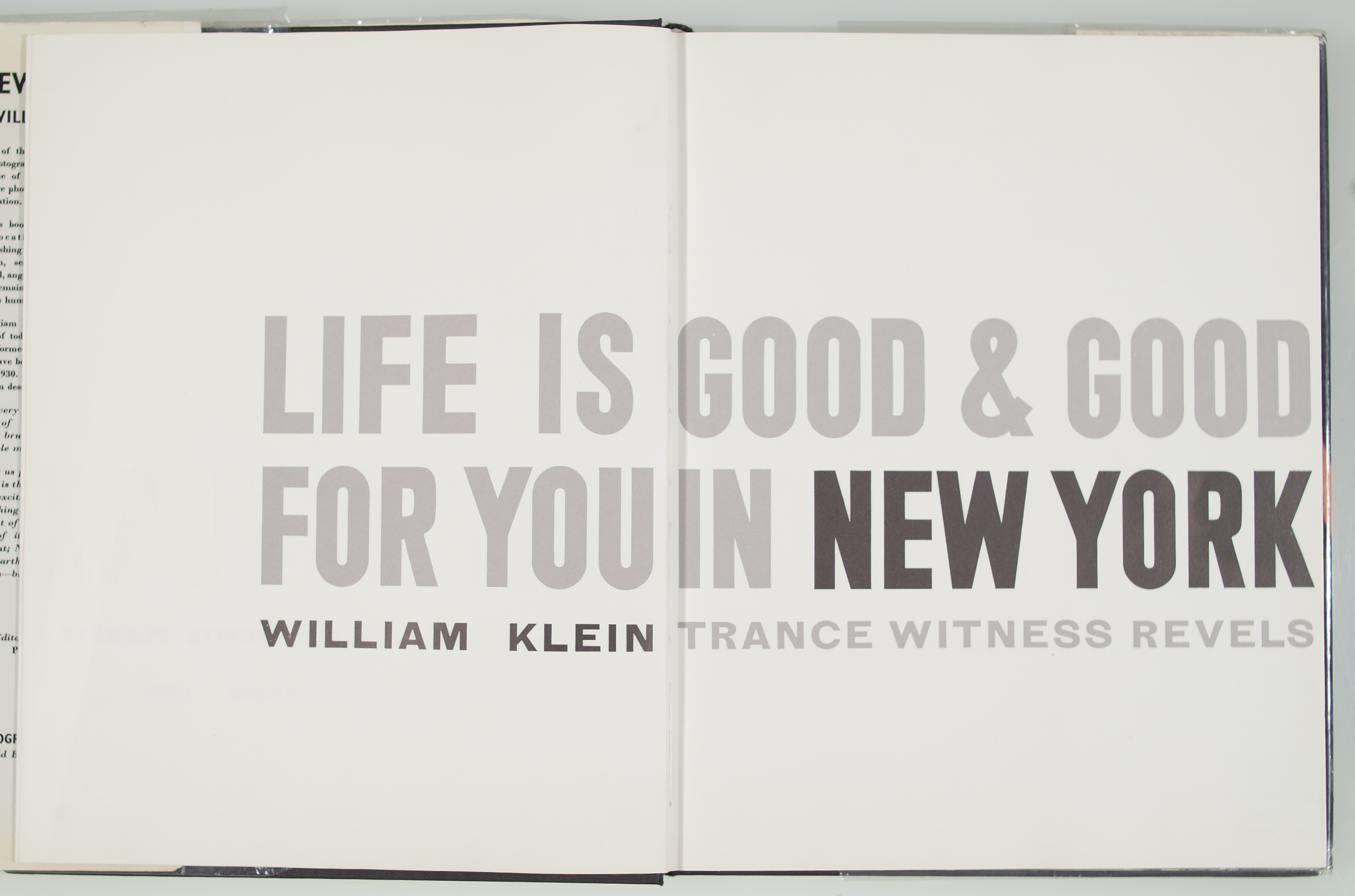
Life is good & good for you in New York: Trance Witness Revels.
Klein, William

Title: NEW YORK. Life is Good & Good for You in New...
Publisher: Seuil,, Paris,
Publication Date: 1956
Editions du Seuil, Album Petite Planete, Paris. 1956. First french edition, first printing. One of the photobook classics (Andrew Roth/Book of 101 Books, page 140-142. Martin Parr & Gerry Badger, The Photobook, page 243. The Open Book, Hasselblad Center, page 164/165. 802 photo books from the M.+M. Auer collection, page 365). Brilliant photobook in photogravure. Breathtaking printing and layout. One of the fabalous four city-books by the artist (beside Rome / Roma , Moscow/Moskau and Tokyo/Tokio). Hardback with full black cloth. 275 x 215 mm (10 x 8 1/2 in). 194 pages. 188 black and white photographs.


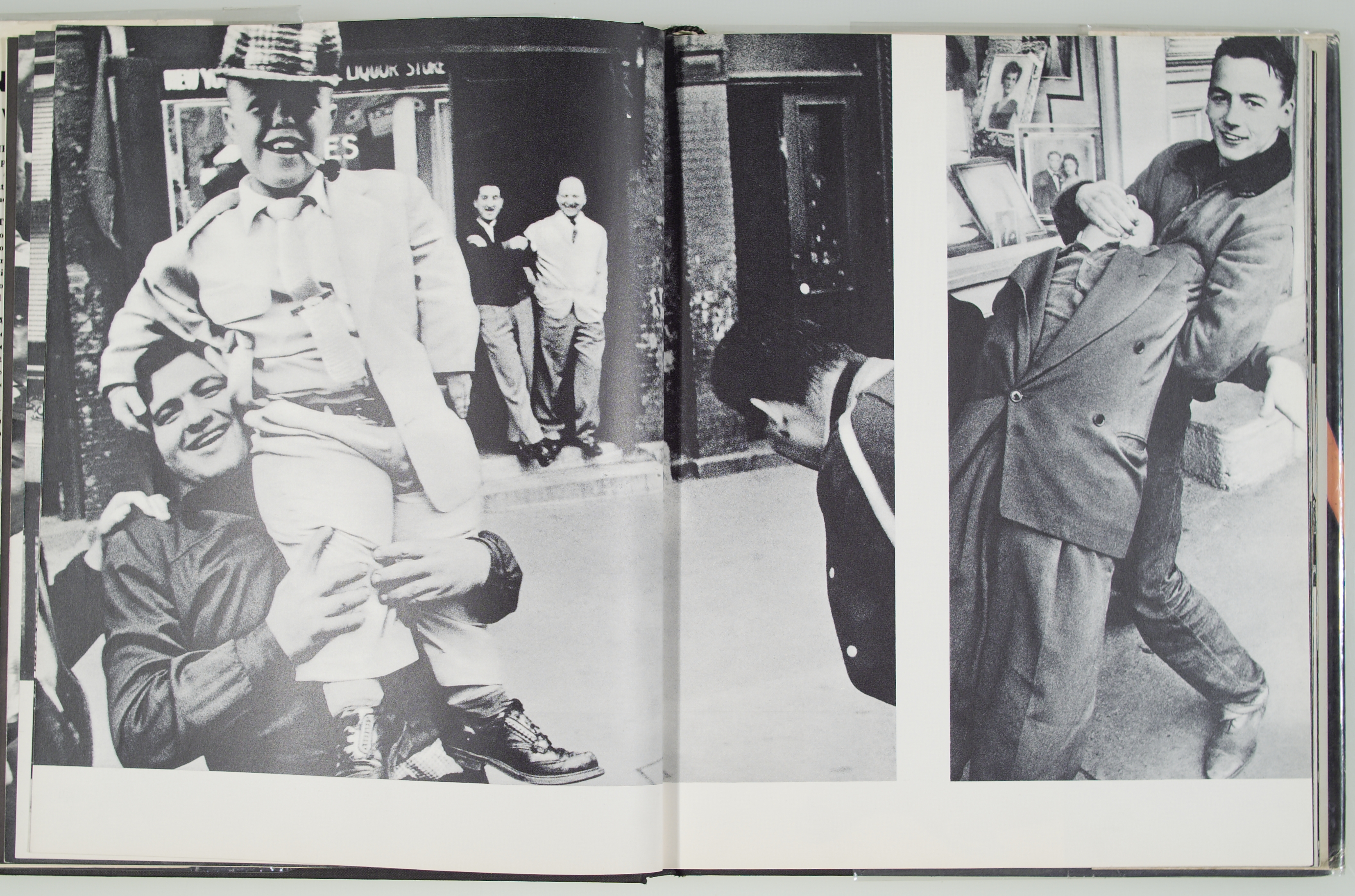
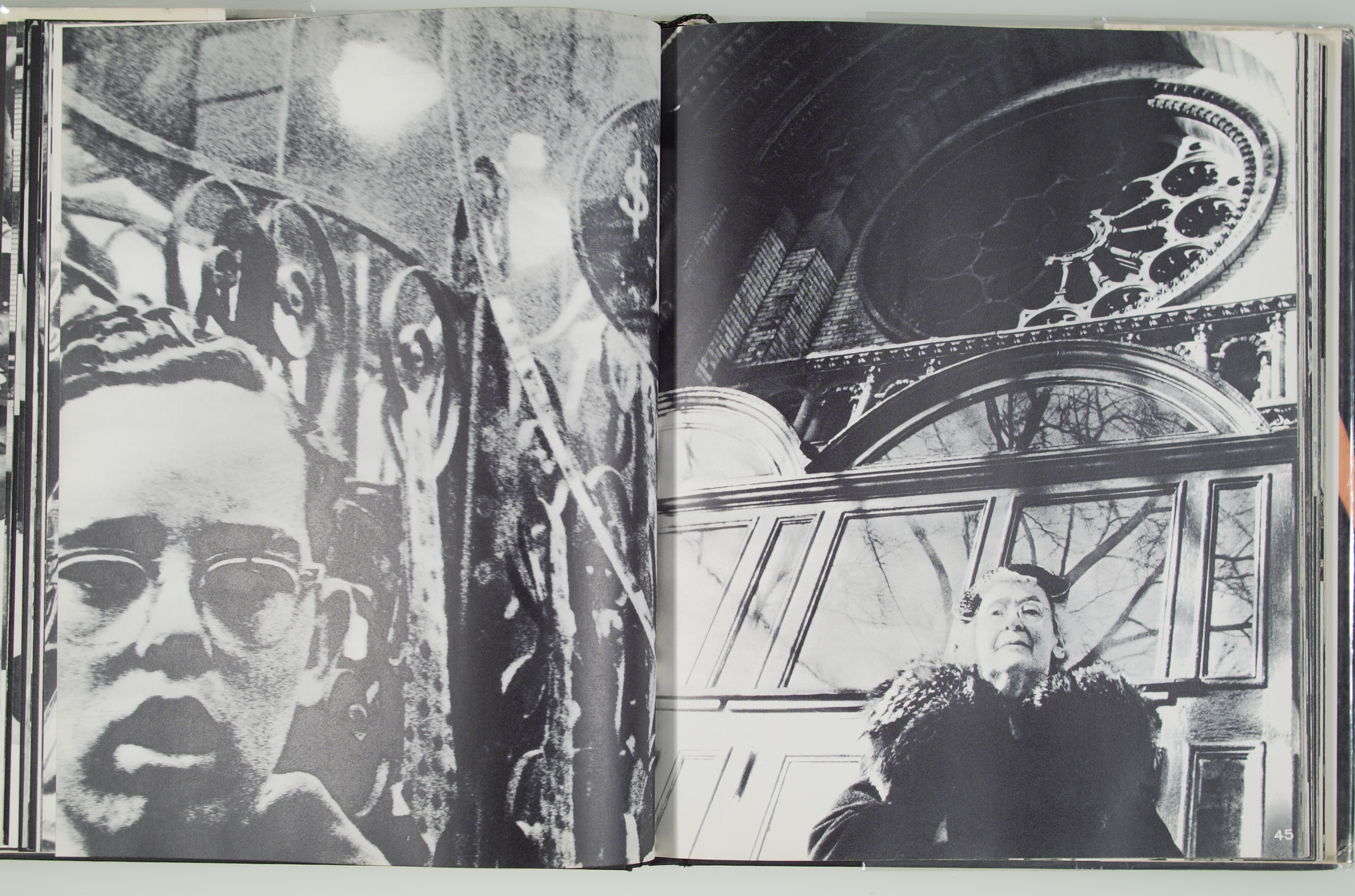
The Bronx-born William Klein left the United States after World War II to settle in Paris. Returning to New York City in the mid-1950s while under contract at Vogue, Klein in essence rediscovered the city, using his camera in an exploratory, stream-of-consciousness manner. Given the support of Alexander Liberman at Condé Nast, and the use of the Vogue darkrooms, Klein photographed the kaleidoscopic street culture of New York City and conceived of the work as existing, ultimately, in book form. Klein did the editing and layout as well.
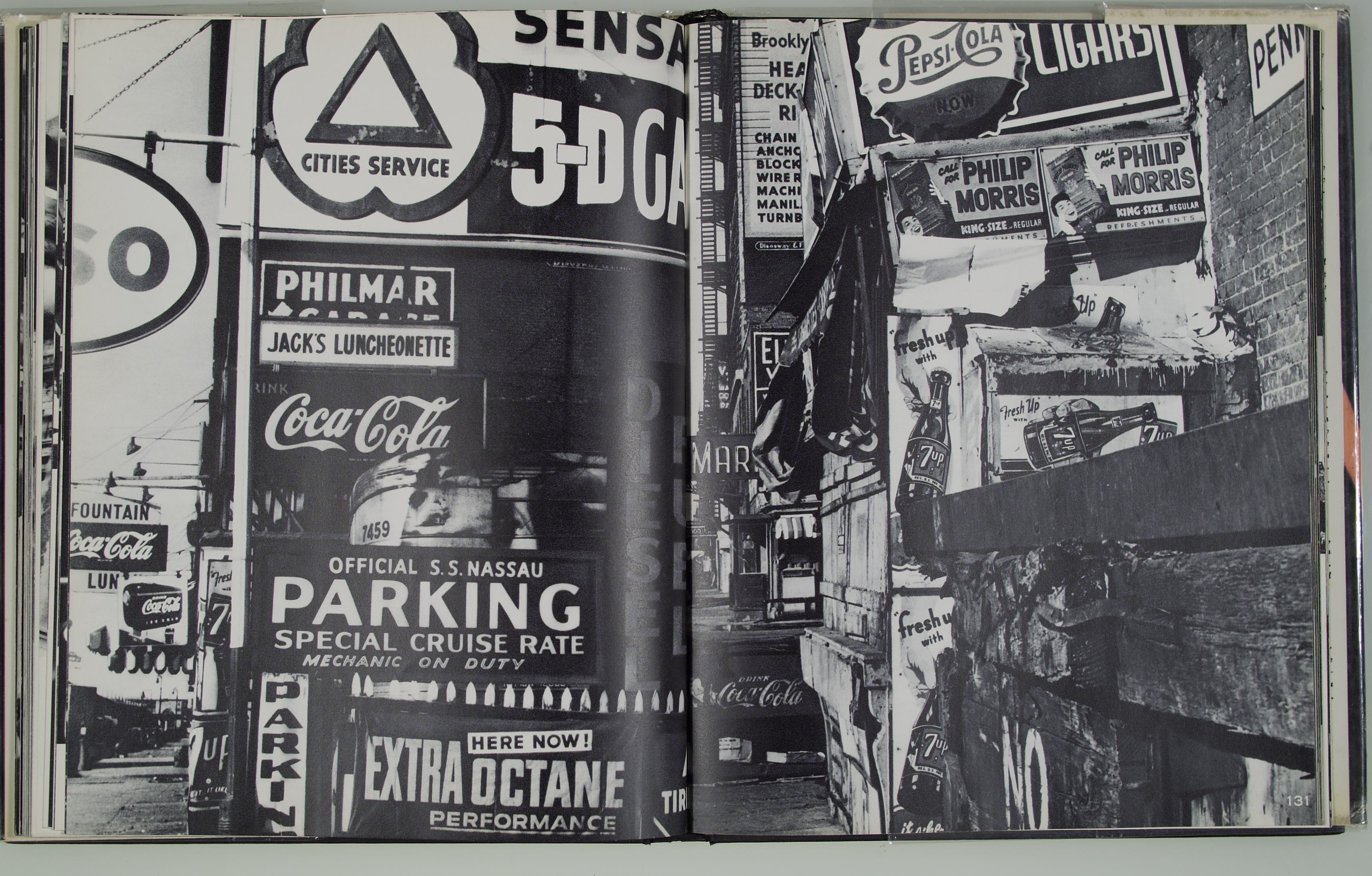
William Klein’s background in painting and graphic design—and the cosmpolitan urban culture of post-war Paris—informs the high contrast printing, the cinematic juxtapositions of images, and the expressionistic framing of the pages. Signage and advertising act as narrative commentary. The salty humor of many of the images relate it to an earlier book “about” New York City, Weegee’s Naked City (New York: Essential Books, 1945), and the vernacular of daily tabloid culture, but Klein’s book exists in a more hermetic, abstract, experiential form. This is a remarkable document of an anonymous urban walker in an eclectic, delirious, unstable city.
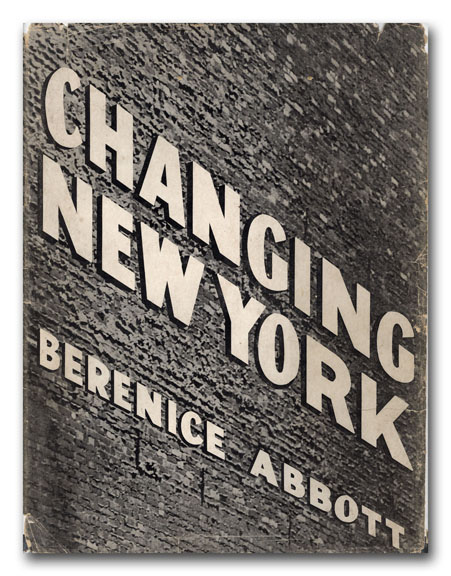
Publication Date: 1939
Binding: Hardcover
Dust Jacket Condition: Dust Jacket Included
Edition: 1st Edition
Probably the premier book of New York images. Parr and Badger, *The Photobook Volume 1*, p.141; Hasselblad. *The Open Book*, p. 130-131; Roth. *The Book of 101 Books*, p. 100-101.
How the Other Half Lives: Studies Among the Tenements of New York
Riis, Jacob A.

Publisher: New York. Charles Scribner's Sons. 1890.
Publication Date: 1890
Binding: Hardcover
Edition: 1st Edition
First Edition with matching dates of 1890 on the title and copyright pages. Also with "Trow's Printing and Bookbinding Company New York" printed at the bottom of the copyright page. With illustrations chiefly from photographs taken by the author. With 45 illustrations and all 18 half-tone photographic illustrations present. Also included are two full page drawings(plans) of "The General Plan of the Riverside Building (A.T. White's) in Brooklyn; and the floor plan of one division in the Riverside Buildings, showing six "apartments." A significant literary exposŽ and muckraking work, focusing on slum life and living conditions in the late 1880's in New York City. Cited as one of the first literary works to use half-tone photographic reproductions. A small volume (7.75" x 5.5"), "How the Other Half Lives" is bound in a finely woven dark blue cloth spine stamped brightly in gold; and oatmeal-colored paper-covered boards printed in red and stamped with drawings of huddlled children and the tenements in which they live.
Naked City
WEEGEE

Publication Date: 1945
Binding: hardcover
Illustrator: Weegee
Illustrated with hundreds of finely printed photogravures by the Polish-born news photographer Arthur Felig who was called "Ouija" by New York City cops for his amazing ability to get to crime scenes before the police. 8vo. Rough textured gray-green cloth New York: Essential Books, 1945.
A Way of Seeing: Photographs of New York by HELEN LEVITT.
Agee, James; Levitt; New York. Museum of Modern Ar

Publication Date: 1965
Binding: Hardcover
Dust Jacket Condition: Dust Jacket Included
Agee, James. A Way of Seeing: Photographs of New York by HELEN LEVITT. 78 pp. include 50 b&w plates. Oblong 8vo, cloth. New York, MoMA, 1965. Levitt's classic book on New York, now quite rare. Beautifully printed and a handsome copy. The Photobook: A History I, p. 252 The Open Book, p. 214.
New York, New York.
György, Lörinczy.

Publication Date: 1972
Binding: Hardcover
Quarto. 95,[2]pp. Black paper-covered boards with gold-stamped cover and gold lettering on spine in original photographic dust jacket. Frontispiece. "In 1968 the photographer György Lörinczy took advantage of the Hungarian's government decision to relax its rigorous laws on citizens traveling abroad. The result was his book New York, New York, which projected a rather less jaundiced view of the Big Apple than that of many home-grown photographers. As a foreigner's vision, and in terms of photographic outlook, Lörinczy's perspective clearly has affinities with that of William Klein, but his manic exuberance seems to run on pure energy, without the psychological tensions that underpin Klein's more realistic and informed vision of the city. It seems unlikely that Lörinczy saw the work of any of the Japanese photographers of the day, but his book has a similar 'anything goes' feeling, akin to the totally spontaneous style of someone like Daido Moriyama, who coincidentally, was photographing in New York around the same time. Lörinczy's style is rough, raw and uninhibited, in the best stream-of-consciousness manner. But he has nevertheless thought about New York, New York as a book, not only laying it out in a dynamic cinematic style, but employing such devices as printing one to two pages tracing paper, or utilizing extreme grain, blur and even solarization. The latter, surprisingly, renders his depiction of the city's energies more rather hallucinatory feeling that Lörinczy seems to have experienced on encountering this most vibrant of cities.This excited, carefree, though not naive view of New York makes a refreshing change from the inbred cynicism of the streetwise native." (Parr & Badger, The Photobook). Profusely illustrated with b/w reproductions of photographs. Text in Hungarian.

The Sweet Flypaper of Life.
DeCarava, Roy and Langston Hughes.

Publisher: New York: Simon & Schuster, 1955.
Binding: Soft cover
First Edition of the classic collaboration between DeCarava and Hughes. Small octavo, original photographic wrappers. Roth 101, Parr & Badger, The Photobook I, 242; The Open Book, 160.
Subway
(ISBN 10: 0893812315 / ISBN 13: 9780893812317 )
Davidson, Bruce

Publisher: Aperture, 729
Publication Date: 1986
Binding: Hardcover
The Animals
WINOGRAND, GARY

Publisher: New York: The Museum of Modern Art, 1969
Publication Date: 1969
Binding: Hardcover
FIRST EDITION OF WINOGRAND'S FIRST BOOK. “Winogrand's zoo, even if true, is a grotesquery. It is a surreal Disneyland where unlikely human beings and jaded careerist animals stare at each other through bars, exhibiting bad manners and a mutual failure to recognize their own ludicrous predicaments. “ -John Szarkowski. New York: The Museum of Modern Art, 1969. Oblong quarto, original wrappers.
Bruce Gilden : Coney Island
(ISBN 10: 0953890120 / ISBN 13: 9780953890125 )
Bruce Gilden

Publisher: Trebruk / Magnum Editions / Browns Design London
Publication Date: 2001
Binding: Hardcover
FIRST EDITION HARDBACK, detailing Bruce Gilden's fascination with this world famous seaside resort of Coney Island. No dustjacket (as issued) wrapped printed boards.
On the outskirts of the five boroughs sits Coney Island, the world famous pleasure beach that has been the summer destination for New Yorkers since its heyday in the 1890s. Toward the end of the 1960s, just one year after he first picked a camera, Bruce Gilden took the subway
train through Brooklyn to capture the sunbathers, the weekenders, and the sideshow freaks who stroll the Boardwalk and sprawl on the sands of Coney Island. As the area's reputation slipped, Gilden continued to take pictures. The result is this book, which gathers together a selection of his Coney Island photographs from the late 60s up through the late 80s, some of which are paired with hand-written recollections, all of which testify to Gilden's ability to eke out the characters and eccentricities of daily life. I still remember, it was a Thursday morning in June and I was living in Queens. I hitchhiked to Coney island. It took me one-and-a-half hours and when I got there, no one was around. I realized that people generally only go to the beach on weekends. I saw this little fellow standing by himself in the midway. He told me that his name was Little Louie and that he had bad teeth . . . --Bruce Gilden
Introduction by Bruce Gilden.
Introduction by Bruce Gilden.
HERE IS NEW YORK: A DEMOCRACY OF PHOTOGRAPHS
(ISBN 10: 3908247667 / ISBN 13: 9783908247661 )
Peress, Gilles (Editor); Shulan, Michael; Traub, Charles & Contributing Photographers

Publication Date: 2002-09-15
Binding: Hardcover
1st Printing. 864 pages. Published in 2002. Memorial collection of photographs. One of the greatest photography books of our time. The First Edition. Precedes and should not be confused with all other subsequent editions. Published in a regular first print run as a hardcover original only. The First Edition is now very scarce. A brilliant production by Gilles Peress and Yolanda Cuomo: Oversize-volume format. The book weighs 10 pounds. Photographs by professional and amateur contributors. There is no text. Conceived and edited by the great photojournalist Gilles Peress. Matching hard board pictorial slipcase. Printed on acid-free archival stock paper in Germany to the highest standards. Without DJ, as issued. Published on September 11, 2002 to commemorate the First Anniversary of 9/11. Presents "bleed" photographs of New York shortly before, during, and after 9/11, a great city's people reflecting upon and mourning their - and America's - grave loss one year later. The exhibition attracted thousands of submissions and tens of thousands of visitors, and toured the US and Europe, including the Museum of Modern Art (MOMA) New York and the Corcoran Gallery Washington DC. "The pictures convey an array of different responses, personal and political, to the tragedy. This book really does, in Whitman's words, contain multitudes" (Publishers Weekly). The very last image, a doublespread in color of the summit of the Twin Towers on a bright summer day, was used as the wraparound DJ design of Don DeLillo's great novel on 9/11, "Falling Man" (2007). The act of mourning and remembering, art as elegy, is the most difficult art of all. Aside from the fact that we are afraid to die, we expect our artists (and ourselves) to be heroes rather than victims, and so they (and we) fail miserably when the time comes to mourn. Yet elegy is the one necessary art, all other art is superfluous; because we're not very good at it, elegy can easily descend into bathos and sentimentality. Despite the small consolation that 9/11's evil perpetrator is dead and gone, remembering and "never forgetting" matter, and always will. Hence Gilles Peress' inspired project, "participatory" art at its most profound. An absolute "must-have" title for photography book collectors. "Here Is New York: A Democracy of Photographs" was selected as one of the greatest photography books in "The Photobook".
New York. Ansichten.
Fischer, Arno und Heinrich Müller

DU: KULTURELLE MONATSSCHRIFT MARZ 1969: EAST 100TH STREET, NEW YORK (BRUCE DAVIDSON)
DAVIDSON, BRUCE) (DU). Davidson, Bruce & Barney Simon. Manuel Gasser & Klara Obermuller, Editors

Publication Date: 1969
Binding: Pictorial Wrappers
np (94pp), profusely illustrated in b&w gravure. Text in German and English. Designed by Peter Jenny. This March 1969 issue of the Swiss cultural monthly magazine "Du" is almost entirely devoted to the first appearance of Magnum photographer Bruce Davidson's stirring "East 100th Street" series - one of the classic essays of Post-War American photography. Printed in lush black and white gravure with several fold out plates, it preceded the 1971 first edition (cited on page 18 of Martin Parr and Gerry Badger's "The Photobook: A History Volume II", pages 260-261 of The Hasselblad Center's "The Open Book", page 26 of "From Fair to Fine: 20th Century Photography Books That Matter", and pages 196-97 of "The Book of 101 Books") by nearly two years, and in many ways is the more striking of the two publications.

The Destruction of Lower Manhattan
Lyon, Danny

Publisher: The Macmillan Company
Binding:
Hardcover
Hardcover book bound in blackcloth with silver foil titles. Photographic essay documenting the clearing of 60 acres in downtown Manhattan's waterfront area to make way for urban renewal and the building the World Trade Center on seven of those acres. A neighborhood of warehouses, 19th century buildings, homes and markets, this was one of New York City's oldest neighborhoods. Black and white photos of buildings, the people who lived there and the demolition of the area. Commisisoned by the New York State Council of the Arts. With 75 plates. Beautiful work. Unpaged.
TEMPORARY DISCOMFORT CHAPTER 1 - 5: DAVOS GENOA NEW YORK EVIAN GENEVA
(ISBN 10: 3037780479 / ISBN 13: 9783037780473 )
Spinatsch, Jules (Photographer); Jaeggi, Martin & Shea, Jamie (Contributors)

Publication Date: 2005-05-24
Binding: Hardcover
1st Printing. Signed. Unpaginated. Published in 2005. Collection of color photographs. One of the greatest photography books of the new century. The first and only edition. A brilliant production by Jules Spinatsch and Winfried Heininger: Oversize-volume format. Rich black leatherette boards with titles on cover and spine and photographic reproduction pasted on the back, as issued. Photographs and text by Jules Spinatsch. Essays by Martin Jaeggi and Jamie Shea. Printed on glossy stock paper in Switzerland to the very highest standards. The whole book ironically mimics the look and feel of an Annual Corporate Report. Without DJ, as issued. Presents in five interrelated chapters an anti-heroic visual approach as the only possible antidote to the toxic effects of the imagery of power. "Spinatsch examines the waiting for the big event as meticulously planned down to the last detail. Whatever will happen is already inscribed in its security architecture. He creates landscapes that could serve as the antithesis to the Romantic tradition. He shows landscapes and cityscapes as they appear under the cold, strategic gaze of security planners, a terrain where every movement must be controlled and contained. Spinatsch mimics the gaze of power, power as a gaze that sees the world only as a security hazard to be contained. At the heart of the security architecture that Spinatsch shows us, we find a hermetically sealed vacuum in which politicians and managers meet to organize world trade in the name of liberal democracy while they smile at TV cameras, remote and untouchable. Spinatsch does not want to be a hero. He is a spy behind enemy lines. Only such a clever anti-strategist can show the cold and imperious glance of power so clearly and hauntingly" (Martin Jaeggi). In the Age of CNN and Fox News, power means having absolute control over the image that people see of power. By taking photographs of the preparations, security measures, and other precautions needed to achieve this goal (while no one else, including all other photographers, was looking or paying attention), Spinatsch exposes the heroic iconography of power as a pompous lie. A "must-have" title for Jules Spinatsch collectors. This copy is very prominently and beautifully signed in black fountain pen by Jules Spinatsch. This title is both an instant classic and will endure. This is one of very few signed copies still available online and has no flaws, a pristine beauty. A rare signed copy thus. Jules Spinatsch's "Temporary Discomfort" was selected as one of the greatest photography books in "The Photobook". One of the greatest living photographers.

The Faith of Graffiti
Mailer, Norman with Mervyn Kurlansky and John Naar

Publisher: New York: Alskog, 1974.
Publication Date: 1974
Edition: First edition.
First edition; first printing--paperback edition of The Faith of Graffiti, the classic early photobook on the then emerging phenomenon of hip-hop graffiti writing in New York City. Mailer's text is by turns insightful, bombastic, maddening and inspiring--and important as one of the first notable defenses of a phenomenon that had been, in the mainstream at least, almost universally regarded as an urban scourge and nothing more. Folio; illustrated throughout in color; pictorial wrapers
ANDRE KERTESZ: NEW YORK STATE OF MIND

Binding: Soft cover
1st Printing. 36 pages. Published in 2001. Exhibition catalog. The first and only edition. Published in a very small and limited print run as a softcover original only. There is no ISBN. An austerely elegant production by David Williams: Plain softcovers, as issued. Photographs by Andre Kertesz. Essay by Robert Gurbo, the Curator of the Estate of Andre Kertesz. Printed on thick coated stock paper in the United States to the highest standards. In integral pictorial DJ with titles on the cover and spine and very large flaps, as issued. Published on the occasion of the exhibition of the same name at the Stephen Daiter Gallery in Chicago in September 2001. A memorial tribute, the exhibition honored both the great city and one of its greatest photographers on 9/11, a time of great mourning and immense tragedy. Reproduces some of Andre Kertesz's most beautiful photographs ever. The exhibition had the full cooperation of The Estate's executors, Jose Fernandez and Alex Hollander. A moving book, this is a "must-have" title for Andre Kertesz completists. This Exhibition Catalog was not commercially sold to the public and is now collectible. This is one of very few copies still available online and has no flaws, a pristine beauty. A very scarce copy thus. 27 duotone plates. Andre Kertesz's "Day of Paris" was selected as one of the greatest photography books in "The Photobook". One of the greatest photographers of the 20th century.
ANDRE KERTESZ: NEW YORK "THE LOST YEARS"
(ISBN 10: 1441473807 / ISBN 13: 9781441473806 )
Daiter, Stephen (Editor/Publisher); Kertesz, Andre (Photographer) & Berlanga, Paul (Contributor)

Publication Date: 2009-02-25
Binding: Soft cover
1st Printing. 75 pages. Published in 2009. Exhibition catalog on subject. The first and only edition. Published in a very small and limited print run as a softcover original only. None of the copies was sold to the public. An austerely elegant production by Adam Holtzman: Regular-sized volume format in square shape. Glossy pictorial softcovers with black titles on the cover and spine, as issued. Photographs by Andre Kertesz. Essay by Paul Berlanga. Printed on pristine-white uncoated stock paper in the United States to the highest standards. Without DJ, as issued. Published on the occasion of the AIPAD Photography Show held in New York from March 26 through 29, 2009. Presents reproductions of Andre Kertesz's vintage prints complete with handwritten and stamped information exactly as they appear on the prints themselves. The images are presented on the right-hand side, the captions en face. By the time Kertesz emigrated to the United States in 1937, he was already a well-known artist/photographer in Europe, and rightly expected to be greeted with the critical acclaim and financial success in America that a figure of his stature deserved. Instead, his work was completely ignored. Kertesz was forced to eke out a living by doing commercial work for House & Garden Magazine. It was not until the prescient John Szarkowski gave him a one-man show at the Museum of Modern Art (MOMA) in 1964, a posthumous-like twenty-seven years later, that he finally achieved the recognition that he enjoys to this day. There are now critics, scholars, and collectors who consider Kertesz to be the greatest photographer of the 20th century. Kertesz called his long American obscurity "The Lost Years", when instead of giving up, he persevered and "developed a body of work that visually distilled his isolation and anxieties, creating subdued and poetic photographs. Photographs that asked New York to slow down and hear a whisper among the shouts. And he remained true to his vision" (Paul Berlanga). All true art compels us to slow down, tarry, take our time; it transports us to another temporal reality and immerses us in it, which Andre Kertesz's photographs do. As presented in this lovely catalog, they make us linger over each page instead of flip through them. A "must-have" title for Andre Kertesz completists. This Exhibition Catalog was not sold to the public. It was given as a keepsake/souvenir to Andre Kertesz print collectors only. As far as we know, this is the only copy available online and has absolutely no flaws, a pristine beauty. A very scarce copy thus. 36 plates. Andre Kertesz's "Day of Paris" was selected as one of the greatest photography books in "The Photobook". One of the greatest photographers of the 20th century.






 Posts
Posts


