vrijdag 6 november 2009

Occupation Soldier Fighters and Peacemakers in Afghanistan Ad van Denderen Documentary Photography


Occupation: Soldier
Since the end of the Cold War in 1990 and the expected conclusion of the Uruzgan mission in 2010, almost 90,000 Dutch soldiers have been involved in peacekeeping operations.

What do we remember of them, what remains in our collective visual memory? Precious little. Peacekeeping does not produce spectacular images. Except when it goes wrong. The fall of Srebrenica is an open wound in Dutch (military) history.

Even so, every day young men and women do their often dangerous duty. Drawn by the adventure, out of a need for camaraderie and sometimes also out of idealism and a sense of responsibility. In total, around 40 of them have lost their lives, more than half in Afghanistan.

As part of their annual photo commission, Document Nederland, the Rijksmuseum and NRC Handelsblad newspaper asked photographer Ad van Denderen to give this history a face. Van Denderen followed the recruits during their training in The Netherlands and on their missions in Chad and Uruzgan: hard working, operating with caution; a frequently unglamorous existence. He also turned his lens towards family members. He captured the Christmas and New Year’s greetings being recorded in a television studio and visited the homes of families whose sons will never return – the target of insurgents as a result of their occupation.

‘Wars are begun because the lust for war exists,’ writes Arnon Grunberg. His polemic examination of the notion of civilisation forms the introduction to Occupation: Soldier. Grunberg visited ISAF, NATO’s peacekeeping and reconstruction force in Afghanistan, in 2006 and 2007.


Ad van Denderen
Ad van Denderen (1943, The Netherlands) has worked as a photographer for Vrij Nederland, Stern, NRC Handelsblad, GEO and The Independent magazine, among others.

He has received a number of prestigious prizes for his work, including the Visa d’Or at the international photo festival Visa pour l’Image in Perpignan in 2001 and The Netherlands Foundation for Visual Arts’ (Fonds BKVB) oeuvre prize in 2007/2008.

Go No Go, his book on migration in Europe, based on 13 years of work, was published by Actes Sud, Mets & Schilt, Lunwerg Editores, Edition Braus and Paradox in 2003. For the 2008 SteidlMack/Paradox publication So Blue So Blue, Van Denderen photographed the 17 countries around the Mediterranean Sea. Earlier publications include Peace in The Holy Land, a book about Palestine (1997) and Welkom in Suid-Afrika, about apartheid (1991).

His work has been widely exhibited in (international) group and solo exhibitions. Go No Go was shown at FOAM and Imagine IC (Amsterdam), the Kunsthalle Wien (Vienna, Austria), La Criée (Rennes, France) and other venues. The project was developed by filmmaker Bors Gerrets into an audiovisual piece on DVD for Paradox. The film premiered at a special migration meeting of the European Parliament in 2004. So Blue So Blue opened in the Nederlands Fotomuseum in Rotterdam (NL) in 2008 before going on to the Fotomuseum Winterthur (CH) in the spring of 2009.

In 2008, Van Denderen was invited by the Rijksmuseum and NRC Handelsblad to work on Document Nederland, an annual commission dealing with contemporary Dutch history, which that year focused on the Dutch armed forces. This resulted in the exhibition Fighters and Peacemakers in the Fotomuseum Den Haag in 2009/2010 and the book Occupation Soldier (NRC Books/Paradox, 2009).


donderdag 5 november 2009

Erotic Photography Sanne Sannes versus Wingate Paine Photography Annual 1967 International Edition

Lees verder ...

Photography Annual 1967 International Edition

Binding: Magazine

Publisher: Ziff-Davis Publishing Company

Date Published: 1966

Description: No Jacket. 4to-over 9¾"-12" tall. Includes contributions by Andre Kertesz, Bill Troy, Flip Schulke, Jerome Ducrot, Marc Riboud, Sanne Sannes and others. 208 pages. Magazine. Ziff-Davis Publishing Company. Published in 1966.


Misha de Ridder Wilderness : Arizona, California, Colorado, Georgia, Nevada, New Mexico, North Carolina, South Carolina, Tennessee Photography


Wilderness 11:38 AM PST, 2003
© Misha de Ridder
Widerness Photographs by Mischa de Ridder, review by photography in print ...
Artimo, Amsterdam, 2003.
72 pages, 54 color illustrations, 12”x14½″.
This book was published five years ago, and we are shocked that it is still available. It has a series of 18 wonderful landscapes, and a set of double sided pages that can be removed to form two different wall sized photographs. The pieced together image is not a Gursky, but it would make any dentist from the 70’s envious, and have flashbacks of their waiting room. In the current economical climate you probably will hold off on buying that Gursky, but you can afford to purchase this book before it’s out of print. Right now, Wilderness is a steal at $42…add one to your collection. -PIP
In this book, lushly photographed flora isolated in nature alternates with enlarged details from the wilderness compositions that emphasize the four-color separation methods used in commercial printing. The detail pages encourage appreciation for the graphic qualities of the quiet views of undeveloped nature where tree bark ridges and layered flowering branches become organic patterns. The book’s pages are perforated for easy removal as the included images can be assembled to create two wall sized installations, each 1644 x 2082 mm (64.5 x 82.1 inches). -Artimo

Dune, 2006
© Misha de Ridder
Ever since landscapes and natural vistas have been depicted in paintings, photographs and films, the viewer has been able to have the experience, to feel that he can not only be at the site, but can also find himself in the world of the artist – in the skies of Van Ruysdael, on the beaches with Rineke Dijkstra’s young girls.
– Maria Barnas
Misha de Ridder’s photographs demonstrate an experience of nature and quite simply, though he won’t admit it, the beauty of color photography.


Wilderness, Artimo, 2003
© Misha de Ridder
The book of de Ridder’s Wilderness images is very interesting. In the book, the lushly photographed scenes alternate with enlarged details from the wilderness compositions that emphasize the four-color separation methods used in commercial printing.
But, it gets better. The book’s pages are perforated for easy removal as the included images can be assembled to create two wall sized installations, each 1644 x 2082 mm (64.5 x 82.1 inches):


Wilderness wall-sized installation images
© Misha de Ridder
Check out his website for more images and read this review to gather a bit more about his intent… and werewolves.

Misha de Ridder Wilderness : Arizona, California, Colorado, Georgia, Nevada, New Mexico, North Carolina, South Carolina, Tennessee Photography


Wilderness 11:38 AM PST, 2003
© Misha de Ridder
Widerness Photographs by Mischa de Ridder, review by photography in print ...
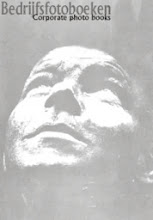
Artimo, Amsterdam, 2003.
72 pages, 54 color illustrations, 12”x14½″.
This book was published five years ago, and we are shocked that it is still available. It has a series of 18 wonderful landscapes, and a set of double sided pages that can be removed to form two different wall sized photographs. The pieced together image is not a Gursky, but it would make any dentist from the 70’s envious, and have flashbacks of their waiting room. In the current economical climate you probably will hold off on buying that Gursky, but you can afford to purchase this book before it’s out of print. Right now, Wilderness is a steal at $42…add one to your collection. -PIP
In this book, lushly photographed flora isolated in nature alternates with enlarged details from the wilderness compositions that emphasize the four-color separation methods used in commercial printing. The detail pages encourage appreciation for the graphic qualities of the quiet views of undeveloped nature where tree bark ridges and layered flowering branches become organic patterns. The book’s pages are perforated for easy removal as the included images can be assembled to create two wall sized installations, each 1644 x 2082 mm (64.5 x 82.1 inches). -Artimo

Dune, 2006
© Misha de Ridder
Ever since landscapes and natural vistas have been depicted in paintings, photographs and films, the viewer has been able to have the experience, to feel that he can not only be at the site, but can also find himself in the world of the artist – in the skies of Van Ruysdael, on the beaches with Rineke Dijkstra’s young girls.
– Maria Barnas
Misha de Ridder’s photographs demonstrate an experience of nature and quite simply, though he won’t admit it, the beauty of color photography.


Wilderness, Artimo, 2003
© Misha de Ridder
The book of de Ridder’s Wilderness images is very interesting. In the book, the lushly photographed scenes alternate with enlarged details from the wilderness compositions that emphasize the four-color separation methods used in commercial printing.
But, it gets better. The book’s pages are perforated for easy removal as the included images can be assembled to create two wall sized installations, each 1644 x 2082 mm (64.5 x 82.1 inches):


Wilderness wall-sized installation images
© Misha de Ridder
Check out his website for more images and read this review to gather a bit more about his intent… and werewolves.

dinsdag 3 november 2009

Changes Cor Jaring the Chronicler of the Roaring Sixties Provo Amsterdam Photojournalism Photography

Lees verder ...


JARING, COR. - Dit hap-hap-happens in Amsterdam


Amsterdam, De Arbeiderspers, 1966. 8vo. Unpaged. Text by Henk J.Meijer, illustrated throughout with reproductions of Jaring's photographs of the sixties happenings in Amsterdam. Original wrappers. First edition.


JARING, COR - FALLAUX, EMILE - Amsterdam.

Huizen, Tritonpers, 1969. Illustrated glazed paper-covered boards , 28,5 x 21,9 cms., 128 pp. text in Dutch, English, German and French with 200 b/w photographic illustrations on Amsterdam in the Sixties. "Amsterdam. A portrait of the Hippie City. Naked, naughty, natural...and unnatural. The 'man in the street' and the 'woman on the streets'. Wayout people in outlandish clothes, people with painted bodies. Shocking, sexy. Amsterdam from the inside out!


JARING,COR. - De Amsterdamse haven / The port of Amsterdam.


Amersfoort, 2001. 127 pp. Col. & b./w. ills. Boards.*Text in Dutch & English


zondag 1 november 2009

Through the eyes of the Dutch Istanbul Diana Blok Photography

Through the eyes of the Dutch Istanbul is seen as a city far behind Amsterdam. And yet, surprisingly in Istanbul and Ankara the Turkish community accepts homosexuals much more than the Turkish community in Amsterdam.

During her visit to Istanbul in 2008 Diana Blok discovered an active gay nightlife more visible and open than expected. She imagined the lesbian world to be totally hidden but found it to be most open in terms of meeting and speaking, even though there is no clear Lesbian community. Gay bars for men are more common, but their willingness to share their lives was more hidden. It is better to be a tough woman in Turkey, they said, than a fragile man.

Diana Blok got in touch with two organizations (Pink House and KAOS GL), both active with issues of sexual orientation and gender identity for lesbians, gays, bisexuals and transsexuals concerning human rights. With their help she found subjects who could relate to her photographic work and were willing to pose for the camera and speak openly about their lives. They shared their courageous, heartfelt stories and the difficulties they face to be free human beings within the traditional society in which they live. Many gay men, lesbians or transsexuals lead a double life.
It is a complex subject within a complex country in the process of change. Some socio-cultural aspects are opening, others disappearing and yet others hiding. Physical and psychological harassment towards these individuals is still common.

Although it is not illegal to be lesbian, gay, bisexual or trans in Turkey, there are still discrimination practices and persecutions against them.

“Having been brought up in Latin America as a Catholic I wondered how the taboos of my upbringing differed from that of the Turkish society today. It is obvious that there is still a great problem with visibility, but it has become clear that there is also change and dreams which very slowly take on a new form.” Diana Blok

This project is dedicated to all individuals who struggle for a voice to express their love.

Diana Blok (1952, Montevideo Uruguay) grew up in Colombia, Mexico and Guatemala. Since 1974 she lives and works in Amsterdam. She is self-taught. Her work is exhibited, published and purchased worldwide. Since 1985, she often participated in group exhibitions in the Melkweg Galerie, where in 2005 her last solo exhibition "Paradise In Disguise" was shown. Issues around sexual identity are always a returning theme in the work of Diana Blok. Lees verder ...