...a photoBook is an autonomous art form, comparable with a piece of sculpture, a play or a film. The photographs lose their own photographic character as things 'in themselves' and become parts, translated into printing ink, of a dramatic event called a book...
- Dutch photography critic Ralph Prins
MADRID.- The Regional Government of Madrid presents at PHotoEspaña the latest work by the winner of the 6th Photography Award. The exhibition shows over 100 photographs, the majority unpublished, based on the cult of the mythical Venezuelan character.
Cristina García Rodero is a major exponent of the documentary trend that began in Spain during the nineteen seventies. For three decades, she has studied and photographed popular traditions, mainly in Spain but also in Mediterranean Europe and Latin America. Her images are characterised by an extraordinary strength, the result of her passion for life and her photographic oeuvre stands out both for its meticulous technique and for the curiosity and sensitivity it shows for the territories explored.
María Lionza. La diosa de los ojos de agua contains approximately one hundred works revolving around this mythical Venezuelan character, whose cult goes back to the time before the Spaniards arrived in the fi fteenth century. Since then, there have been numerous pilgrimages to the Sorte mountain, located in the state of Yaracuy, where the devout go to make their requests. Cristina García Rodero’s photographs have never been published and they cover her work over the last ten years. They are a valuable selection of images on the rites, ceremonies and customs of María Lionza’s worshippers and offi ciants in today’s Venezuela.
Cristina García Rodero(Puertollano, Ciudad Real, 1949) has received numerous awards, including the World Press Photo Prize in the art category (1993) and Spain’s National Photography Prize (1996). She has participated in many solo exhibitions in the United States, Mexico, Portugal, United Kingdom, Germany, Venezuela and Poland, as well as in the Venice Biennale (2001).
Quote:"I tried to photograph the mysterious, true and magical soul of popular Spain in all its passion, love, humor, tenderness, rage, pain, in all its truth; and the fullest and most intense moments in the lives of these characters as simple as they are irresistible, with all their inner strength, as a personal challenge that gave me strength and understanding and in which I invested all my heart."
See also Miserere by Marrie Bot... the great pilgrimages of penance in Europe : pictures of Fatima, Croagh Patrick, Zebrzydowski, Andujar, Lourdes, Paclawska, Sevilla, Tinos, Lough Derg and Rocio...
MADRID.- The Regional Government of Madrid presents at PHotoEspaña the latest work by the winner of the 6th Photography Award. The exhibition shows over 100 photographs, the majority unpublished, based on the cult of the mythical Venezuelan character.
Cristina García Rodero is a major exponent of the documentary trend that began in Spain during the nineteen seventies. For three decades, she has studied and photographed popular traditions, mainly in Spain but also in Mediterranean Europe and Latin America. Her images are characterised by an extraordinary strength, the result of her passion for life and her photographic oeuvre stands out both for its meticulous technique and for the curiosity and sensitivity it shows for the territories explored.
María Lionza. La diosa de los ojos de agua contains approximately one hundred works revolving around this mythical Venezuelan character, whose cult goes back to the time before the Spaniards arrived in the fi fteenth century. Since then, there have been numerous pilgrimages to the Sorte mountain, located in the state of Yaracuy, where the devout go to make their requests. Cristina García Rodero’s photographs have never been published and they cover her work over the last ten years. They are a valuable selection of images on the rites, ceremonies and customs of María Lionza’s worshippers and offi ciants in today’s Venezuela.
Cristina García Rodero(Puertollano, Ciudad Real, 1949) has received numerous awards, including the World Press Photo Prize in the art category (1993) and Spain’s National Photography Prize (1996). She has participated in many solo exhibitions in the United States, Mexico, Portugal, United Kingdom, Germany, Venezuela and Poland, as well as in the Venice Biennale (2001).
Quote:"I tried to photograph the mysterious, true and magical soul of popular Spain in all its passion, love, humor, tenderness, rage, pain, in all its truth; and the fullest and most intense moments in the lives of these characters as simple as they are irresistible, with all their inner strength, as a personal challenge that gave me strength and understanding and in which I invested all my heart."
See also Miserere by Marrie Bot... the great pilgrimages of penance in Europe : pictures of Fatima, Croagh Patrick, Zebrzydowski, Andujar, Lourdes, Paclawska, Sevilla, Tinos, Lough Derg and Rocio...
MADRID.- The exhibition includes over 200 images from the most emblematic series taken for Life magazine in the 1940’s and 1950’s and the projects Pittsburgh and Minamata. A full review of the series Country Doctor, Nurse Midwife, A man of Mercy and Spanish Village is made.
W. Eugene Smith is one of the main figures in humanist photography and his career centred on his obsession with the truth, resulting in passionate, idealistic, sensitive and optimistic images. As a photojournalist, between 1946 and 1954, he made some fifty projects for Life magazine, known as Photographic Essays. After having left the magazine, Smith carried out extensive independent projects such as Pittsburgh (1955–1957), for which he took more than 10,000 photos, and Minamata (1971–1975), about the chemical contamination of the population in that Japanese island.
These two exhaustive projects are – together with the photo essays made for Life: Country Doctor, Nurse Midwife, A Man of Mercy and Spanish Village – the heart of the W. Eugene Smith. more real than reality exhibition, a comprehensive review in over two hundred photographs of the work of a creator of emotionally intense and photographically spectacular images.
W. Eugene Smith (U.S.A. 1918–1978) was self trained. At the age of nineteen, he began to collaborate with Newsweek and a year later with Life, Look, Harper’s Bazaar and The New York Times. He left Life in 1955 and joined Magnum Photos. Along with his photographic work, he was a professor at the New School for Social Research in New York. His photographs have been shown in the most important art institutions, including the MoMA in New York, the Centre Georges Pompidou in Paris, the Art Institute in Chicago and the Victoria and Albert Museum in London. Read more... See for a Review ...
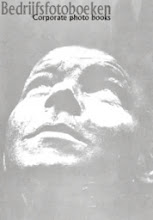
Dutch and Belgian nominees for the best photobooks : Zeger Reyers (Still Growing), Harry Gruyaert (Edges, Tv Shots), Geert van Kesteren (Baghdad Calling), Useful Photography #007, Hans Eijkelboom (Paris-New York-Shanghai), Bert Teunissen (Domestic Landscapes), Ellen Kooi (Dentro por fuera) en Carl De Keyzer (Trinity).
Het Water De schoonheid van ons land (7) 1950 Contact Amsterdam Typography & graphic design J. van Krimpen. Photography Cas Oorthuys, A.N.P., Nol Binsbergen, Carel Blazer, Kees Hana, Annelies Romein, Ad Windig
Klederdrachten: de Schoonheid van ons Land (Traditional Costume: The Beauty of Our Land) by Thienen, F.W.S. van, and J. Duyvetter, text Amsterdam: Uitgeverij Contact, 1962 Text in Dutch. Part 18 in a series Land and People. 83 pages followed by a photographic section by Cas Orthuysof 184 b/w captioned photos of costumes, 4 color plates frontis, 10 color plates with 12 illustrations, bibliography, index; Traditional Costumes of the Netherlands with history and development including of the Island of Marken, photos of people in daily life and in individual towns and areas, from the Arnheim Museum.
See also ''T SCHOT IS TE BOORD by Herman van der Horst ... This film, commissioned by the European Film Unit, one of the Marshall Aid organisations, is an overwhelming account of the labour-intensive North Sea herring fishing industry. Van der Horst filmed the fishermen during their work. He does this using his characteristically rough-hewn yet lyrical style, with great eye for detail. Scenes include the departure from the harbour of Scheveningen, the journey to the Doggersbank (''one full day and one full night''s sailing, bearing north by northeast''), the hauling in of the nets during the night, and finally, the festive arrival in the harbour. Everything about this documentary is overwhelming. The images are very dynamic, abrupt and almost rough in the way it has been edited. Wide shots and close-ups follow each other at a fast pace. Sound plays an important part in the film: the rattling of chains, the staccato radio communication, the seagulls, the ship''s horns, the rhythmical singing of the teams of labourers.
Kentucky Yard Sale Yields a Trove of Weegee Images By RANDY KENNEDY
As letters go, they aren’t exactly the stuff of literature. One from 1959 asks that the recipient phone Con Edison and complain about an unusually high electric bill ($54.92). Another requests a shipment of beloved New York cigars because of apparent dissatisfaction with the options available in Europe. At least one, written from the Regina-Palast Hotel in Munich, Room 551, starts to provide a hint of the sender.
“Looks like the picture won’t be finished on time,” the letter explains. “It rains every day and we can’t find 2 midgets, so it looks like I’ll be here at least 2 more weeks.” The letters, along with 210 vintage black-and-white photographic prints, were found in 2003 in a zebra-stripe trunk that was bought at a yard sale in Kentucky by two Indiana women who were on their way back from a camping trip. One of the women simply liked the look of the trunk, and when she found old clothes, yellowed papers and pictures inside, she thought about throwing the contents away.
But she took them instead to an Indianapolis rare-documents dealer. And this week the Indianapolis Museum of Art plans to announce that it has acquired a trove of work and correspondence by Weegee, the crepuscular, stogie-smoking New York photographer whose visceral pictures became a template not only for artists like Diane Arbus but also for much of the uncomfortably close tabloid imagery that exists today. The museum described the acquisition as a partial gift and partial purchase from the dealer.
The trunk is assumed to have once been the possession of Wilma Wilcox, a social worker who was Weegee’s companion and lived with him from 1957 until his death in 1968. Upon her death in 1993, she bequeathed the bulk of his work — thousands of prints and negatives — to the International Center of Photography in Manhattan. How the trunk full of prints and 62 letters to Ms. Wilcox from Weegee (born Usher Fellig in what is now Ukraine, and later known as Arthur Fellig) ended up in Kentucky is a mystery that neither the Indianapolis Museum nor the dealer, Steve H. Nowlin, has solved.
“We’re just lucky that it all survived,” said Martin Krause, the museum’s curator of prints, drawings and photographs. “The woman who found them thought maybe these were just old family snapshots or something — though how you could mistake a Weegee for a family photograph, I don’t know.”
The size of the newly discovered collection pales in comparison with the holdings of the International Center of Photography, and Mr. Krause said that no previously unknown work had been found among the prints. But for a museum that began collecting photography seriously only 15 years ago, the work is an important addition — especially because the trunk contained a surprisingly broad survey of Weegee’s career, with the only weak spot being fewer prints from his early years of crime and murder-scene coverage in the 1930s.
Maxwell Anderson, the museum’s director, said the institution’s young collection has notable 19th-century work and a concentration of contemporary photography. “So this will serve as a great bridge between those traditions,” he said, adding, of the discovery of the prints and letters, that it was “like the last keystroke of a life of accidental purpose.” Weegee — whose nickname, according to one story he told, was a transliteration of Ouija, a reference to his almost psychic ability to find a fresh crime scene — was the archetype of a tabloid photographer, working mostly at night in the lower-rent parts of New York City.
“People who work in the daytime are suckers,” he once said. Before the publication of his first book, “Naked City,” made him famous in 1945, he lived in a cheap room near police headquarters and was said to be so accustomed to working on the run that he once developed a picture of a prizefight in a subway motorman’s cab while rushing back to a newspaper office.
As his star rose in the 1950s and 1960s, he began to travel extensively, make experimental films and worked for other directors, some as illustrious as Stanley Kubrick, for whom he served as a consultant during the filming of “Dr. Strangelove.”
But as many of the newly discovered letters to Ms. Wilcox show, much of his film career was on a lower plane. The letter from Munich refers to his work on a 1958 quasi-documentary called “Windjammer,” the story of an epic sea journey filmed in something called Cinemiracle, a short-lived widescreen format. (In fact, very short-lived: “Windjammer” was the only movie to be shot with that method.) Given Weegee’s influence on Arbus, Andy Warhol and even contemporary photographers, Mr. Krause said the museum was extremely lucky to come into such a body of work all at once. But he added that the heavily flashed, high-contrast pictures — of corpses, movie-house lovers, jazz clubs, celebrities, bums and oddball street scenes — were also simply as entertaining as the man who took them.
“This gives our collection a certain personality,” he said. “And what a personality to get.”
Kentucky Yard Sale Yields a Trove of Weegee Images By RANDY KENNEDY
As letters go, they aren’t exactly the stuff of literature. One from 1959 asks that the recipient phone Con Edison and complain about an unusually high electric bill ($54.92). Another requests a shipment of beloved New York cigars because of apparent dissatisfaction with the options available in Europe. At least one, written from the Regina-Palast Hotel in Munich, Room 551, starts to provide a hint of the sender.
“Looks like the picture won’t be finished on time,” the letter explains. “It rains every day and we can’t find 2 midgets, so it looks like I’ll be here at least 2 more weeks.” The letters, along with 210 vintage black-and-white photographic prints, were found in 2003 in a zebra-stripe trunk that was bought at a yard sale in Kentucky by two Indiana women who were on their way back from a camping trip. One of the women simply liked the look of the trunk, and when she found old clothes, yellowed papers and pictures inside, she thought about throwing the contents away.
But she took them instead to an Indianapolis rare-documents dealer. And this week the Indianapolis Museum of Art plans to announce that it has acquired a trove of work and correspondence by Weegee, the crepuscular, stogie-smoking New York photographer whose visceral pictures became a template not only for artists like Diane Arbus but also for much of the uncomfortably close tabloid imagery that exists today. The museum described the acquisition as a partial gift and partial purchase from the dealer.
The trunk is assumed to have once been the possession of Wilma Wilcox, a social worker who was Weegee’s companion and lived with him from 1957 until his death in 1968. Upon her death in 1993, she bequeathed the bulk of his work — thousands of prints and negatives — to the International Center of Photography in Manhattan. How the trunk full of prints and 62 letters to Ms. Wilcox from Weegee (born Usher Fellig in what is now Ukraine, and later known as Arthur Fellig) ended up in Kentucky is a mystery that neither the Indianapolis Museum nor the dealer, Steve H. Nowlin, has solved.
“We’re just lucky that it all survived,” said Martin Krause, the museum’s curator of prints, drawings and photographs. “The woman who found them thought maybe these were just old family snapshots or something — though how you could mistake a Weegee for a family photograph, I don’t know.”
The size of the newly discovered collection pales in comparison with the holdings of the International Center of Photography, and Mr. Krause said that no previously unknown work had been found among the prints. But for a museum that began collecting photography seriously only 15 years ago, the work is an important addition — especially because the trunk contained a surprisingly broad survey of Weegee’s career, with the only weak spot being fewer prints from his early years of crime and murder-scene coverage in the 1930s.
Maxwell Anderson, the museum’s director, said the institution’s young collection has notable 19th-century work and a concentration of contemporary photography. “So this will serve as a great bridge between those traditions,” he said, adding, of the discovery of the prints and letters, that it was “like the last keystroke of a life of accidental purpose.” Weegee — whose nickname, according to one story he told, was a transliteration of Ouija, a reference to his almost psychic ability to find a fresh crime scene — was the archetype of a tabloid photographer, working mostly at night in the lower-rent parts of New York City.
“People who work in the daytime are suckers,” he once said. Before the publication of his first book, “Naked City,” made him famous in 1945, he lived in a cheap room near police headquarters and was said to be so accustomed to working on the run that he once developed a picture of a prizefight in a subway motorman’s cab while rushing back to a newspaper office.
As his star rose in the 1950s and 1960s, he began to travel extensively, make experimental films and worked for other directors, some as illustrious as Stanley Kubrick, for whom he served as a consultant during the filming of “Dr. Strangelove.”
But as many of the newly discovered letters to Ms. Wilcox show, much of his film career was on a lower plane. The letter from Munich refers to his work on a 1958 quasi-documentary called “Windjammer,” the story of an epic sea journey filmed in something called Cinemiracle, a short-lived widescreen format. (In fact, very short-lived: “Windjammer” was the only movie to be shot with that method.) Given Weegee’s influence on Arbus, Andy Warhol and even contemporary photographers, Mr. Krause said the museum was extremely lucky to come into such a body of work all at once. But he added that the heavily flashed, high-contrast pictures — of corpses, movie-house lovers, jazz clubs, celebrities, bums and oddball street scenes — were also simply as entertaining as the man who took them.
“This gives our collection a certain personality,” he said. “And what a personality to get.”
MINNEAPOLIS.- The Minneapolis Institute of Arts (MIA) presents selections from Sleeping by the Mississippi, the acclaimed series of photographs by Minneapolis photographer Alec Soth, from May 31 through August 10, 2008.
Drawn from the MIA’s recent acquisition of the entire series, “Alec Soth: Sleeping by the Mississippi” comprises twenty-six prints, including several unpublished prints. This exhibition is organized by the Minneapolis Institute of Arts and curated by Mikka Gee Conway, Assistant Director for Exhibitions and Programs at the MIA.
“We are tremendously excited to have made this acquisition,” said Conway. “Soth is a great photographer and this is his most famous body of work.
The Minneapolis Institute of Arts is a natural home for this series, and we’re proud to present it.” In December 2007, the MIA acquired large-scale (40-by-50-inch) prints of all forty-six images reproduced in Soth’s book Sleeping by the Mississippi, plus six unpublished prints, making the only complete set of the series in any museum collection. The acquisition was made possible through the generosity of many donors, including the artist himself; southern California collectors Dan and Mary Solomon and Emily and Mark Goldstein; New York collectors Mitchell and Nancy Steir; and longtime MIA supporters Alfred and Ingrid Lenz Harrison.
Soth, who was born in 1969, originally trained as a painter and from 1996 through 2003 was employed as a digital image specialist at the MIA. The forty-six photographs in his book Sleeping by the Mississippi were made between 1999 and 2002 during the course of the Soth’s wanderings along the Mississippi River, from its origins at Lake Itasca in northern Minnesota to the Gulf of Mexico.
The acquisition of this significant body of work is only the most recent example of the MIA’s continuing commitment to contemporary photography. The MIA has a long history of championing the art of photography, including the work of contemporary practitioners. Among the MIA’s earliest acquisitions of photographs were prints by Diane Arbus and Richard Avedon. Work by living artists has been added regularly to the collection since the department’s founding in 1973.
Review by 5B4: Alec Soth’s great first book Sleeping By the Mississippi is now in its third printing and as I see from the Steidl website it looks to have a new cover. I loved the cover of the first edition which is a detail of wallpaper that appears in one of the photos and was disappointed with the decision to make the book more identifiable to buyers by using a signature image for the second printing. This third printing looks to have grey cloth with a better photo tipped in to the cover but I have seen many books on their website change at the last minute and have the final release look much differently.
Related Video Online Copyright 2004, National Projects
Alec Soth, Reverand Cecil and Felicia, Saint Louis, Missouri, 2002. Chromogenic print. 40-1/8 x 50-1/8 in. Gift of Emily and Mark Goldstein. Minneapolis Institute of Arts.
...Photography is the visual medium of the modern world. As a means of recording, and as an art form in its own, it pervades our lives and shapes our perceptions...
 Cristina Garcia Rodero, Three Flames, 2005. © Cristina Garcia Rodero/Magnum Photos.


 See also





 Posts
Posts


