zondag 10 november 2013

Stick up Don't move Smile LAPD Archive Los Angeles Police Department's Crime scene Photography

← Back to Original Article

Going back in time with the LAPD

An archive of images once slated for destruction exhibits the evolution of the city and policing.

October 14, 2008|Andrew Blankstein | Times Staff Writer
A man lies on the tiled floor illuminated by the afternoon sun as blood streams from a head wound, out an open door and onto the sidewalk.
The grisly incident, immortalized by one of the Los Angeles Police Department's crime scene photographers, was shot inside a dark hallway in July 1932, after a deadly shooting at a Vermont Avenue jewelry store.
Another vintage black-and-white image, circa 1955, shows several detectives in fedoras and overcoats standing over a dead body in the rain-swollen Los Angeles River.
Still another offers a tight shot of a sofa and bloodstained newspaper, leaving the clear impression that an unseen victim met an untimely end.
The prints are part of an immense photographic archive discovered earlier this decade that was tucked away in a corner of the LAPD's downtown evidence storage facility.
Once slated for destruction, the collection of nearly a million pieces -- the majority of them film negatives -- span from the Prohibition era to Woodstock, a period of prolific growth in Los Angeles.
Besides violent crime scenes, LAPD cameras captured the mundane: A police officer directing traffic along Broadway; a vehicle mangled in an accident; mug shots; close-ups of evidence such as spent bullets and, in later years, commemorative and promotional shots of a department that, through television shows like "Dragnet," was gaining worldwide attention.
Those who have worked with the collection, including selecting prints for shows and a coffee table book published several years ago, say that beyond the aesthetics, the photos speak volumes about the evolution of the city and changes to policing.
Early crime scene photos have a more artistic quality even in the most gratuitous scenes, said Tim B. Wride, who has curated an exhibit of the photos.
"The photographers enlisted by the Police Department to document situations were photographers first," Wride said. "They became police who were photographers, and then police who were photographers and knew forensics. As you professionalized the department, you professionalized the pictures."
Eventually, the photos appeared "more sterile," said Wride, as the photographer's eye became secondary to how the photograph fit into an investigation and prosecution.
What's captured by the camera was also changing, according to Merrick Morton and his wife, Robin Blackman, archivists for the LAPD collection.
The rise of Los Angeles' automobile culture in the 1920s and beyond can be seen in the scores of photos documenting car crashes.
Pictures of oversized tin cans chronicled a bygone era when police went after bootleggers.
For a time, there were also shots of empty refrigerators to show child neglect, until governmental welfare agencies took over that function.
In the 1950s, there was an abundance of safecracking cases and a marked increase in evidence of drug paraphernalia and the narcotics trade.
By the mid-1960s, police had expanded into another area: undercover surveillance.
"Along with evidence, they were documenting clandestine behavior," Morton said of the photography during that era.
There were pictures of hippies who frequented clubs on the Sunset Strip, "love-ins in Griffith and Elysian parks," and even Muhammad Ali's appearance at an antiwar rally in Century City, Morton said.
Blackman noted that as the decades went on, the number of crime scene photos jumped exponentially, mirroring the growing population and the commensurate rise in crime.
By the 1960s, taking photographs of violent crimes such as murder had become almost a daily occurrence, Blackman said, whereas before, they would be snapped every few days.
"More people, more crimes, more killing," Blackman said. "Everything just got bigger."
Once the postwar era was in full swing, the LAPD's image became important, not only to attract new police recruits but to cultivate the professional, spit-and-polish culture demanded by Chief William J. Parker.
Photographers who were taking photos of a stabbing one day would participate in staged scenes for PR purposes the next.
Such images included shots used for recruiting billboards. Others were of celebrities such as Bob Hope, Sammy Davis Jr. and Jack Webb, which were used in the LAPD's in-house magazine.
In surveying the entire collection, Wride said, he laments that in many ways "the imagery contained in it has become less interesting because it became more utilitarian.
"They need to fulfill a very prescribed function," he said. "But that's not to say that people 50 years from now won't find them interesting for that very reason."--
andrew.blankstein@latimes.com

James Ellroy Gives Us a Tour Through the LAPD History Museum

lapdmus.jpeg
James Bartlett
Copies of internal Daily Police Bulletin magazines at the L.A. Police Historical Society Museum
See also:
*Best L.A. Novel Ever: The Tournament
*5 Freaky L.A. Crime Sites from James Ellroy's City of Demons

Dressed in a Hawaiian shirt, novelist James Ellroy breezes into the Los Angeles Police Historical Society Museum, collapses into a chair, puts a foot up on the table and wonders aloud where the coffee is. Jet-lagged from a quick-turnaround flight to Spain, he's fighting off a cold, and freely admits he was just catching some zzz's in his car outside. 
Once coffee appears, he half-jokingly mentions his hatred for the press (one of his ex-wives was a journalist), then discusses how one of his favorite female reporters reminded him of his parole officer. 
Readers of Ellroy's 1996 memoir, My Dark Places, will know all about his criminal past, which included habitual shoplifting, burglary and theft. 
Yet everyone here welcomes him warmly. They talk like old friends about past cases, recent vacations and family pets. Later, two of the staffers sincerely describe him as the museum's "patron saint." 
In fact, Ellroy is a regular visitor and supporter -- one with a deep interest in LAPD history. He's writing the narrative to accompany a book being published on the museum's imprint, featuring crime-scene photos from LAPD's archive. He also has a plan to bring more visitors to the out-of-the-way location in Lincoln Heights. 
More Dragnet than CSI, former Police Station #11 was reopened as a museum in 2001. It's now run by a small team of enthusiastic volunteers and ex-cops. Aside from hosting many television and movie shoots (including the upcoming Sean Penn/Ryan Gosling movieGangster Squad), it's home to the expected displays of vintage LAPD vehicles, uniforms, badges, guns and souvenirs from famous cases. 
It also houses the force's photo archive from 1890 until the late 1970s. Some photographs are here on a side table, in piles of small, square envelopes, each topped by a code number -- 187, 261 or 273 -- or a brief description like "Abortion," "Narco" or "Home Invasion."
Black-and-white images strewn across the table show working cops, fedora'd detectives, crumpled bodies found under bridges and in cupboards. They're the stuff noir dreams are made of. 
The book based on those archives is to be titled LAPD '53, a year that happened to have a number of notable crimes -- "We got lucky, some people got unlucky," Ellroy laughs. It's meant to be the first in a series, although, with such a small team, it's been a slow process. 
Ellroy has a stronger connection to the police department than just his rap sheet. His mother was murdered in El Monte in 1958, and his well-documented search for her killer has given him an encyclopedic knowledge of crime in that era. 
People often call the museum looking for answers, too, and sometimes they even walk through the doors with stories -- and evidence and souvenirs -- from that time. The No. 1 request, by far, is about Elizabeth Short, nicknamed the Black Dahlia after her gruesome 1947 murder. She's followed by the 1968 assassination of Robert F. Kennedy, says museum executive director Glynn Martin. 
After that it's Charles Manson, with the Night Stalker and the Hillside Strangler bringing up the rear behind those curious about the Symbionese Liberation Army and the North Hollywood Shoot-out (both of which have extensive exhibits here). 
Recently a woman walked in and asked about her father, a former detective. Were his stories true? "He'd been at the Elizabeth Short autopsy," Martin says, "and worked on the case -- his name is all over the files. Back then there were only 50 to 80 murders a year, and information was shared with everyone -- cops, the press -- and she had his scrapbook from the case. We treated her like a rock star." 
In those days, photographers had their own cots in some police stations so they could be first on the scene of a crime. But then came the blaze of bad publicity following the brutal (and still unsolved) murder of Short, which Ellroy detailed in his book The Black Dahlia
Ellroy gets serious when he talks about the media and its "adversarial" relationship with LAPD. He believes that, more than any other police force, LAPD has its controversial shoot-outs and car chases beamed across the world. Yet many thousands of people are helped by officers on the beat every day -- and that never gets a line of print. 
Martin notes that the murder rate is the same now as it was when LAPD was first formed -- around 300 annually -- but back then they marshaled a wild city of 5,000 people, whereas today it has a population closer to 4 million. The city has changed in countless ways, Ellroy adds. "L.A. is a social experiment gone wrong. After the post-WWII boom and the idea of wide-open spaces, it became too many people, too much pollution and too many automobiles." 
The snuffling novelist then begs his leave, stopping only to show everyone his favorite exhibit. It's not the grim, gray cells, the "bullet camera," a ransom letter, the endless pairs of handcuffs, the "batter ram" V100 tank or even another LAPD event-turned-novel, The Onion Field: It's an action shot of a K-9 German shepherd, one of the many photographs taken by ex-officer Glenn Grossman. 
"I dig the dog. He's thinking, 'Fuck this shit. I didn't join the LAPD, I was pressed into service against my will. You got some hopped-up dipshit in some backhouse, he's barricaded himself in there ... it's 116 degrees right now.' And he's out front. There's no body armor on this dog. He's thinking, 'I should be up at Ellroy's swank pad. Yeah, he'd let me sleep up on the bed. Yeah, he'd feed me steak. Yeah, I could go out and hunt cats in his backyard. I could be drinking tasty, bracing toilet water, sniffing crotches. Instead I'm out here risking my life for the motherfucking LAPD. Nobody asked me if I wanted this fuckin' job. I am truly a victim of the LAPD.' " 
LAPD '53 is due for release late next year, but in January the museum begins a series of "LAPD Noir" evenings, a double bill of classic noir movies introduced by Ellroy: "We want a meeting of the tribes -- hipsters and cops and everyone in between -- and there will be pizza and all the beer you can possibly drink." 
Not perhaps the best invitation to make around a group ostensibly concerned about DUIs, but, Martin says, Ellroy "gets much more salty when he's had his usual few espressos." Doubtless the writer would be thrilled to know that he easily elbows aside St. Michael, patron saint of police officers -- in this place, at least.


dinsdag 5 november 2013

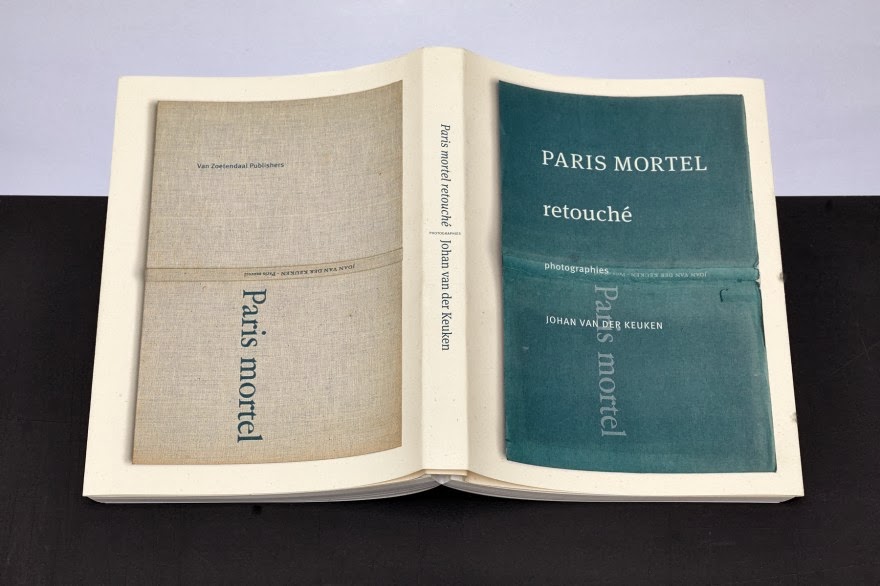
Paris Mortel Retouché / Johan van der Keuken Concept & Design Willem van Zoetendaal Photography

  • YEAR2013
  • SIZE26 x 18,5 cm
  • COLOURduo-tones and FC
  • BINDINGpaperback + dustjacket
  • PAGES188
  • TEXTWillem van Zoetendaal
  • CONCEPTWillem van Zoetendaal
  • DESIGNWillem van Zoetendaal
  • ISBN978-90-72532-21-3

FOLLOWING THE INTRODUCTION BY COMPOSER WILLEM VAN ZOETENDAAL THE NEW BOOK PARIS MORTEL RETOUCHÉ –photographies Johan van der Keuken INCLUDES A SELECTION OF PHOTOS FROM PARIS BETWEEN 1956 AND 1958, MOST OF WHICH HAVE NEVER BEEN PUBLISHED BEFORE. THE THIRD SECTION OF THE PUBLICATION PRESENTS THE THIRD AND FINAL VERSION OF THE PARIS MORTEL DUMMY AS PRESERVED IN THE COLLECTION OF THE PRENTENKABINET LEIDEN. THE FINAL SECTION OF THIS BOOK PRESENTS A SCALED-DOWN FACSIMILE OFPARIS MORTEL FOLLOWED BY NOTES AND A BIBLIOGRAPHY. FRENCH/ENGLISH.

"In 1956 Johan van der Keuken (1938-2001) moved from Amsterdam to Paris to study at the School of Film. There Van der Keuken took thousands of photographs, the city acting as a background to his feelings of desolation. In 1963 a selection of these were published in a book called 'Paris Mortel'. The complete book, including the original dummy Van der Keuken made and a few previously unpublished photographs are collected in this publication." (from the publisher)

Anbout the original: "'Paris mortel' by Van der Keuken - first edition from 1963 - equally portrays the city and its denizens with an off-hand, jazz-like perspective. The recent exhibition displaying all of the hitherto unseen prints leading up to one of Paris mortel’s most iconic single-images, Quartorze juillet (Amsterdam, 2010), and rated equally as a significant photobook, has also been added to the collection. In both books, we see how much Keuken’s film-making studies in Paris between 1956 and 1958, as well as William Klein’s work, impacted upon his radical aesthetic in both political and artistic ways to present a vision of Paris intended to disabuse us from our romanticism." 

Leesfragment
door Johan van der Keuken, Noshka van der Lely
Eén van de beroemdste foto’s van Johan van der Keuken (1938-2001) is een dansscène op het Ile St. Louis te Parijs, gefotografeerd tijdens de viering van ‘Quatorze Juillet’ in 1958. Deze foto werd voor het eerst gepubliceerd in het boek Paris mortel: Foto (1963). In het archief van Van der Keuken bevinden zich nog 32 andere negatieven die allen zijn genomen op dezelfde dag en –plek. Deze nog nooit eerder gepubliceerde foto’s vormen de kern van de tentoonstelling Johan van der Keuken – Beeldverhalen.

Met het tonen van deze opnames doen de samenstellers van de tentoonstelling op geen enkele wijze afbreuk aan het bestaande fotografische oeuvre van Van der Keuken. Primair doel is het inzichtelijk maken van de ontstaansgeschiedenis van de bekende foto en het werpen van een verhelderend licht op de blik en werkwijze van Johan van der Keuken. Het denken in reeksen neemt daar een belangrijke plek in.


Quatorze Juillet, Paris, 1958 (c) Johan van der Keuken
Quatorze Juillet, Paris, 1958 © Johan van der Keuken
Vanaf het begin van zijn carrière was Van der Keuken, toen nog in de eerste plaats fotograaf, geïnteresseerd in het zichtbaar maken van beweging in stilstaande beelden. Mede door zijn grote belangstelling voor film experimenteerde hij al vroeg met reeksen foto’s die hij zodanig aan elkaar verbond dat er een ‘beeldverhaal’ ontstond. Ook koppelde hij bewogen, onscherpe foto’s aan stilstaande, scherpe beelden. Zo ontdekte hij hoe een montage van foto’s de beweging die in de beelden zit kan versnellen of daaraan juist een andere betekenis kan geven.

Om dit principe inzichtelijk te maken zijn voor deze tentoonstelling een aantal andere series en beeldreeksen geselecteerd. Enkele hiervan zijn nooit eerder getoond.


Voor velen is Johan van der Keuken bekend als filmmaker. Toch is hij ook altijd fotograaf gebleven. Een definitieve keuze tussen beide media heeft hij eigenlijk nooit gemaakt. Juist de specifieke mogelijkheden of beperkingen van film en fotografie interesseerden hem, zeker op het gebied van montage. Afwisselend legde hij het accent op het ene of op het andere medium. Om hieraan recht te doen zijn in de tentoonstelling ook enkele korte films van Van der Keuken opgenomen.
De tentoonstelling Johan van der Keuken – Beeldverhalen is samengesteld door Noshka van der Lely en Willem van Zoetendaal.
Bij de tentoonstelling verschijnt het boek Johan van der Keuken – Quatorze Juillet.
Quatorze Juillet, Paris, 1958 (c) Johan van der Keuken
Quatorze Juillet, Paris, 1958 © Johan van der Keuken


Van beeldreeksen naar filmsequenties

Noshka van der Lely (uit het boek Johan van der Keuken - Quatorze Juillet)

Johan van der Keuken had al op heel jonge leeftijd de reputatie van veelbelovend talent binnen de Nederlandse fotografiewereld. Om zijn talent verder te ontwikkelen kreeg hij een staatsbeurs aangeboden om in Parijs te studeren, aangezien er toen nog geen filmacademie in Nederland bestond. Op achttienjarige leeftijd vertrok hij en meldde hij zich aan bij het Instituut voor Gevorderde Cinematografische Studies (IDHEC). Op die school voelde hij zich aanvankelijk niet thuis; in plaats van les te volgen gaf hij de voorkeur aan het dwalen door de stad om foto’s te nemen, hetgeen resulteerde in het fotoboek Paris mortel.


Op dit punt was Johan van der Keuken vooral eerst fotograaf, maar vanaf het begin van zijn carrière was hij geïntrigeerd door de mogelijkheid om dynamiek in stilstaande beelden tot uiting te brengen. Hij experimenteerde met reeksen foto’s die hij zodanig aan elkaar verbond dat er een ‘beeldverhaal’ ontstond. Ook maakte hij combinaties van dynamische, bewogen beelden met stilstaande, haarscherpe foto’s. Op die manier ontdekte hij hoe een gekozen arrangement, een bepaalde sequentie van beelden hun impliciete dynamiek kon versnellen of een andere betekenis kon geven.


De mogelijkheid de suggestie van beweging op te roepen met het statische medium fotografie is hem altijd blijven boeien, ook toen hij zich na het doorlopen van de filmacademie in de eerste plaats op het filmmaken ging richten.


In het nagelaten contactarchief uit Parijs bleken naast de bekende foto van een dansend paartje op straat op 14 juli 1957 nog een groot aantal negatieven te bestaan die rondom deze foto zijn gemaakt en nooit gepubliceerd. Samen vormen deze beelden een spannende dansscène.


De jonge fotograaf loopt door de stad, het is 14 juli, de belangrijkste feestdag van het jaar in Parijs. Hij loopt langs de Seine en stuit op een klein pleintje waar zich een groepje mensen heeft verzameld. Er is een podium gebouwd waarop het orkest staat. Vanaf die verhoging heeft de fotograaf een ideale blik op het dansende publiek. We zien allerlei mensen, van verschillende leeftijd en achtergrond, aangetrokken door de muziek. Ze zijn mooi gekleed volgens de mode van die tijd en ze zijn gekomen om feest te vieren. Als we de foto’s chronologisch bekijken zien we de mensen in beeld komen, jonge meisjes met gebloemde rokken en shawltjes om het haar, oudere paren, Noord-Afrikaanse mannen, jonge kinderen met hun ouders. De mensen scharen zich rondom de dansvloer, de muziek begint. Figuranten worden hoofdrolspelers, mensen raken met elkaar in gesprek, een man met een ladder loopt door het beeld, een auto komt de hoek om rijden. Dan beginnen de mensen te dansen terwijl sommigen aan de kant toekijken. We zien vriendinnen met elkaar dansen, oudere paren en ook de kinderen amuseren zich. Er vormen zich nieuwe paren van toevallige passanten.


Uit alle negatieven van deze situatie kiest Johan van der Keuken later de mooiste, de foto die voor hem alles samenvat in één beeld. Maar voor dit boek zijn we geïnteresseerd in iets anders, namelijk het veld dat de gekozen foto omringt, de voorgeschiedenis en de eventuele afronding van de sessie. Dan zien we het ‘filmische’ van de scène, de beweging die er in zit. Dan voel je, ook de fotograaf danst mee. Door zijn hele fotografische oeuvre heen komen we dit steeds weer tegen, reeksen, sequenties, van stilstaande beelden samengevoegd tot een montage die ‘beweegt’.


Het duurde niet lang tot Van der Keuken gegrepen werd door de onbegrensde mogelijkheden van het filmvak. Parijs was in die tijd, eind jaren ‘50 de filmstad bij uitstek voor iedereen die zich voor film interesseerde. Elke film van betekenis die ooit was gemaakt was daar te zien. De hele filmgeschiedenis lag in Parijs als het ware op straat. Bovendien was er een open klimaat voor experimenten en vernieuwing, ook op de IDHEC die hij volgde. Het kon niet uitblijven dat Van der Keuken hierdoor werd geraakt en gestimuleerd.


Door zijn interesse in film ontdekte hij de enorme mogelijkheden van de montage, hoe je door beelden in een andere volgorde te plaatsen of door de lengte van een shot te veranderen, aan een scène een totaal andere betekenis kunt geven, dat je filmmateriaal zodanig kunt manipuleren dat je een nieuwe werkelijkheid creëert. Hij ontdekte ook dat je door het schikken en herschikken van het ‘ruwe’ materiaal juist steeds dichter bij de werkelijkheid kunt komen zoals jij die ziet, zoals jij die wilt laten zien.


Toch zou de fotografie Van der Keuken blijven uitdagen en zijn hele leven zou hij het filmen afwisselen met periodes waarin hij zich uitsluitend met fotograferen bezig hield.


Achteraf kunnen we constateren dat hij er nooit definitief voor heeft gekozen om of filmer of fotograaf te zijn, maar legde hij het accent afwisselend op het ene of het andere.


Daarnaast had Johan van der Keuken de behoefte om zijn ideeën over de specifieke mogelijkheden en beperkingen van beide media te onderzoeken, te analyseren en op schrift te formuleren. De teksten die hij schreef verschenen o.a. in het filmtijdschrift Skrien in de vaste rubriek ‘Uit de Wereld van een Kleine Zelfstandige’. Deze teksten zijn gebundeld in de publicatie Bewogen Beeld.
Quatorze Juillet, Paris, 1958 (c) Johan van der Keuken
Quatorze Juillet, Paris, 1958 © Johan van der Keuken


zondag 3 november 2013

Hope for the Earth in Pictures Genesis Sebastião Salgado Photography

Earth eternal

A photographic homage to our planet in its natural state

“In GENESIS, my camera allowed nature to speak to me. And it was my privilege to listen.” —Sebastião Salgado

On a very fortuitous day in 1970, 26-year-old Sebastião Salgado held a camera for the first time. When he looked through the viewfinder, he experienced a revelation: suddenly life made sense. From that day onward—though it took years of hard work before he had the experience to earn his living as a photographer—the camera became his tool for interacting with the world. Salgado, who “always preferred the chiaroscuro palette of black-and-white images,” shot very little color in his early career before giving it up completely.

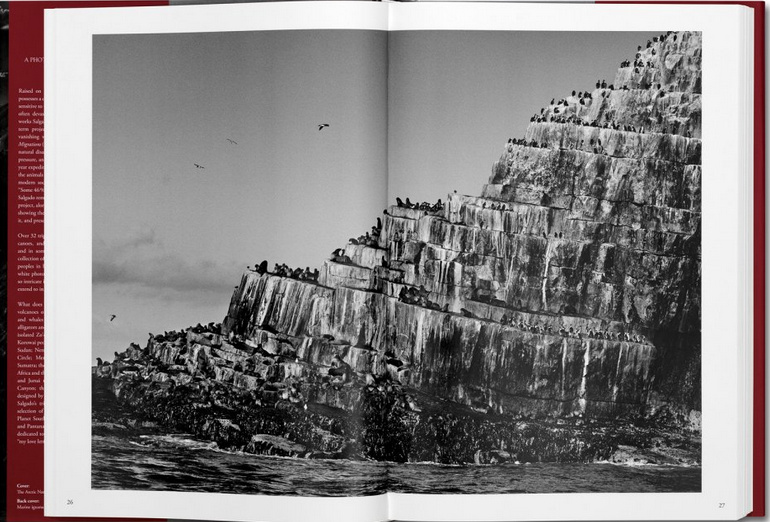
Raised on a farm in Brazil, Salgado possessed a deep love and respect for nature; he was also particularly sensitive to the ways in which human beings are affected by their often devastating socio-economic conditions. Of the myriad works Salgado has produced in his acclaimed career, three long-term projects stand out: Workers (1993), documenting the vanishing way of life of manual laborers across the world, Migrations (2000), a tribute to mass migration driven by hunger, natural disasters, environmental degradation and demographic pressure, and this new opus, GENESIS, the result of an epic eight-year expedition to rediscover the mountains, deserts and oceans, the animals and peoples that have so far escaped the imprint of modern society—the land and life of a still-pristine planet. “Some 46% of the planet is still as it was in the time of genesis,” Salgado reminds us. “We must preserve what exists.” The GENESIS project, along with the Salgados’ Instituto Terra, are dedicated to showing the beauty of our planet, reversing the damage done to it, and preserving it for the future.

Over 30 trips—travelled by foot, light aircraft, seagoing vessels, canoes, and even balloons, through extreme heat and cold and in sometimes dangerous conditions—Salgado created a collection of images showing us natureanimalsand indigenous peoples in breathtaking beauty. Mastering the monochrome with an extreme deftness to rival the virtuoso Ansel Adams, Salgado brings black-and-white photography to a new dimension; the tonal variations in his works, the contrasts of light and dark, recall the works of Old Masters such as Rembrandt and Georges de La Tour.

What does one discover in GENESIS? The animal species and volcanoes of the Galápagos; penguins, sea lions, cormorants, and whales of the Antarctic and South Atlantic; Brazilian alligators and jaguars; African lions, leopards, and elephants; the isolated Zo’é tribe deep in the Amazon jungle; the Stone Age Korowai people of West Papua; nomadic Dinka cattle farmers in Sudan; Nenet nomads and their reindeer herds in the Arctic Circle; Mentawai jungle communities on islands west of Sumatra; the icebergs of the Antarctic; the volcanoes of Central Africa and the Kamchatka Peninsula; Saharan deserts; the Negro and Juruá rivers in the Amazon; the ravines of the Grand Canyon; the glaciers of Alaska... and beyond. Having dedicated so much time, energy, and passion to the making of this work, Salgado likens GENESIS to “my love letter to the planet.”

Whereas the limited Collector’s Edition is conceived like a large-format portfolio that meanders across the planet, this unlimited book presents a selection of photographs arranged in five chapters geographically: Planet South, Sanctuaries, Africa, Northern Spaces, Amazonia and Pantanal. Each in its own way, this book and the Collector’s edition—both edited and designed by Lélia Wanick Salgado—pay homage to Salgado’s triumphant and unparalleled GENESIS project.

The world premiere of Sebastião Salgado: GENESIS opened at the Natural History Museum in London on April 11, 2013. The exhibition builds on the Museum’s reputation as the home of the planet’s best nature photography. For further information and to book tickets please go towww.nhm.ac.uk/salgado. Additionally, from May 14th, a special portfolio of platinum prints from GENESIS will be shown at Phillips Howick Place gallery in London.

Worldwide venues for the GENESIS exhibition:
  • Musée de l’Elysée, Lausanne, Switzerland - September 21, 2013 through January 12, 2014
  • La Maison Européenne de la Photographie (MEP), Paris, France - September 25, 2013 through January 5, 2014
  • SESC Belenzinho, São Paulo, SP, Brazil - September 4 - November 2013
  • CaixaForum, Madrid, Spain - January 15 through May 4, 2014
  • Casa dei Tre Oci, Venice, Italy - January 30 through April 30, 2014
  • Palacio Reale, Milan, Italy - Mid-May through end of September 2014
  • Canarias, Spain - June 14 through August 31, 2014
  • The National Museum of Singapore - April through July 2014
  • Gazômetro, Porto Alegre, Rio Grande do Sul, Brazil - March 12 through May 13,  2014
  • Palacio das Artes, Belo Horizonte, Minas Gerais, Brazil - May 28 through August 25, 2014
  • Fotografiska – the Swedish Museum of Photography, Stockholm, Sweden - June through September 2014
  • CaixaForum, Barcelona, Spain - October 2, 2014 through February 1, 2015
The photographer:
Sebastião Salgado began his career as a professional photographer in Paris in 1973 and subsequently worked with the photo agencies Sygma, Gamma and Magnum Photos. In 1994 he and his wife Lélia created Amazonas images, which exclusively handles his work. Salgado’s photographic projects have been featured in many exhibitions as well as books, including Other Americas (1986), Sahel, L'Homme en détresse (1986), Workers (1993), Terra (1997),Migrations (2000), The Children (2000) and Africa (2007).

The editor and author:
Lélia Wanick Salgado studied architecture and urban planning in Paris. Her interest in photography started in 1970. In the 1980s she moved on to conceiving and designing photography books and organizing exhibitions, numerous of them on Sebastião Salgado. Since 1994 Lélia Wanick Salgado has been the director of Amazonas images.

Hoop voor de aarde in foto's

Dirk Limburg
Recensie Recensie | Zaterdag 19-10-2013 | Sectie: Overig | Pagina: NH_NL01_034 | Dirk Limburg

Tentoonstelling

Op 245 foto's in het Maison Europ�enne de la Photographie in Parijs laat Sebasti�o Salgado de wereld in zijn nog onbedorven pracht zien.

Na het zien van de expositie Genesis van Sebasti�o Salgado blijft er maar ��n vraag over: waarom? Waarom reisde de beroemde Braziliaanse fotograaf acht jaar lang de wereld over om op de meest onherbergzame plaatsen deze prachtige foto's te maken?
Omdat het kon? Omdat hij het als zeventigjarige nog kon? De 245 (!) grote zwart-witfoto's in fotomuseum Maison Europ�enne de la Photographie in Parijs laten berglandschappen zien, zilveren rivieren, duikende walvissen, naakte Amazone-indianen, runderhoedende Dinka's, overbevolkte pingu�nvlaktes, enzovoort, enzovoort. Het zijn momentopnames van het leven zoals zich dat al duizenden en duizenden jaren op aarde afspeelt.
Op al die foto's gaat het Salgado om wat je niet ziet: de moderne mens en hoe die zijn omgeving be�nvloedt en verandert. Op al die foto's staat niets dat niet natuurlijk is. Oud-Magnumfotograaf Salgado laat de wereld zien - door de lens van een ongetwijfeld zeer moderne camera - zoals die was voordat de mens zich al te succesvol begon voort te planten.
Die 'natuurlijke' wereld weet Salgado op zijn reizen van de Noordelijke poolcirkel in Alaska, Canada en Rusland tot aan de Arctische eilanden in spectaculair zwart-wit vast te leggen. Maar wat stoort is dat de foto's toch een willekeurige graai zijn uit een werkelijkheid die je met nog geen miljoen foto's recht kunt doen. Waarom deze wel, en waarom zijn de talloze andere foto's die hij maakte op zijn reizen niet opgenomen in de reizende expositie en de dikke boeken die hij erover maakte? Steeds dringt zich de vraag op: hoe had Salgado's wereld eruitgezien als hij honderd meter verderop was gaan staan?
Salgado weet met zijn foto's niet duidelijk te maken wat hij met Genesis wil aantonen. Hij is altijd al een sociaal bewogen fotograaf geweest, maar bovenal een estheet (zie zijn keuze voor zwartwitfotografie). Zijn foto's uit de jaren tachtig en negentig over honger in Afrika en arbeidsomstandigheden van Braziliaanse mijnwerkers en andere handarbeiders waren schitterend maar te mooi voor een activistisch pamflet. Een tekst bij het begin van deze expositie over een eerbewijs aan een kwetsbare planeet die we allemaal verplicht zijn te beschermen is te gemakkelijk.
De estheet Salgado komt sterk naar voren in Genesis. De rivieren, bergen, dieren en natuurvolken lijken nooit zielig of bedreigd; eerder het tegenovergestelde. Ze zijn schitterend, trots en zelfstandig. Al zijn de flipflopslippers van de meisjes van de Kuikuro-stam een grappige concessie aan de ge�ndustrialiseerde wereld waar ze zo ver mogelijk vandaan blijven.
Technisch zijn de foto's perfect, slechts een enkele keer wens je dat een speels groepje pingu�ns wat scherper in beeld was gebracht. Vaker weet hij zelfs clich�situaties - olifant op de savanne, pingu�ns op een ijsschots - spannend te maken, zowel door de kadrering en de vorm van het onderwerp, als de vrijwel altijd meesterlijke compositie van grijze tonen die de essentie van zijn fotografie is.
Genesis is geen belangrijk document. Het is wel een geniaal reisverslag van een van de begaafdste fotografen van deze tijd. De enorme inspanning van Sebasti�o Salgado om de afgelopen acht jaar naar al die plaatsen te reizen, schenkt de toeschouwer de wetenschap dat er nog schoonheid en dus hoop op aarde te vinden is.
Fotografie Reizende expositie Sebasti�o Salgado's megaproject Genesis is mede mogelijk gemaakt door uitgeverij Taschen. Die heeft diverse boeken met de foto's uitgebracht, van een luxe editie van 8.000 euro tot een 'normaal' boek van 50 euro. Van de expositie zelf bestaan vijf sets die de wereld over reizen. Eerder dit jaar was Genesis al in Londen, Toronto en Rio de Janeiro. Naast Parijs is Genesis ook in Lausanne en S�o Paulo. Volgend jaar zal de expositie reizen naar onder andere Madrid, Veneti�, Stockholm, Singapore en twee Braziliaanse steden. Salgado's agentschap Amazonas Images is in gesprek met diverse andere locaties. Voor Nederland is nog niets gepland. Genesis van Sebasti�o Salgado. T/m 5/1 in Maison Europ�enne de la Photographie, Parijs. Inl: www.mep-fr.org ****
Foto-onderschrift: Vrouwen van de Zo'� in het Amazonedorpje Towari Ypy kleuren hun lichaam met het fruit van de bixa 'lipstickboom' (2009). Een zuidkaper (Eubalaena australis) bij het Argentijnse schiereiland Vald�s (2004)
Op dit artikel rust auteursrecht van NRC Handelsblad BV, respectievelijk van de oorspronkelijke auteur.